


Why MVHR Beats Regular Ventilation for Energy‑Efficient Residential Buildings
Modern energy-efficient residential buildings are built around two core principles: ultra-tight building envelopes and minimal energy waste. High-performance insulation, airtight windows, and sealed wall systems drastically cut external heat transfer, slashing heating and cooling loads. However, this airtight design creates a critical dilemma for homeowners and builders: traditional ventilation methods struggle to deliver fresh air without sacrificing energy efficiency or indoor comfort. This is exactly why MVHR (Mechanical Ventilation with Heat Recovery) has become the gold standard for low-energy homes, outperforming regular ventilation systems in energy savings, air quality, and year-round livability. In this guide, we break down the key differences between MVHR and conventional ventilation, and explain why MVHR is the ultimate choice for modern energy-efficient residential buildings.
To understand why MVHR dominates low-energy residential design, we first need to expose the inherent limitations of regular ventilation systems, including natural window ventilation, basic extract fans, and standard mechanical ventilation without heat recovery.
Traditional ventilation operates on a simple principle: expel stale indoor air and let fresh outdoor air in. For old, poorly insulated homes with leaky walls and windows, this passive air exchange happens naturally with minimal energy loss. But for modern energy-efficient buildings with airtight construction, regular ventilation becomes counterproductive and wasteful.
Opening windows for fresh air forces conditioned indoor air—heated in winter, cooled in summer—to escape rapidly. This creates massive thermal loss, forcing heating and cooling systems to run overtime to maintain indoor temperatures, directly negating the building’s energy-saving design. Meanwhile, basic extract fans only remove stale air from single rooms like bathrooms and kitchens, failing to deliver balanced whole-house ventilation. They leave bedrooms and living areas stuffy, with accumulated CO₂, moisture, and airborne pollutants, resulting in uneven air quality and persistent indoor discomfort.
Worst of all, regular ventilation offers no temperature regulation. In extreme winter cold or summer heat, incoming outdoor air creates drafts, temperature fluctuations, and increased HVAC workload, driving up monthly energy bills and undermining the purpose of energy-efficient residential construction.
Unlike one-way, wasteful regular ventilation, MVHR is a balanced, heat-retaining ventilation system engineered specifically for airtight, energy-efficient homes. It delivers continuous whole-house fresh air circulation while capturing and reusing waste heat, eliminating the core flaws of conventional ventilation methods.
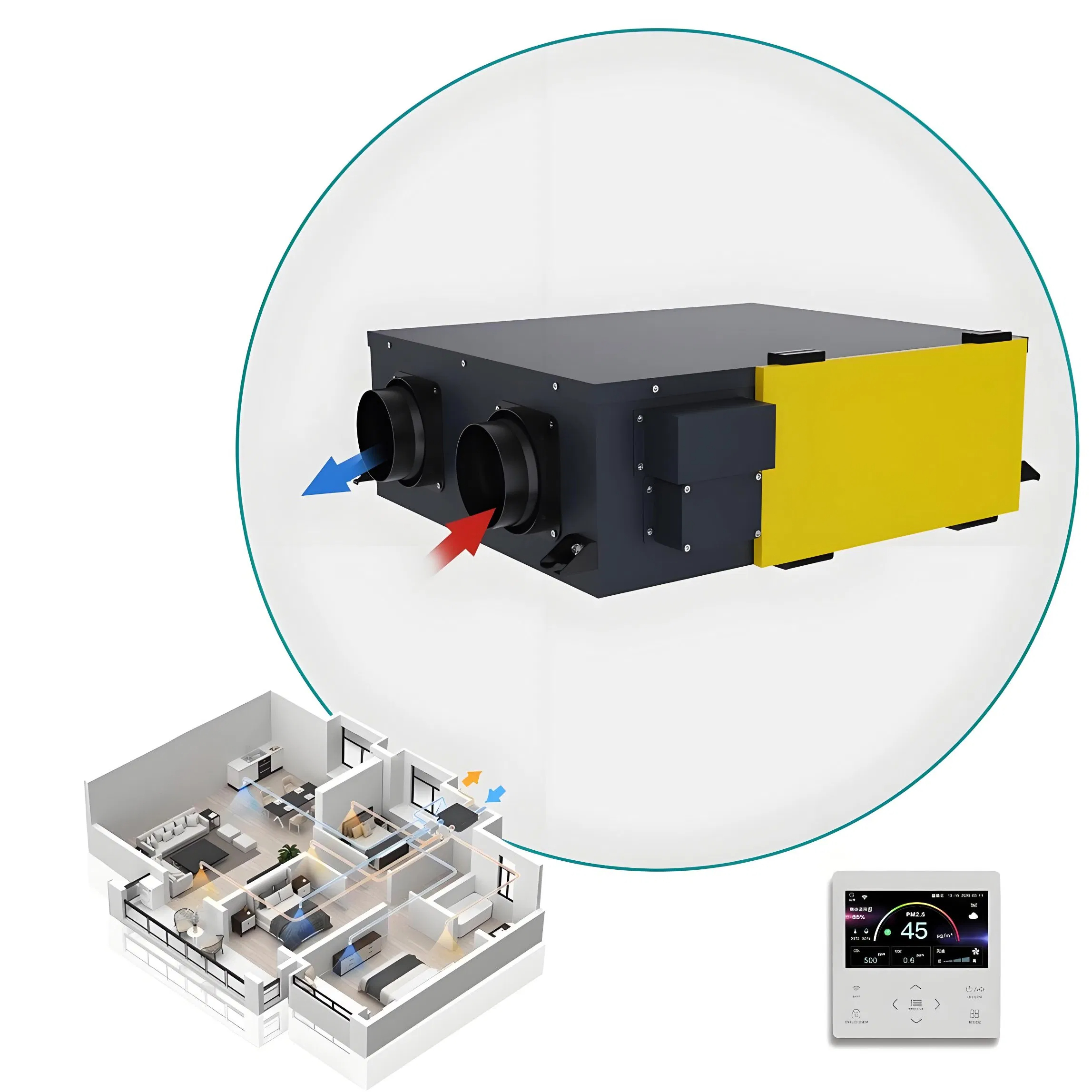
The system runs two simultaneous, isolated air streams through a high-efficiency heat exchanger core. It extracts stale, moisture-laden indoor air from wet rooms and living spaces, while drawing in filtered fresh air from outside. As the two air streams pass through the core without mixing, up to 85–95% of indoor heat or coolness is transferred to the incoming fresh air stream.
In winter, MVHR pre-warms cold outdoor air before it enters living spaces, eliminating heat loss from ventilation. In summer, it pre-cools hot incoming air with residual indoor coolness, reducing heat gain. This unique heat recovery function means energy-efficient homes can enjoy constant fresh air without thermal waste—a feat regular ventilation can never achieve.
Regular ventilation forces homeowners to choose between fresh air and low energy consumption: ventilate freely and face soaring utility bills, or limit airflow to save energy and endure stale indoor air. MVHR completely eliminates this trade-off. By recovering residual thermal energy from exhaust air, it prevents the heating and cooling energy losses that plague traditional ventilation. For passive houses and ultra-low-energy residential buildings, MVHR reduces annual HVAC energy consumption by 30–50%, preserving the building’s designed energy efficiency while maintaining 24/7 balanced ventilation.
Standard extract fans and window ventilation provide sporadic, unbalanced airflow. Some rooms become over-ventilated with drafts, while others remain stagnant with high CO₂ levels, dust, and excess moisture. MVHR features a fully ducted, zoned system that delivers precise air supply to living rooms, bedrooms, and study areas, while steadily exhausting polluted, humid air from bathrooms and kitchens. Equipped with multi-stage filters, it blocks pollen, fine dust, and outdoor pollutants, supplying purified fresh air throughout the entire house. This consistent, balanced air circulation is essential for sealed energy-efficient homes, preventing stuffiness and improving overall indoor air quality year-round.
One major downside of regular ventilation is inconsistent indoor temperatures. Opening windows introduces frigid winter air or sweltering summer heat, creating uncomfortable drafts and temperature swings. Basic mechanical ventilation also blows unconditioned outdoor air directly indoors, disrupting thermal comfort. MVHR’s heat exchange process stabilizes incoming air temperatures, ensuring gentle, draft-free ventilation with uniform indoor temperatures. It maintains a cozy, consistent living environment in all seasons, maximizing the comfort benefits of high-performance insulated homes.
Airtight energy-efficient homes trap moisture generated by cooking, showering, and daily respiration. Irregular regular ventilation fails to remove excess humidity consistently, leading to damp walls, peeling paint, mold growth, and damaged building materials. MVHR provides continuous, controlled cross-ventilation that steadily expels surplus indoor moisture, maintaining optimal indoor humidity between 40–60%. This prevents mold and damp buildup, protects the building’s thermal envelope and structural integrity, and preserves the long-term performance of energy-efficient residential buildings.
Window-based regular ventilation inevitably lets in outdoor traffic noise, wind, dust, and harsh weather conditions. MVHR allows homeowners to keep windows fully closed for ventilation, creating a quiet, dust-free indoor environment. It operates reliably throughout heavy rain, extreme heat, freezing cold, and high-pollen seasons, delivering uninterrupted fresh air without external disturbances—another critical advantage for premium energy-efficient residential properties.
Feature | MVHR System | Regular Ventilation (Windows/Extract Fans) |
|---|---|---|
Energy Efficiency | 85–95% heat recovery, minimal energy loss | High thermal waste, increases HVAC load |
Air Circulation | Balanced whole-house continuous ventilation | Sporadic, unbalanced, partial-room airflow |
Indoor Temperature | Stable, draft-free year-round temperatures | Frequent temperature swings and drafts |
Air Filtration | Multi-stage filtration for clean, purified air | No filtration, allows dust/pollen/pollutants in |
Moisture Control | Consistent humidity regulation, anti-mold | Unstable humidity, high mold risk |
Noise Performance | Quiet operation, full noise insulation | Introduces outdoor traffic & wind noise |
For standard traditional homes with leaky envelopes, regular ventilation may suffice for basic airflow needs. But for any purpose-built energy-efficient residence—including passive houses, low-carbon new builds, and deep-renovated airtight homes—MVHR is not an optional upgrade, but a necessary system.
The upfront investment in an MVHR system pays off rapidly through reduced heating and cooling bills, lower maintenance costs from prevented mold and structural damage, and improved family health. It preserves the home’s energy-saving design, complies with modern green building codes, and boosts long-term property value, while delivering superior comfort and air quality that regular ventilation can never match.
Energy-efficient residential construction aims to reduce waste, boost sustainability, and create healthier living spaces. Regular ventilation undermines these goals by wasting energy, disrupting comfort, and failing to maintain consistent indoor air quality. MVHR bridges the gap between airtight energy conservation and healthy ventilation, making it the superior, future-proof ventilation solution for all modern low-energy homes.
If you want to maximize your home’s energy efficiency, protect your building structure, and enjoy year-round healthy, comfortable indoor air, replacing traditional ventilation with a professional MVHR system is the smartest long-term choice.
 18705226241


