


Sukabumi is located in the southern part of West Java Province, Indonesia, at the junction of the volcanic mountain range and the rainforest. It has a tropical rainforest climate, with high temperatures and humidity throughout the year. The average humidity exceeds 85%, and there is abundant precipitation along with orographic rain caused by the mountainous terrain. The air contains high levels of moisture, pollen from the rainforest, and mold spores. Additionally, there are extensive tea and coffee plantations around the city, along with fine dust from the mountain forests. The buildings in the urban area are distributed along the mountains, and the ventilation conditions are restricted by the terrain, making it easy for excessive humidity, mold growth, and stale air to occur in sealed buildings. This city, centered on mountain tourism and tea and coffee cultivation, has an excellent natural environment. However, the combination of high humidity and the dust from the mountain forests creates an environment that makes indoor air quality and temperature/humidity control crucial. The ERV energy recovery ventilation system can continuously ventilate and exchange air while efficiently recovering the coldness and humidity from the exhaust air, significantly reducing the energy consumption for air conditioning dehumidification. It can also filter out pollutants such as rainforest pollen, mountain forest dust, and mold spores through multiple levels of filtration, precisely balancing the indoor temperature and humidity, and fundamentally improving indoor air quality. This is particularly important for the comfort of living, operational efficiency, and item protection in various places. The following places are particularly suitable for installing ERV systems:
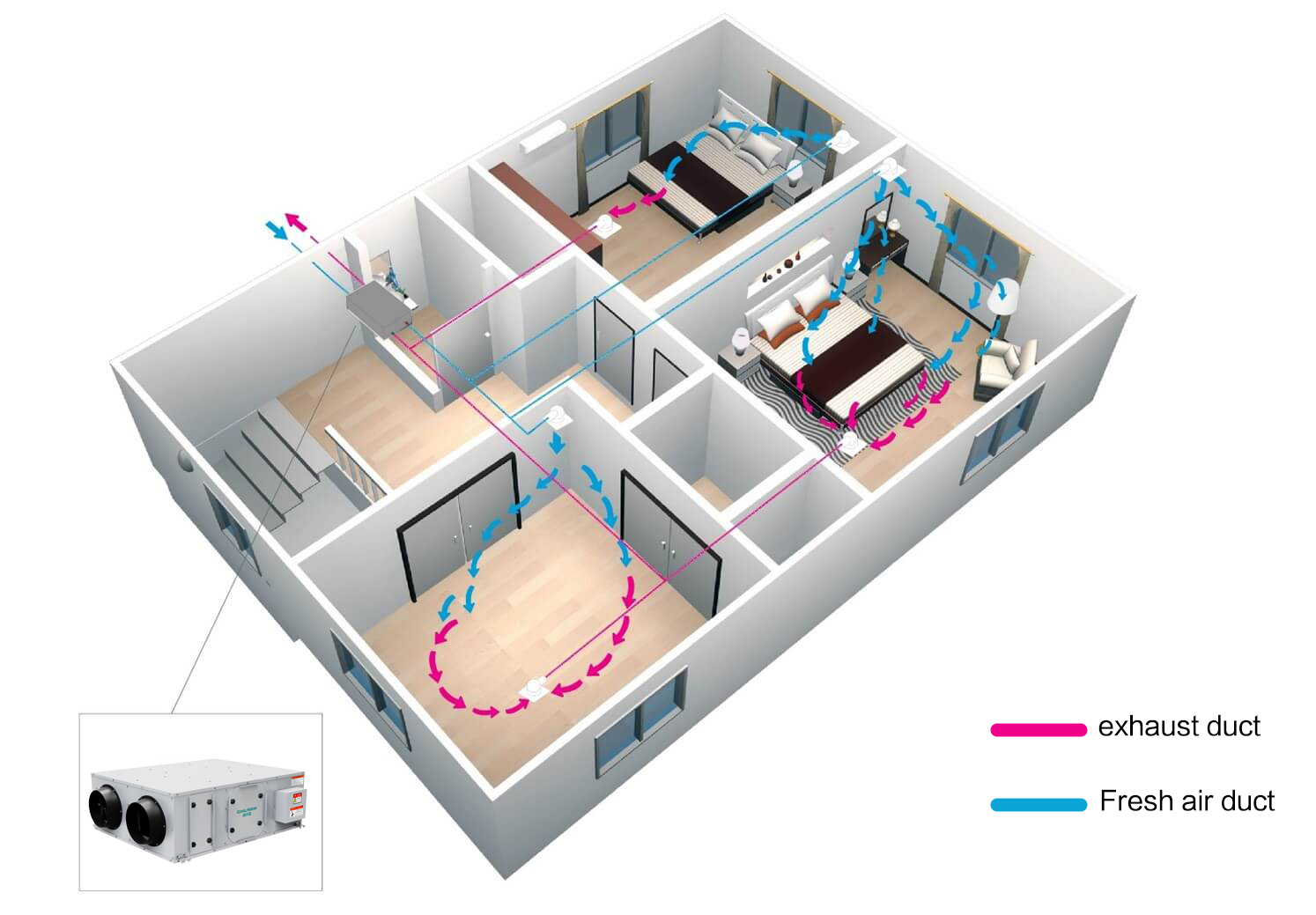
The various residences in Sukabumi are the core application scenarios for the ERV system. Whether it is multi-story apartments built along the mountains in the urban area, the workers' residences in the nearby tea and coffee plantations, or the mountain forest-style tourist accommodations, they can all significantly improve the living environment by using the ERV system. Local residents have always tightly closed their windows and relied on air conditioning to keep out the high temperatures, mountain forest mosquitoes, and dust. This often leads to poor indoor air circulation, increased carbon dioxide concentration, and the damp environment causes mold on walls, furniture, and clothes. Rainforest pollen can also cause discomfort for people with respiratory sensitivities. Residential buildings near the tea and coffee plantations are also affected by the penetration of fine dust from the planting area. The ERV system can continuously introduce filtered fresh outdoor air, effectively intercept rainforest pollen, mold spores, and fine dust from the mountain forest and the planting area, remove the stale air and excess moisture from the room, and recover the coldness from the exhaust air, reducing the operating load of the air conditioner, and lowering the energy cost for residents. It can also control indoor humidity within an appropriate range, creating a dry and fresh living environment for residents. This is particularly important for families with elderly members, children, and those with respiratory sensitivities, as well as residential buildings near the mountain forest and tea and coffee plantations that are prone to dust and pollen penetration.
 18705226241


