


If you live in a modern, energy-efficient home—or even a older home that’s been air-sealed to cut down on heating and cooling bills—you’ve probably noticed one common issue: stale, stuffy indoor air. From cooking odors and pet dander to excess moisture and hidden indoor pollutants, tightly sealed homes trap unhealthy air inside, and small spot fans (like bathroom or kitchen exhaust fans) just don’t do enough to refresh the entire space. That’s where whole house ventilation comes in: a comprehensive mechanical solution designed to circulate fresh outdoor air throughout your home and expel stale, polluted indoor air consistently, keeping your living space healthy, comfortable, and free of trapped moisture and contaminants.
Unlike passive ventilation (like opening windows, which is unreliable and wastes energy), whole-house ventilation systems are controlled, mechanical systems that work year-round to maintain balanced indoor air quality (IAQ) without sacrificing your home’s energy efficiency. According to leading home energy and HVAC experts, there are four primary types of whole-house ventilation systems, each with unique mechanics, benefits, drawbacks, and ideal climate matches. Below, we break down everything you need to know to pick the right one for your home.
Today’s homes are built far more airtight than those built decades ago, which is great for lowering utility bills but terrible for indoor air flow. Without proper ventilation, indoor air can become 2-5 times more polluted than outdoor air, according to the U.S. Environmental Protection Agency (EPA). Trapped moisture leads to mold and mildew growth, stale air triggers allergies and respiratory discomfort, and excess humidity or dryness makes your home feel less comfortable year-round.
Whole-house ventilation fixes this by creating a steady, controlled air exchange cycle: it brings in filtered fresh air from outside and pushes out stale indoor air, maintaining consistent air quality without constant window-opening. Now, let’s dive into the four core types.
How it works: Exhaust-only ventilation systems operate by depressurizing your home. A single, centrally located fan (typically ducted to high-pollutant rooms like bathrooms, kitchens, and laundry rooms) pulls stale, moist air out of the house. As air is exhausted, fresh outdoor air naturally seeps in through small cracks in the home’s envelope, passive vents, or window vents.
Key Pros: This is the most budget-friendly option for whole-house ventilation; it’s simple to install, has minimal upfront costs, and requires very little ongoing maintenance. It’s highly effective at removing excess moisture and indoor pollutants like cooking fumes and bathroom humidity.
Key Cons: Depressurization can pull in unwanted outdoor pollutants (like radon, garage fumes, or attic dust) into living spaces. It’s not ideal for hot, humid climates, as moist outdoor air can seep into wall cavities and cause condensation, mold, or wood rot. It also wastes energy, since heated or cooled indoor air is exhausted without any energy recovery.
Best For:Cold climates (where hot, humid outdoor air isn’t a concern) and homeowners on a tight budget looking for a basic ventilation fix.
How it works: The opposite of exhaust systems, supply ventilation pressurizes your home by using a fan to actively pull filtered fresh outdoor air into the house (usually ducted to bedrooms and living rooms, the spaces you occupy most). As fresh air is forced in, stale indoor air leaks out through gaps in the home’s exterior, exhaust fans, and passive vents.
Key Pros: Offers better control over incoming air quality—you can add filters to remove pollen, dust, and outdoor allergens, and even add dehumidifiers for humid climates. Pressurization prevents outdoor pollutants and combustion fumes (from fireplaces or furnaces) from being pulled into the home, eliminating backdrafting risks. It’s more effective than exhaust systems at keeping living spaces fresh.
Key Cons: Can cause moisture issues in cold climates: warm, humid indoor air may leak into cold attics or wall cavities and condense, leading to mold. Like exhaust systems, it wastes energy because conditioned indoor air is lost to the outside. May create cold drafts in winter if incoming air isn’t tempered.
Best For:Hot, humid, or mixed climates and homeowners who want basic filtration and better air quality control than exhaust systems.
How it works: Balanced ventilation is the most neutral, all-climate option, designed to neither pressurize nor depressurize your home. It uses two separate fans and two duct systems: one fan actively brings in fresh outdoor air, and the other simultaneously expels stale indoor air at the same rate, creating a perfect air balance.
Key Pros: Works seamlessly in all climate zones—no risk of moisture damage from pressure imbalances. Allows full filtration of incoming air, and it eliminates draft issues and backdrafting risks. It provides consistent, whole-home air exchange without disrupting your home’s pressure balance.
Key Cons: Higher upfront installation costs than exhaust or supply systems, since it requires dual fans and dual ductwork. It does not recover any energy from exhausted air, so it still adds to heating and cooling costs compared to energy-efficient alternatives.
Best For: Homeowners in mixed or extreme climates who want a versatile, low-risk ventilation system and prioritize air balance over extreme energy savings.
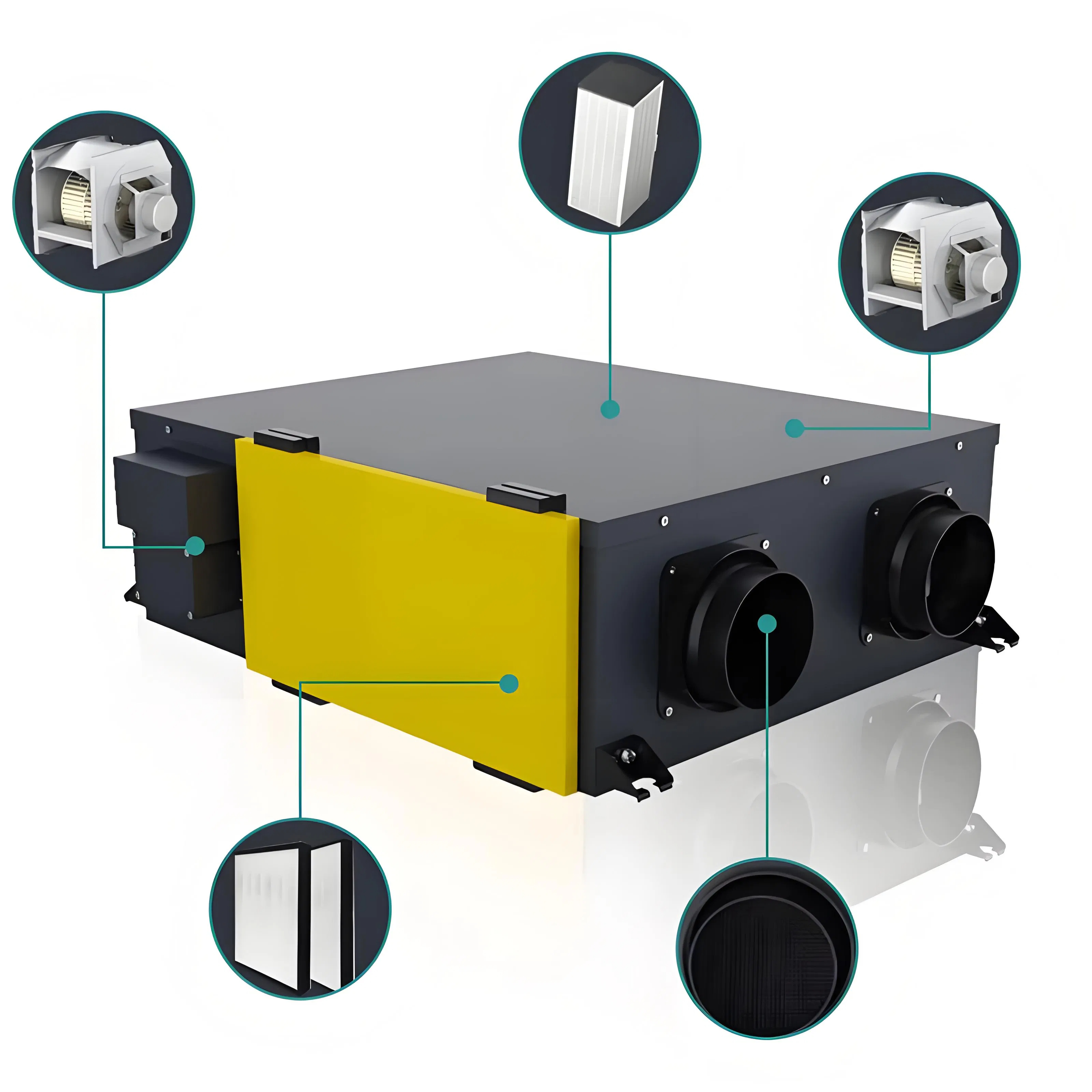
How it works: Energy recovery systems (the most energy-efficient whole-house ventilation option) are a specialized type of balanced ventilation that recovers energy from exhausted air to condition incoming fresh air. There are two subtypes:
HRV (Heat Recovery Ventilator): Transfers only heat between outgoing stale air and incoming fresh air. In winter, it warms cold outdoor air with heat from exhausted indoor air; in summer, it cools warm outdoor air with cool exhausted indoor air.
ERV (Energy Recovery Ventilator): Transfers both heat and moisture (enthalpy), making it ideal for humid climates. It balances indoor humidity levels—adding moisture to dry winter air and removing excess moisture from humid summer air.
Both systems use a heat exchanger core to capture 70-80% of the energy from exhausted air, drastically cutting ventilation-related energy waste.
Key Pros: Massively reduces heating and cooling costs compared to the other three types. Controls indoor humidity perfectly (especially ERVs), prevents mold and moisture damage, and provides filtered, fresh air year-round. Ideal for extremely cold or hot climates where energy efficiency is a top priority.
Key Cons: Highest upfront installation cost and requires more regular maintenance (filter changes, core cleaning, and freeze protection in cold climates). May not be cost-effective in mild climates where energy savings don’t offset the higher price tag. Requires professional installation for optimal performance.
Best For:Extreme cold or hot/humid climates, energy-efficient net-zero homes, and homeowners who want to prioritize IAQ and lower long-term utility bills.
Picking the perfect system boils down to three key factors: your local climate, your budget, and your energy efficiency goals.
Quick Climate Match Cheat Sheet:- Cold Climates: Exhaust or HRV - Hot/Humid Climates: Supply or ERV - Mixed Climates: Balanced or ERV - Tight Budget: Exhaust (basic) or Supply (mid-tier) - Max Efficiency & Long-Term Savings: ERV/HRV
Whole-house ventilation isn’t just a luxury—it’s a necessity for modern, airtight homes. The right system transforms stale, unhealthy air into fresh, clean air year-round, while protecting your home from moisture damage and cutting down on energy waste (especially with ERV/HRV systems). Whether you opt for a budget-friendly exhaust system or a high-efficiency energy recovery unit, investing in whole-house ventilation will boost your home’s comfort, indoor air quality, and longevity for years to come.
If you’re unsure which system fits your home, consult a licensed HVAC contractor who can assess your climate, home size, and air sealing to recommend the perfect ventilation solution.
 18705226241


