


Poor indoor air quality is one of the most overlooked issues in homes, offices, workshops and commercial buildings. Many people assume that indoor air is clean just because windows are closed or basic ventilation fans are running. In reality, indoor spaces often trap fine dust, pollen, pet dander, mould spores, volatile organic compounds (VOCs) and other airborne pollutants. These contaminants can trigger allergies, irritate the respiratory tract and reduce overall comfort and productivity. This is where a reliable ventilator air filtration system makes a huge difference.
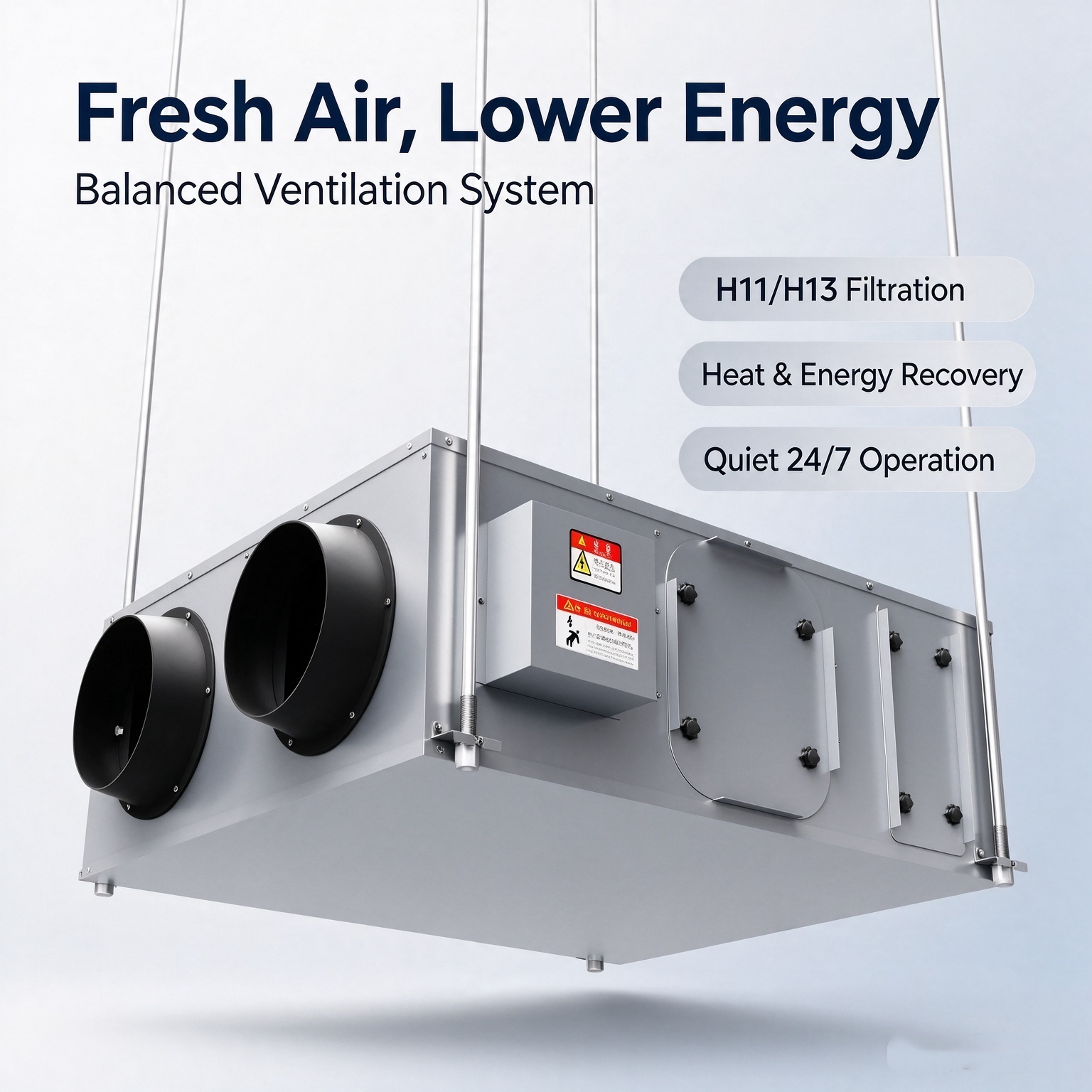
A ventilator air filtration system combines continuous fresh air exchange with multi-stage air purification. Unlike standalone air purifiers that only recirculate existing indoor air, this integrated ventilation system brings in fresh outdoor air, filters out harmful particles before the air enters your space, and exhausts stale, polluted indoor air outside. It delivers two core functions at once: proper ventilation and effective air filtration.
Most high-performance ventilator air filtration units adopt layered filter designs. A pre-filter first captures large particles such as hair and coarse dust to protect the main filter and extend service life. Medium filters block fine dust and pollen. Premium models are fitted with H11 or H13 HEPA filters, which can trap ultra-fine particulate matter efficiently. Some optional configurations also add activated carbon filters to absorb unpleasant odours, smoke fumes and VOCs from paint, cleaning agents and furniture. Whether you run an ERV, HRV or mechanical ventilation setup, upgrading or integrating a matching filtration system greatly elevates IAQ performance.
The benefits go far beyond cleaner air. For residential users, this system helps relieve seasonal allergy symptoms and creates a healthier living environment for children and elderly family members. For commercial premises including offices, classrooms and production workshops, stable filtered ventilation reduces sick building syndrome and keeps staff focused and comfortable. It also protects valuable equipment and inventory from dust accumulation. Compared with simply opening windows, a ventilator air filtration system avoids unpredictable outdoor pollutants, extreme hot or cold air, and noisy wind. It maintains balanced airflow while keeping air quality consistent all year round.
To keep your ventilator air filtration system working at peak efficiency, regular maintenance cannot be ignored. Check filter status following the manufacturer’s schedule. Pre-filters can usually be cleaned several times, while HEPA and carbon filters need replacement once they reach saturation. Clogged filters reduce airflow, increase fan energy consumption and weaken filtration effects. Many modern ventilation systems support Modbus or Tuya smart control, allowing you to monitor air quality readings and filter reminders remotely. Choosing the right filter class and airflow rate (CFM/CMH) according to your room size and application scenario is also critical before purchase.
You may wonder: should I buy a separate air purifier or invest in a ventilator air filtration system? If you only need spot cleaning for a single small room, a portable purifier can be a temporary solution. But if you want long-term, whole-building fresh air together with filtration, a ventilator air filtration system is the better, more sustainable choice. It solves the root problem of stale indoor air instead of just repeatedly cleaning the same air.
Good indoor air quality is not a luxury — it is essential for health. A properly sized and well-maintained ventilator air filtration system balances fresh air supply and contaminant removal, creating a safe, comfortable indoor environment for every occupant. If you are upgrading your existing ERV/HRV ventilation project or planning a new ventilation solution, always pay close attention to the filtration stage. Clean fresh air is the best return on your ventilation investment.
 18705226241


