Ventilation Reimagined: How EVR & Renewable Energy Solutions Build Sustainable Buildings
In the era of global carbon neutrality and green building transformation, ventilation is no longer just a basic building function for air exchange. Traditional ventilation systems often bring severe energy loss: while discharging stale indoor air, they waste a large amount of heating and cooling energy, forcing HVAC systems to consume extra power to condition incoming fresh air. This long-standing industry pain point has been perfectly solved by EVR (Energy Recovery Ventilation) paired with renewable energy solutions — creating a win-win model of healthy indoor air quality, ultra-low energy consumption, and zero-carbon operation.
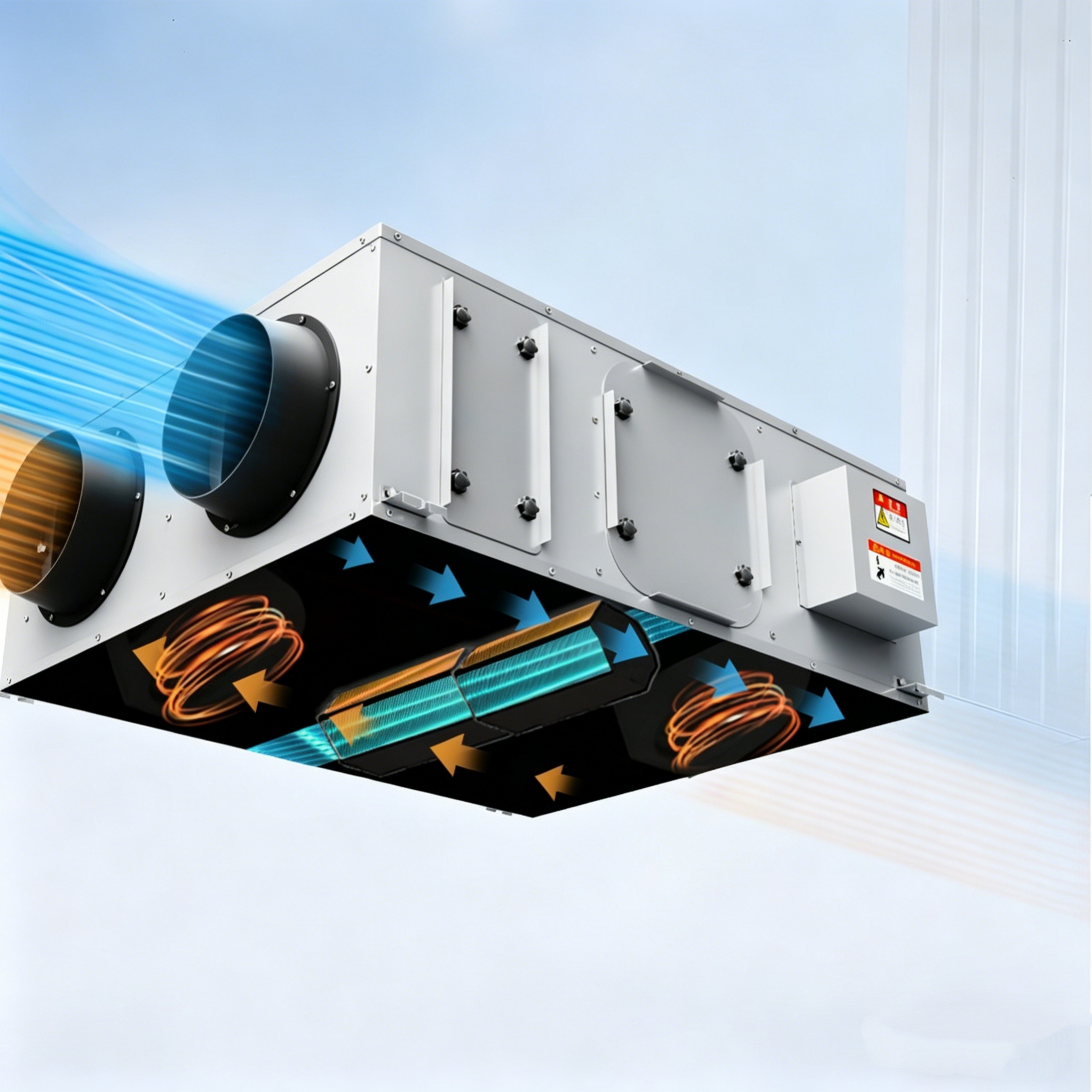
EVR, or Energy Recovery Ventilation, is a high-efficiency ventilation technology designed for energy saving and air quality optimization. Different from ordinary exhaust and air supply equipment, its core advantage lies in energy recovery and air balance. The system runs a simultaneous two-way air flow: it draws fresh outdoor air indoors while exhausting polluted, stale indoor air out. Through its high-efficiency heat and moisture exchange core, EVR transfers the temperature and humidity energy of the exhausted indoor air to the incoming fresh air.
This pre-conditioning process drastically cuts down the workload of building heating and cooling systems. Advanced EVR units can achieve an energy recovery efficiency of over 90%, reducing HVAC energy consumption by up to 65% and avoiding the massive energy waste caused by traditional blind ventilation. Meanwhile, EVR maintains balanced positive and negative indoor air pressure, effectively filtering dust, pollen and pollutants, and delivering continuous fresh air to create a comfortable and healthy indoor environment for residential, commercial and industrial spaces.
EVR itself realizes energy conservation, while renewable energy solutions help it achieveclean energy substitution. Traditional EVR systems still rely on grid power for operation, which cannot completely eliminate carbon emissions. By integrating mainstream renewable energy sources such as solar and wind power with EVR equipment, buildings can thoroughly break away from dependence on traditional fossil energy power.
Solar power is the most widely matched solution for EVR systems. Rooftop photovoltaic panels can independently supply stable power for EVR fans, intelligent control modules and heat exchange systems. For most medium and small buildings, solar energy can cover nearly 30% of ventilation power demand throughout the year. In areas with sufficient wind resources, small distributed wind power equipment can assist in power supply, forming a complementary renewable energy system to ensure 24-hour stable operation of EVR.
This integrated model completely upgrades the building ventilation logic: on the one hand, EVR reduces the total energy demand of ventilation; on the other hand, renewable energy provides zero-carbon power for the entire system. The combination turns building ventilation from an energy-consuming burden into a sustainable green module of modern buildings.
The dual energy-saving mechanism of EVR energy recovery and renewable clean power cuts building ventilation energy costs by 50%–80% year-round. Whether it is high-temperature summer or cold winter, the heat and moisture exchange function of EVR avoids extreme energy loss of fresh air conditioning, and renewable power eliminates high grid electricity bills, bringing a short investment return cycle for building owners.
Many energy-saving ventilation solutions sacrifice air exchange volume for low energy consumption, leading to stuffy indoor air and excessive CO₂ concentration. The EVR system ensures constant fresh air ventilation without energy loss, effectively discharging formaldehyde, peculiar smell and exhaust gas indoors. The stable renewable power supply ensures the system runs continuously without shutdown, maintaining long-term healthy indoor air circulation.
At present, green building certifications such as LEED and domestic zero-carbon building standards have strict requirements for ventilation energy consumption and clean energy utilization. The integrated solution of EVR and renewable energy perfectly meets relevant assessment indicators, helping enterprises and buildings complete carbon emission reduction targets, enhance green asset value, and conform to the global low-carbon development trend.
This solution is not limited to single scenarios. It can be flexibly applied to residential buildings, office buildings, shopping malls, factories and public facilities. From small household EVR ventilation systems to large commercial central fresh air systems matched with distributed photovoltaic power generation, the modular design can meet the energy-saving and environmental protection needs of different buildings.
As energy prices rise and carbon emission policies become increasingly stringent, traditional high-energy-consumption ventilation systems are gradually being phased out. The combination ofEVR energy recovery ventilation and renewable energy solutions has become the inevitable trend of the ventilation industry.
It not only solves the long-standing contradiction between ventilation demand and energy consumption, but also realizes the organic integration of indoor comfort, energy saving and environmental protection. In the future, with the popularization of smart building technology, EVR systems will also realize intelligent linkage with renewable energy equipment, automatically adjusting ventilation volume and power supply mode according to weather, indoor personnel density and power generation efficiency, further optimizing building energy management.
Sustainable ventilation is no longer an optional upgrade, but a standard configuration for modern green buildings. EVR technology saves energy for ventilation, and renewable energy cleans the entire energy chain. Together, they build a healthier, lower-cost and greener indoor living and working environment. For building owners, developers and energy managers, choosing EVR & renewable energy solutions is not only a cost-saving investment, but also a positive practice for ecological sustainable development.
 18705226241