


Understanding the Main Components of HVAC Systems: A Complete Beginner's Guide
Most homeowners know their house stays warm in winter and cool in summer, but few can name the pieces doing the work. HVAC stands for Heating, Ventilation, and Air Conditioning — three separate jobs that one integrated system performs: it adds heat, removes heat, and keeps fresh, filtered air moving through every room. Knowing how the main components fit together helps you diagnose odd noises, schedule maintenance, and talk to a contractor with confidence.
This guide walks through every major part of a typical residential central system: where it lives, what it does, and how the pieces cooperate.
The most common setup in North American homes is a split system. One unit sits indoors (usually a furnace or air handler), another sits outdoors (the condenser). They are joined by ductwork, refrigerant lines, wiring and a thermostat. During the heating cycle, the indoor unit warms air; during the cooling cycle, refrigerant absorbs heat inside the house and dumps it outside. Ventilation and filtration happen continuously as the blower circulates air through the return and supply ducts.
The furnace is the heart of the heating side. It burns fuel (natural gas, propane, or fuel oil) or uses electric resistance elements to create heat, then hands that heat to the moving air. Most furnaces are installed in a basement, garage, attic, or dedicated utility closet.
Burner and igniter: in a gas furnace, the burner assembly mixes fuel with air and ignites it; a hot-surface igniter or spark igniter starts the flame, replacing old standing pilots.
Heat exchanger: a sealed metal chamber that warms the air passing around it without letting combustion gases touch that air. A cracked heat exchanger is a serious safety concern because it can leak carbon monoxide.
Flue and vent pipe: carries combustion exhaust outdoors; older systems use a metal chimney, newer high-efficiency furnaces vent through plastic PVC pipes.
Blower motor and fan: the fan pulls cold return air over the heat exchanger and pushes warmed supply air into the ducts.
In heat-pump and electric systems there may be no burner. The air handler is the indoor cabinet housing the blower, evaporator coil, filter rack and electrical controls. It moves air through the ductwork in both heating and cooling modes.
A heat pump replaces the furnace as a combined heating and cooling machine. Instead of making heat, it moves it: in summer it extracts heat from indoor air and releases it outside; in winter a reversing valve flips the cycle, so it pulls heat from outdoor air (or ground) and releases it indoors. Cold-climate models include backup electric strip heat for the very coldest days.
The large metal cabinet beside your house contains the outdoor half of the air conditioner or heat pump. Its job is to release heat collected indoors into the outside air.
Compressor: the pump that pressurizes refrigerant, raising its temperature; it is the component most often linked to high energy use and wear.
Condenser coil: the finned metal tubing where hot, high-pressure refrigerant condenses from gas to liquid and releases heat.
Condenser fan: pulls outside air across the coil to accelerate heat rejection; a blocked fan causes high pressure and overheating.
Capacitor and contactor: electrical parts that start the compressor and fan motors; they are common failure points on older units.
The evaporator coil, often shaped like an A and mounted on top of the furnace or inside the air handler, is where cold refrigerant boils and absorbs heat from the indoor air blown across it. Moisture condenses on its cold surface and drips into a drain pan — this is also how an air conditioner dehumidifies the house.
Located between the liquid line and evaporator coil, the expansion valve lowers refrigerant pressure and temperature in a controlled way before it enters the coil. It meters the flow so the coil stays efficient rather than flooding or starving.
Two insulated copper lines run between indoor and outdoor units:
Suction line: the larger, insulated line carrying cold refrigerant gas from the evaporator back to the compressor.
Liquid line: the smaller line carrying high-pressure liquid refrigerant toward the expansion valve.
Water removed from indoor air collects in the drain pan under the evaporator coil and flows away through a PVC drain line, often outside the foundation. A clogged line can flood the furnace cabinet or trigger a float-switch shutoff.
Cooling and heating would do no good if air could not reach the rooms. The ductwork and its fittings form a second major subsystem.
Return ducts and return grilles: pull stale, room-temperature air back to the furnace or air handler for filtering and conditioning. Air returns are usually found in hallways or high on walls.
Supply ducts and supply registers: deliver warmed or cooled air into each room; cooling registers are typically placed high on walls or ceilings, heating registers near the floor.
Plenum: the large sheet-metal chamber directly attached to the top or side of the unit, where conditioned air enters the supply duct system, or where return air collects before the unit.
Air filter: installed in the return duct or the air handler cabinet; it traps dust, pollen and fibers before air reaches the coil and blower. Filters are rated by a MERV number that measures particle capture.
Dampers: adjustable plates inside ducts that open or close airflow to balance rooms; zoning systems use motorized dampers controlled by separate thermostats.
Insulation and duct sealant: sealed, insulated ducts avoid leaks, unconditioned attic losses and condensation on cold metal.
Thermostat: the user interface that sets target temperature and switching mode (heat, cool, auto, fan). Modern smart models measure humidity, occupancy and schedule and connect to Wi-Fi.
Sensors: temperature sensors in the thermostat and unit, plus pressure and limit sensors inside the furnace that shut the system down if overheating or pressure problems appear.
Control board: the circuit board in the indoor unit that sequences igniter, burner, blower, inducer draft motor and safety switches in the correct order.
Zone controls: multiple thermostats and motorized dampers let different areas of the house maintain their own temperature instead of one setting for the whole home.
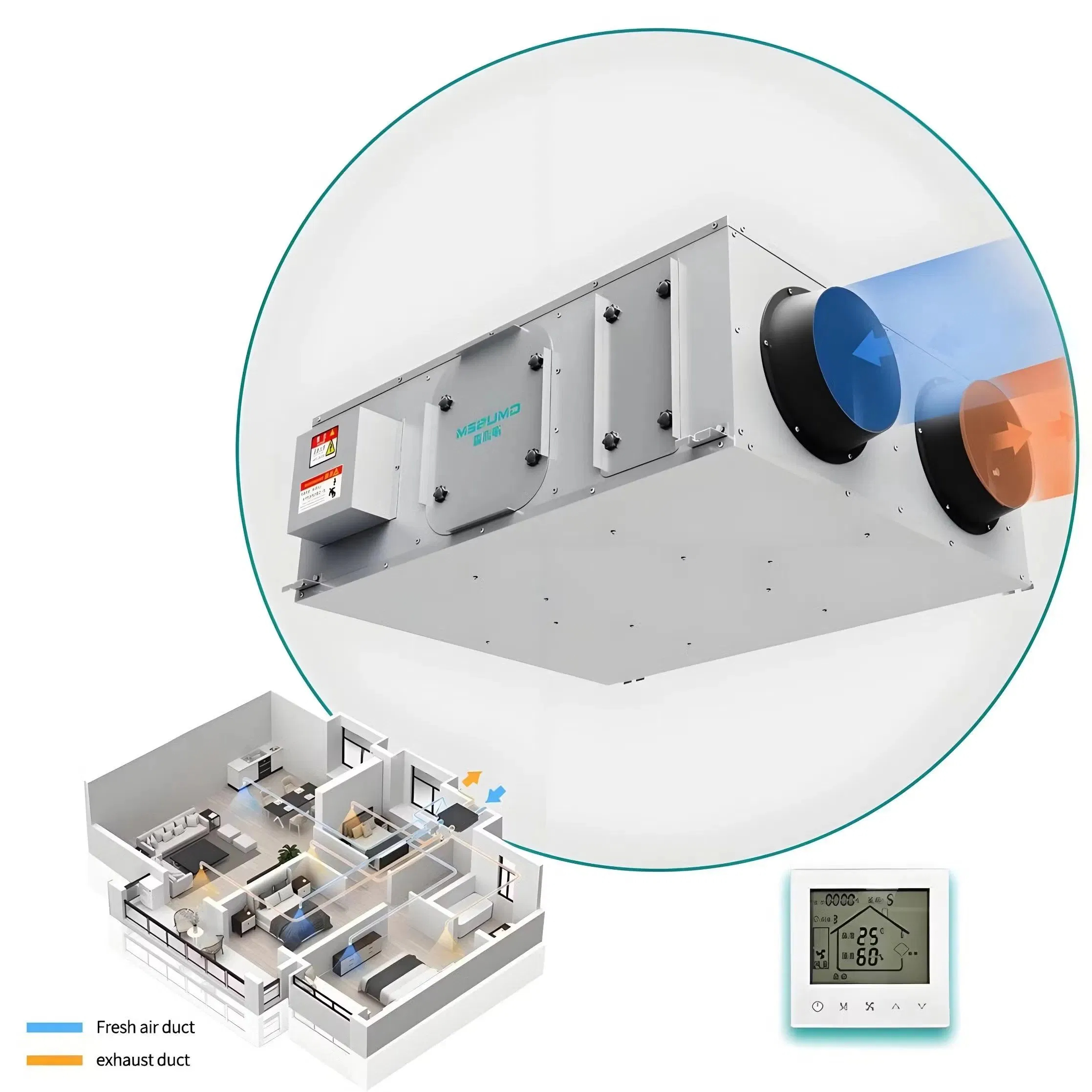
The V in HVAC, ventilation, ensures stale, humid or pollutant-laden air is exchanged with fresh outdoor air. Components often added to a central system include:
HRV / ERV (Heat or Energy Recovery Ventilator): brings in fresh outdoor air while transferring heat (HRV) or heat plus moisture (ERV) from exhaust air before it leaves the house; especially useful in tightly sealed modern homes.
Humidifier: mounted on the supply or return duct, adds moisture in dry winter air to reduce static, dry skin and discomfort.
Dehumidifier: removes excess humidity in damp climates or basement areas, reducing mold risk and load on the air conditioner.
Exhaust fans: bathroom and kitchen fans expel moist air and odors directly outdoors; range hoods perform the same function over cooking surfaces.
UV light air purifiers and media filters: optional enhancements installed in the ductwork to reduce bacteria, mold and airborne particles.
Indoors, in the furnace or air handler cabinet: blower motor, evaporator coil, heat exchanger, burner, filter, control board, drain pan.
Outdoors, in the condenser cabinet: compressor, condenser coil, condenser fan, capacitor, contactor.
Between the two units: suction line, liquid line, low-voltage control wiring.
Throughout the house: supply and return ducts, plenum, registers, dampers, air filter location.
On the wall or in a room: thermostat (and any zone thermostats).
Change or clean the air filter on the schedule recommended by the manufacturer (commonly every 1–3 months); a dirty filter starves the coil and blower of air.
Keep the outdoor condenser clear of grass, leaves, shrubs and stored items; airflow through the coil cannot be restricted.
Have a qualified technician inspect the heat exchanger, burners, flue, refrigerant charge, condensate line and electrical contacts during annual service.
Keep supply and return registers unobstructed by furniture, rugs or curtains.
Listen for new noises — rattling, buzzing, squealing or banging — and note whether they happen in heating, cooling or fan-only mode; that context helps a technician identify the component.
An HVAC system is really three machines in one: a heating machine, a cooling machine, and an air-moving machine, coordinated by a small control system. Once you can point to the furnace, evaporator coil, outdoor condenser, compressor, blower, ducts, filter and thermostat, the system stops being a black box. You will understand which symptoms point to the indoor unit, which point to the outdoor unit, and which point to the ductwork or filter — and you will spend your maintenance budget on the parts that actually protect comfort, air quality and equipment life.
This article provides general educational information about common residential split-system HVAC equipment. Equipment layouts differ by furnace, heat pump, ductless mini-split and packaged unit; always rely on a licensed HVAC contractor for sizing, repairs, refrigerant work and safety inspections.
 18705226241


