


When it comes to creating a healthy, comfortable, and energy-efficient building—whether it’s a home, office, or commercial space—ventilation is non-negotiable. Proper ventilation replaces stale indoor air with fresh outdoor air, removes pollutants, controls humidity, and maintains thermal comfort. But not all ventilation systems are created equal. The right choice depends on factors like building size, location, climate, and usage. In this blog, we’ll break down the three main types of ventilation systems in buildings, their working principles, pros and cons, and ideal applications to help you make informed decisions.
Natural ventilation is the oldest and most energy-efficient form of ventilation, relying entirely on natural forces—wind pressure and the stack effect—to circulate air without mechanical equipment. It’s a passive system that uses planned openings like windows, doors, louvers, skylights, or windcatchers to facilitate air exchange between indoor and outdoor spaces.
The stack effect occurs when warm indoor air rises (due to lower density) and escapes through upper openings, while cooler, denser outdoor air is drawn in through lower openings. Wind pressure, on the other hand, creates a pressure difference: wind pushes air into the building’s windward side (positive pressure) and pulls air out from the leeward side (negative pressure), driving air circulation. Many historic buildings, especially in moderate climates, relied solely on natural ventilation, and it has seen a resurgence in modern green buildings due to its sustainability benefits.
Zero energy consumption: No electricity or mechanical parts, reducing utility bills and carbon footprint.
Cost-effective: Minimal installation and maintenance costs (only requires well-designed openings).
Natural comfort: Delivers fresh outdoor air, creating a more pleasant and breathable indoor environment.
Sustainable: Aligns with green building standards like LEED and supports net-zero carbon goals.
Unpredictable: Relies on weather conditions (wind speed, temperature, humidity), so ventilation效果 can vary drastically.
Limited control: Cannot adjust airflow rate or temperature, making it ineffective in extreme climates (e.g., very hot or cold regions).
Potential for poor air quality: May draw in outdoor pollutants (dust, pollen, noise) if not properly designed.
Dependent on building design: Requires strategic placement of openings, which may limit architectural flexibility.
Natural ventilation works best in low-rise buildings with simple layouts, such as residential homes, small offices, schools, and rural buildings. It’s most effective in moderate climates with consistent wind and mild temperatures—think regions where summer heat is manageable and winter cold isn’t extreme. For example, traditional adobe homes in desert regions use windcatchers to leverage natural ventilation, while modern green homes often incorporate operable windows and skylights to maximize airflow.
Mechanical ventilation uses electric fans, ducts, and controls to actively move air into and out of a building. Unlike natural ventilation, it’s not dependent on weather conditions, making it a reliable choice for buildings where consistent airflow and air quality are critical. This system is widely used in modern commercial buildings, high-rises, and homes in extreme climates, where natural ventilation alone can’t meet comfort or safety standards.
There are two main subtypes of mechanical ventilation, each serving different needs:
Exhaust ventilation uses fans to draw stale indoor air out of the building, creating negative pressure that pulls fresh outdoor air in through cracks, gaps, or dedicated inlet vents. It’s simple and affordable, often used in bathrooms, kitchens, and small spaces where localized air removal is needed (e.g., to eliminate cooking fumes or bathroom moisture).
Supply ventilation uses fans to push fresh outdoor air into the building, creating positive pressure that forces stale air out through exhaust vents or cracks. This system allows for better control over air quality, as incoming air can be filtered, heated, or cooled before entering the space. It’s ideal for homes with tight envelopes (well-insulated, minimal air leakage) to prevent indoor air pollution buildup.
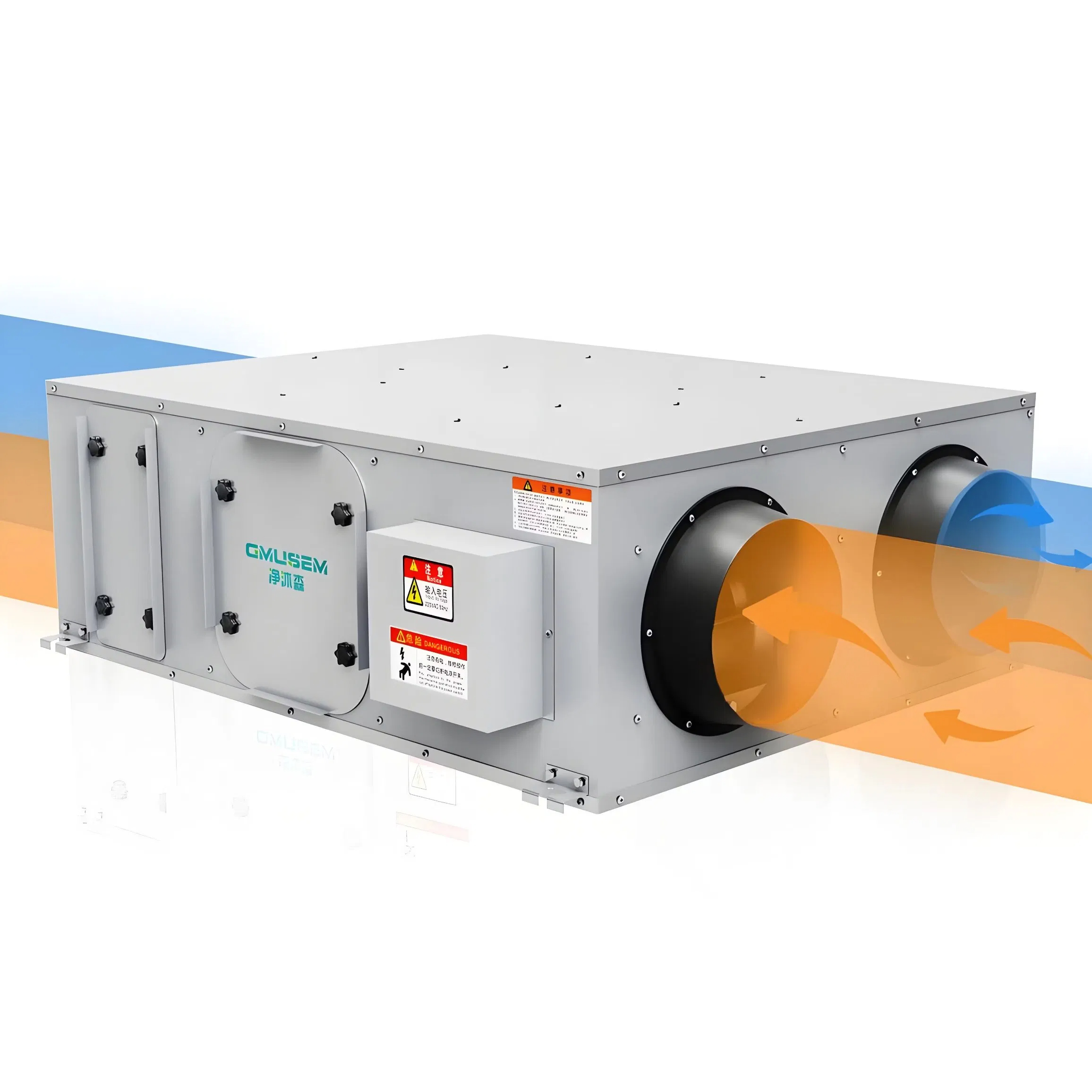
Balanced ventilation combines exhaust and supply systems, ensuring equal airflow in and out of the building (no positive or negative pressure). Many balanced systems include heat recovery ventilators (HRVs) or energy recovery ventilators (ERVs), which transfer heat (and sometimes moisture) between incoming and outgoing air. This reduces energy waste by preheating or precooling fresh air, making it the most energy-efficient mechanical ventilation option for extreme climates.
Consistent performance: Works regardless of weather, ensuring steady airflow and air quality.
Controllable: Adjust airflow rates, temperature, and humidity to meet specific needs (e.g., in hospitals or laboratories).
Improved air quality: Can filter incoming air to remove pollutants, allergens, and dust.
Compatible with HVAC systems: Integrates seamlessly with heating and cooling systems for all-season comfort.
Energy consumption: Requires electricity to run fans, increasing utility costs (though HRVs/ERVs mitigate this).
Higher installation costs: Needs ducts, fans, and controls, which can be expensive for large buildings.
Maintenance: Fans and filters require regular cleaning and replacement to avoid breakdowns and poor performance.
Noise: Fans can produce noise if not properly installed or maintained.
Mechanical ventilation is essential for high-rise buildings (where natural airflow is limited), commercial spaces (e.g., malls, offices, hospitals), industrial facilities (where pollutants are generated), and homes in extreme climates (very hot, very cold, or very humid). It’s also critical in buildings with tight envelopes, as natural infiltration (unplanned air leakage) is minimal.
Mixed-mode ventilation (also called hybrid ventilation) combines natural and mechanical ventilation, leveraging the strengths of both systems to optimize comfort, energy efficiency, and air quality. It switches between natural and mechanical modes (or uses both simultaneously) based on weather conditions, indoor air quality, and occupancy needs. A well-designed mixed-mode system starts with an intelligent facade to minimize cooling loads, then uses mechanical ventilation only when natural ventilation is not feasible.
For example, in mild weather, the system uses natural ventilation (operable windows, windcatchers) to reduce energy use. When temperatures rise or fall to extreme levels, or when indoor air quality drops (e.g., high occupancy), the mechanical system kicks in to maintain comfort and air quality. Some advanced mixed-mode systems use sensors and automation to switch modes automatically, ensuring optimal performance without manual intervention.
Energy-efficient: Reduces reliance on mechanical systems by using natural ventilation when possible, cutting utility costs and carbon emissions. Studies show mixed-mode systems can save 60-70% of energy compared to fully mechanical systems and 20-25% compared to natural ventilation alone.
Flexible: Adapts to changing weather and occupancy, ensuring comfort year-round.
Improved air quality: Combines the fresh air of natural ventilation with the controlled filtration of mechanical systems.
Cost-effective long-term: Lower energy bills offset higher initial design and installation costs over time.
Complex design: Requires careful planning to integrate natural and mechanical components, including sensor-based controls.
Higher initial costs: More expensive to design and install than single-mode systems.
Requires monitoring: Automated systems need regular checks to ensure mode switching works correctly.
Dependent on building design: Needs strategic placement of natural openings and mechanical equipment to work effectively.
Mixed-mode ventilation is perfect for medium to large buildings in moderate to temperate climates, where weather conditions vary seasonally. Examples include office buildings, universities, museums, and green buildings aiming for LEED certification. It’s also ideal for retrofits, where existing natural ventilation can be enhanced with mechanical systems to improve performance without full replacement. Studies across European cities (Copenhagen, Munich, London) have shown mixed-mode ventilation to be highly effective in office buildings, balancing comfort and energy savings.
Selecting the right ventilation system depends on your building’s needs, location, and goals. Here’s a quick recap to guide your decision:
Choose natural ventilation if you’re building in a moderate climate, prioritizing sustainability and low costs, and have a simple building layout.
Choose mechanical ventilation if you need consistent performance, live in an extreme climate, or have a large/commercial building with high air quality requirements.
Choose mixed-mode ventilation if you want to balance energy efficiency and comfort, live in a variable climate, or aim for green building certification.
Remember, ventilation isn’t just about “fresh air”—it’s about creating a space that’s healthy, comfortable, and efficient. Whether you’re designing a new building or upgrading an existing one, understanding these ventilation types will help you make a choice that benefits both occupants and the planet. If you’re unsure which system is right for you, consult a building engineer or HVAC professional to assess your specific needs!
 18705226241


