


Poor indoor air quality is one of the quietest health hazards in modern homes. Tightly sealed energy-efficient houses trap excess moisture, CO₂, volatile organic compounds, cooking fumes and stale air indoors. Opening windows helps, yet it brings in pollen, road dust, noise and fluctuating temperatures. This is exactly where a Tuya smart HRV ventilation system steps in: balanced heat recovery ventilation paired with seamless IoT control to deliver consistent, fresh indoor air without wasting heating or cooling energy.
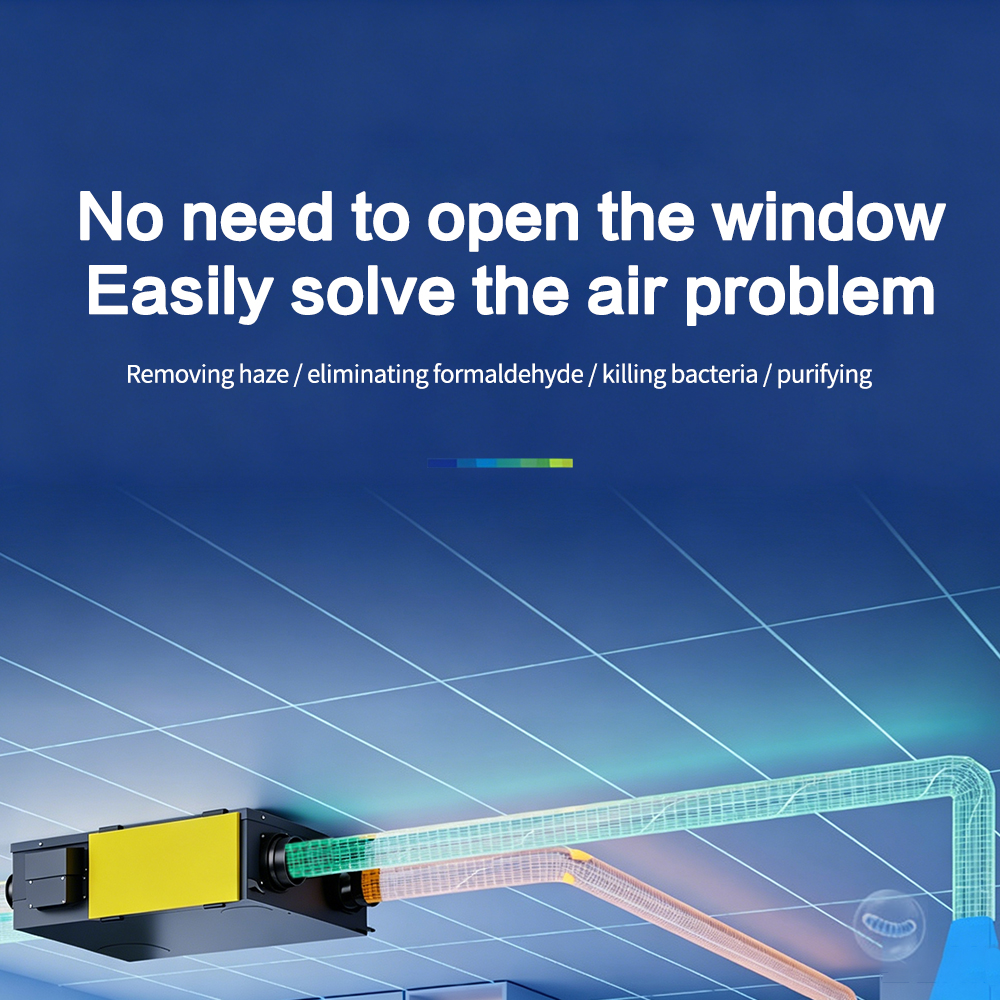
HRV stands for Heat Recovery Ventilation. An HRV continuously exchanges stale indoor air with filtered fresh outdoor air while recovering up to a large portion of the heat from the outgoing air. It keeps your indoor temperature stable and cuts down HVAC running costs, unlike simple exhaust fans that push conditioned air straight outside.
When integrated with the Tuya IoT platform, the traditional HRV evolves into a fully connected smart ventilation solution. You can operate the unit remotely via the Tuya mobile app, set custom schedules, switch fan speeds, check real-time IAQ data and link the HRV with other smart home devices. Many models also support Modbus communication, making them ideal for residential builds, passive houses and light commercial HVAC projects.
A standalone HRV works well, but smart control unlocks its full potential.
First, remote access means you can turn up ventilation before arriving home or lower the fan speed while away, no need to rush back to adjust a wall panel. Automated scheduling fits your daily routine: boost airflow during cooking, showering or when the whole family is indoors, and run at low quiet speed overnight.
Second, Tuya-enabled HRVs often pair with built-in or external air quality sensors. The system automatically ramps up ventilation when CO₂, humidity or VOC levels rise. This delivers air on demand instead of running blindly at a fixed speed, saving power and extending filter life.
Third, smart scenes and automation bring whole-home synergy. You can set rules such as “when the smart kitchen hood turns on, boost HRV airflow” or “if indoor humidity exceeds the threshold, activate high-speed ventilation”. Voice control is also supported on most Tuya devices for hands-free adjustment.
Constant filtered fresh air reduces accumulated allergens, mould triggers, carbon dioxide and airborne pollutants. This is especially valuable for children, people with asthma or allergies, and anyone spending long hours working indoors.
The heat recovery core transfers thermal energy between supply and exhaust airstreams. In winter, outgoing warm air preheats incoming fresh air; in summer, it cools down incoming air. You enjoy fresh air without heavy heating and cooling penalties.
Quality Tuya smart HRV units operate at low noise levels suitable for bedrooms. Unlike single-point extract fans that create negative pressure, balanced supply and exhaust airflow prevent back-drafting from chimneys or drains.
The Tuya app can send filter replacement reminders, so you never miss scheduled service. Most HRVs use easy-to-remove filters, usually G4, F8 or H13 grades, to block dust, pollen and fine particulates.
Passive house design relies on airtight envelopes and continuous controlled ventilation. A Tuya smart HRV meets this requirement, offering precise airflow tuning, data logging and remote monitoring for homeowners, builders and HVAC contractors.
HRV installation works best during new construction or major renovation. The duct layout should be planned carefully to distribute fresh air to bedrooms and living areas while extracting stale air from kitchens, bathrooms and utility rooms.
Always match the airflow capacity to your house volume and occupancy. Oversized units waste energy; undersized ones cannot keep CO₂ and humidity under control. If you pick a Tuya smart HRV with Modbus, it can integrate easily into larger building automation systems beyond basic app control.
Remember regular upkeep: clean or replace filters, inspect the heat exchanger and drain lines, and check ductwork for leaks once or twice each year. Even the smartest ventilation system performs poorly without basic maintenance.
A Tuya smart HRV ventilation system is a great fit if you own an airtight new home, suffer from poor indoor air quality, want to reduce mould risk, or aim to build a connected smart home. It also appeals to HVAC installers looking for reliable, IoT-ready ventilation equipment they can offer to clients.
If you only need occasional spot extraction, a simple exhaust fan may suffice. But for year-round, whole-house fresh air with energy recovery and intelligent automation, the Tuya smart HRV stands out.
Healthy indoor air is not a luxury anymore. As buildings become more airtight and energy efficient, controlled mechanical ventilation becomes essential. A Tuya Smart HRV Ventilation System combines proven heat recovery technology with flexible smart control, balancing comfort, energy efficiency and indoor air quality.
It does not just move air. It creates a living environment where the air you breathe stays fresh, filtered and comfortable all year round.
 18705226241


