


Recuperator Air System: Fresh Air Without Wasted Energy
Modern buildings are better insulated than ever before. That is good for the heating bill, but it creates a quiet problem of its own: air gets stale. Carbon dioxide, humidity, cooking fumes, cleaning chemicals and volatile organic compounds build up indoors, and simply opening a window throws away the heat or cooling you just paid for. A recuperator air system solves both sides of the equation at once. It brings in fresh outdoor air and, before that air enters your rooms, recovers most of the heat that would otherwise be sent outside in the exhaust stream.
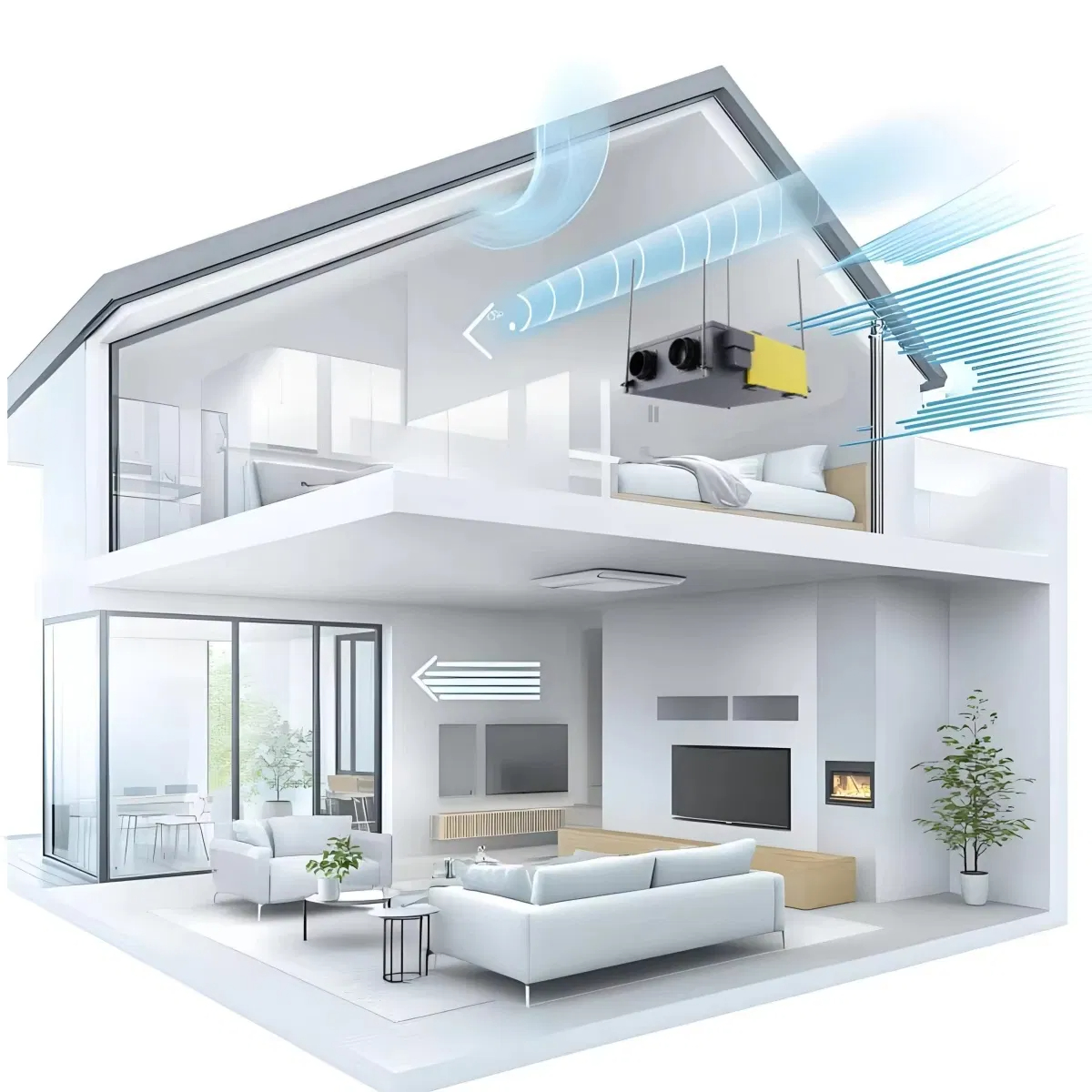
A recuperator air system is a type of balanced mechanical ventilation with heat recovery (MVHR). At its core is a static heat exchanger made of stacked aluminium or plastic plates. Two separate air streams pass through the same unit without ever mixing: stale, warm air is extracted from inside the building, and fresh, cold air is drawn in from outside. The two streams flow past opposite sides of the plates, and heat moves through the plate material from the outgoing air to the incoming air.
Because the heat-transfer element is a fixed plate pack rather than a rotating wheel, there are no moving parts inside the core itself. This is the technical difference between a recuperator (a static plate heat exchanger) and a regenerator (a rotating heat wheel). In everyday marketing, the two are sometimes grouped together as HRV or ERV equipment, but a plate-type recuperator is worth understanding on its own.
The process is continuous and fully balanced. Two fans run at the same time:
One fan pulls stale indoor air out of kitchens, bathrooms and living areas.
The other fan pushes filtered fresh outdoor air through the unit and into bedrooms and living rooms.
Before the exhaust air is discharged outside, it passes through the plate heat exchanger and gives up its heat to the cold incoming air.
The pre-warmed supply air is then distributed through a duct network at a comfortable, draught-free temperature.
In heating seasons, the incoming air can be raised close to room temperature before it ever reaches the heater. In cooling seasons, the same principle runs in reverse: cool exhaust air from an air-conditioned room chills the incoming warm air, reducing the load on the cooling system. Efficient plate recuperators typically recover the large majority of the sensible heat passing through them, which is why they pair so well with heat pumps and tight, well-insulated buildings.
The appeal of a recuperator system comes from combining ventilation with energy recovery in a single device.
Better indoor air quality. Instead of living with recycled, CO2-heavy air, occupants get a steady supply of filtered fresh air. Most units accept G4, F7 or even H11/H13 grade filters, which is useful for allergy sufferers and for buildings near busy roads or industrial areas.
Lower heating and cooling bills. Ventilation is no longer a wasteful operation. The heat you paid to produce stays inside the building, and the small amount of fan energy consumed is a fraction of the energy that would otherwise be lost through simple exhaust or window airing.
No cross-contamination. Because the two air streams are physically separated by the plates, exhaust fumes, moisture or odours do not mix back into the fresh air supply. This is an advantage over rotary wheels, which can carry over a small amount of exhaust air.
Low maintenance and long service life. With no rotating heat wheel, a plate recuperator has fewer wearing parts. Routine care mostly means changing filters, checking the condensate drain and occasionally cleaning the heat exchanger.
Balanced pressurisation. Because supply and extract fans are sized together, the building is neither over-pressurised nor under-pressurised, which reduces drafts, rain ingress at windows and back-drafting from flues.
If you have already started researching ventilation, you have probably seen HRV, ERV and MVHR used almost interchangeably. A few distinctions help when comparing products:
HRV (Heat Recovery Ventilator) recovers sensible heat only. It is common in dry, cold climates.
ERV (Energy Recovery Ventilator) also transfers some moisture, which is useful in humid climates where you want to control humidity in summer.
Rotary wheel units use a slowly rotating heat storage wheel and can reach high efficiency, but they carry a small amount of cross-contamination and need motorised moving parts.
Plate recuperator units keep the air streams completely separate, have no wheel to maintain, and are often chosen for hospitals, laboratories, animal rooms, clean environments and any application where exhaust air must not re-enter the supply.
A recuperator air system is a strong fit for tightly insulated homes, passive-house projects, apartments, schools, offices and commercial spaces where fresh air is required but energy cannot be wasted. It is especially valuable in cold winters, when opening windows would otherwise mean throwing away large amounts of heating energy, and in air-conditioned buildings, where uncontrolled ventilation would fight the cooling system.
When selecting a unit, pay attention to the airflow rate in cubic metres per hour (CMH) or cubic feet per minute (CFM), the filter grade, the fan efficiency (EC fans are recommended), the available control options such as Modbus or RS485 for building-management integration, and the expected sound level. Oversizing wastes energy; undersizing leaves rooms under-ventilated, so the sizing should be done against the actual number of occupants and rooms.
A recuperator air system changes ventilation from an energy loss into a controlled, comfortable process. Occupants get the fresh air they need, the building stays balanced, and most of the heating or cooling energy stays indoors rather than going out the exhaust pipe. For modern, well-insulated buildings, that is exactly the kind of no-waste ventilation that makes both comfort and energy sense.
If you are specifying a project, ask your supplier for the unit's certified heat recovery efficiency, airflow curve, filter sizes and electrical connection before comparing prices. The right recuperator will quietly save energy for years, while still delivering the fresh air your building was missing.
 18705226241


