


Passive House Design: The Role of ERV Ventilation
Modern sustainable architecture is no longer just about reducing carbon footprints or cutting energy costs—it’s about creating airtight, ultra-efficient living spaces that deliver consistent comfort and healthy indoor environments. At the forefront of this green building revolution isPassive House (Passivhaus) design, a rigorous construction standard focused on superior insulation, minimal air leakage, and passive temperature regulation. While high-performance walls, triple-glazed windows, and airtight building envelopes are the most recognizable features of Passive House builds, one unsung system makes the entire design functional: ERV ventilation (Energy Recovery Ventilation).
Without a properly installed and calibrated ERV system, the airtight construction that defines Passive House design becomes a critical flaw. Tight, well-insulated homes trap stale air, excess moisture, pollutants, and indoor toxins, creating stuffy, unhealthy living conditions. ERV ventilation solves this dilemma by balancing continuous fresh air exchange with energy conservation, making it an indispensable core component of every certified Passive House. In this blog, we’ll break down why ERV is non-negotiable for Passive House design, how it works alongside passive building principles, and the key benefits it brings to ultra-efficient homes.
To understand the role of ERV ventilation, it’s first essential to grasp the core rule of Passive House construction: zero unnecessary air leakage. Traditional homes rely on accidental air exchange—gaps around windows, door frames, and wall penetrations—to bring in fresh air and expel stale air. This unregulated ventilation is incredibly inefficient, causing massive heat loss in winter and cool air loss in summer, which drives up heating and cooling energy waste.
Passive House design eliminates this waste by sealing every building gap completely. The result is an ultra-tight envelope that preserves indoor temperatures and reduces HVAC energy use by up to 90% compared to conventional homes. However, this airtight barrier stops natural ventilation entirely. Stagnant indoor air quickly accumulates carbon dioxide (CO₂), volatile organic compounds (VOCs) from furniture and cleaning products, mold-causing moisture, dust, and allergens. Over time, poor indoor air quality (IAQ) leads to stuffy rooms, respiratory issues, condensation, and even structural damage to the building envelope.
This is where mechanical ventilation becomes mandatory for Passive House compliance. Unlike basic exhaust fans or natural ventilation, energy recovery ventilation is purpose-built for airtight ultra-low-energy buildings. It delivers controlled, continuous fresh air intake while exhausting contaminated indoor air—without sacrificing the thermal efficiency Passive Houses are designed to achieve.
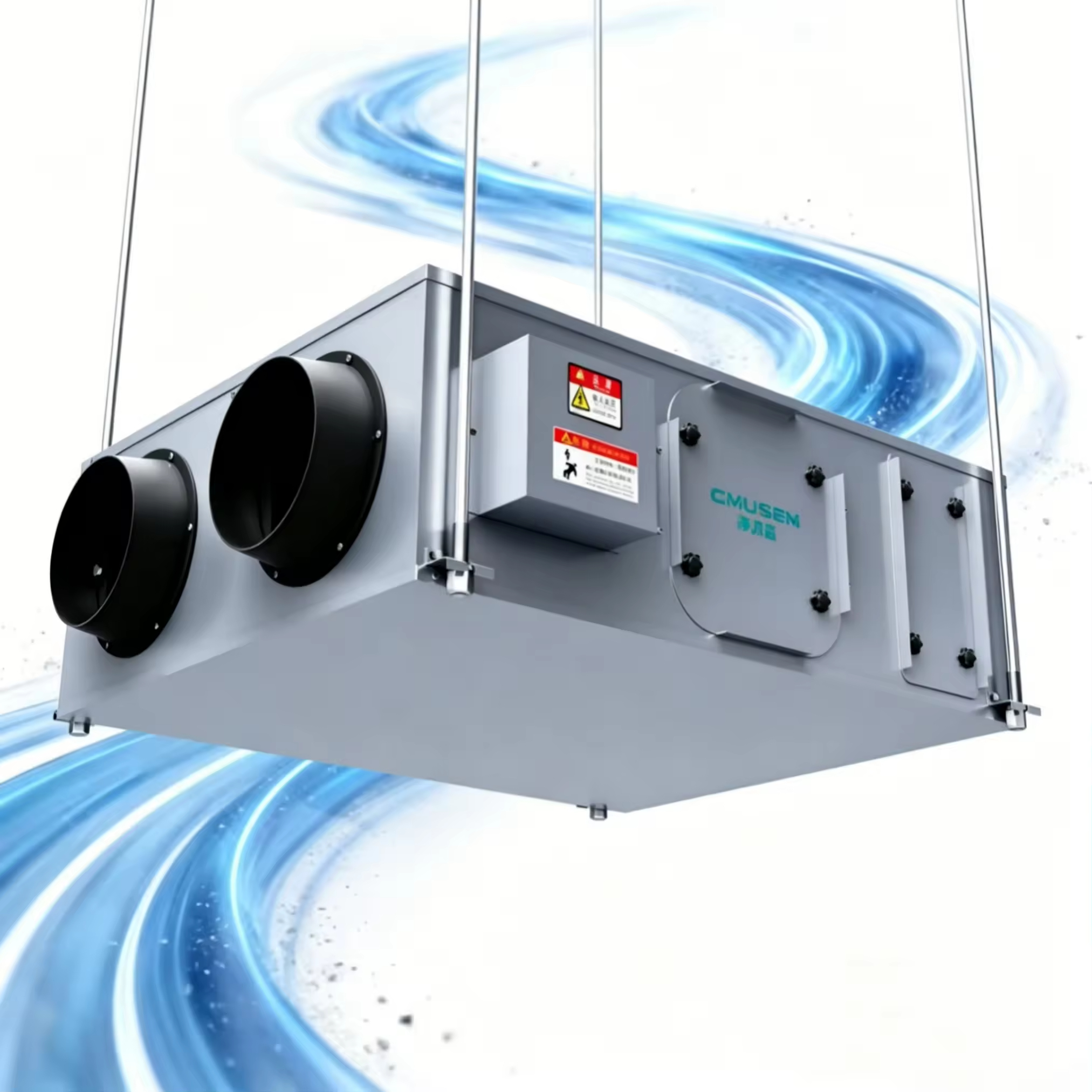
At its core, an ERV system is a heat and moisture recovery ventilation unit that connects two duct networks: one for fresh outdoor air intake and one for stale indoor air exhaust. The system operates silently and continuously, maintaining balanced air pressure throughout the home—a key requirement for Passive House certification. What sets ERV apart from standard ventilation systems is its dual heat and moisture exchange core.
When stale, warm indoor air is pushed out of the home, it passes through the ERV’s heat exchanger. Simultaneously, cold, fresh outdoor air is pulled into the unit. The exchanger transfers up to 80–90% of the heat from the outgoing stale air to the incoming fresh air. In winter, this pre-warms outdoor air before it circulates indoors, eliminating cold drafts and reducing the load on auxiliary heating systems. In summer, it extracts heat from incoming hot outdoor air, keeping indoor spaces cool without overworking air conditioning.
Unlike HRV (Heat Recovery Ventilation) systems, ERV units also transfer moisture between air streams—a critical feature for Passive House comfort. In dry winter climates, it retains indoor humidity to prevent dry skin, irritated respiratory tracts, and static air. In humid summer environments, it expels excess indoor moisture to prevent condensation, mold growth, and damp walls. This precise moisture regulation maintains optimal indoor humidity levels (40–60% year-round), a key Passive House comfort standard.
The primary goal of Passive House design is to minimize active energy consumption. Without ERV, forced fresh air exchange would create massive thermal loss, negating all the energy-saving benefits of airtight insulation and high-performance windows. ERV eliminates this trade-off by recycling thermal energy during ventilation, ensuring Passive Houses maintain their ultra-low energy consumption while still accessing fresh outdoor air. This balance is what allows Passive Homes to operate with little to no traditional heating or cooling systems year-round.
Controlled, filtered ventilation is a game-changer for indoor health in Passive Houses. ERV systems are equipped with high-efficiency filters that trap pollen, dust, pet dander, airborne bacteria, and outdoor pollutants before fresh air enters the home. Unlike natural ventilation, which lets in pollutants alongside fresh air, ERV provides purified air exchange 24/7. It also continuously flushes out accumulated CO₂ and indoor toxins, preventing the stuffy, fatiguing air common in sealed modern homes. For families, allergy sufferers, and long-term residents, this creates a consistently healthy living environment.
Excess moisture is one of the biggest threats to airtight energy-efficient homes. Trapped humidity condenses inside walls, ceilings, and insulation, leading to mold, mildew, rotting building materials, and poor structural integrity. ERV’s moisture regulation capability balances indoor humidity levels dynamically, eliminating condensation risks entirely. This protects the Passive House’s high-performance building envelope, extending the lifespan of insulation, windows, and structural components while reducing maintenance costs.
Traditional ventilation creates uncomfortable temperature fluctuations and cold or hot drafts. ERV distributes tempered, fresh air evenly throughout every room of the home, eliminating hot spots, cold zones, and stuffy corners. Whether in freezing winter or sweltering summer, the system maintains stable indoor temperatures and balanced humidity, delivering the uniform comfort that defines Passive House living. No more drafty windows, dry air in winter, or muggy indoor conditions in summer.
A common question among Passive House builders and homeowners is whether to choose ERV or HRV systems for their projects. While both support energy-efficient ventilation, ERV is more versatile for most global climates and modern Passive House designs.
HRV systems only transfer heat, not moisture. They work well in consistently dry climates but fail to regulate humidity in humid or variable weather, leading to overly dry indoor air in winter or trapped moisture in summer. ERV’s dual heat and moisture recovery makes it suitable for all climate zones, from cold temperate regions to humid subtropical areas. For universal Passive House compliance and year-round comfort, ERV ventilation is the more reliable, adaptable choice for most residential and commercial passive builds.
Passive House design succeeds because of its holistic approach to efficiency and comfort—no single component works in isolation. High-end insulation and airtight envelopes minimize energy loss, but ERV ventilation turns an ultra-efficient sealed structure into a livable, healthy home.
It solves the biggest drawback of airtight construction: stale, polluted, unbalanced indoor air. By recycling thermal energy, regulating humidity, and delivering continuous filtered fresh air, ERV systems uphold every core principle of Passive House design: maximum energy efficiency, superior indoor comfort, and long-term building durability.
For anyone designing, building, or renovating a Passive House, investing in a high-quality, correctly sized ERV ventilation system is not an upgrade—it’s a fundamental requirement for unlocking the full potential of passive sustainable architecture.
 18705226241


