


MVHR vs Extract Ventilation – Which Delivers Better IAQ?
Indoor Air Quality (IAQ) has become one of the most critical factors for modern home comfort and health. With new builds and renovated properties becoming increasingly airtight for energy efficiency, stale air, excess humidity, elevated CO₂ levels, and airborne pollutants can easily accumulate indoors without proper ventilation.
Two mainstream residential ventilation solutions dominate the market: MVHR (Mechanical Ventilation with Heat Recovery) and Extract-Only Ventilation (also known as mechanical extract ventilation). While both systems aim to refresh indoor air, their working principles, air filtration capabilities, humidity control, and overall IAQ performance differ drastically.
For homeowners, self-builders, and HVAC installers, choosing between MVHR and extract ventilation directly impacts long-term indoor health, mould risk, energy bills, and living comfort. In this article, we compare the two systems head-to-head, focusing entirely on IAQ performance, and help you decide which option is best for your property.
Extract-only ventilation is a simple, cost-effective mechanical ventilation system commonly found in older homes, retrofits, and budget residential projects. The system relies solely on exhaust fans installed in wet rooms—including bathrooms, kitchens, and utility rooms—to pump stale, damp, and polluted indoor air outside.
Unlike balanced ventilation systems, it has no dedicated fresh air supply mechanism. To replace the extracted air, the home depends entirely on passive inlet sources, such as window trickle vents, door gaps, and wall cracks. This creates a consistent negative indoor pressure that pulls outdoor air into the building uncontrollably.
As a basic ventilation solution, extract ventilation requires minimal installation and maintenance, with low upfront costs. However, its passive air intake design creates inherent limitations for consistent, high-quality indoor air.
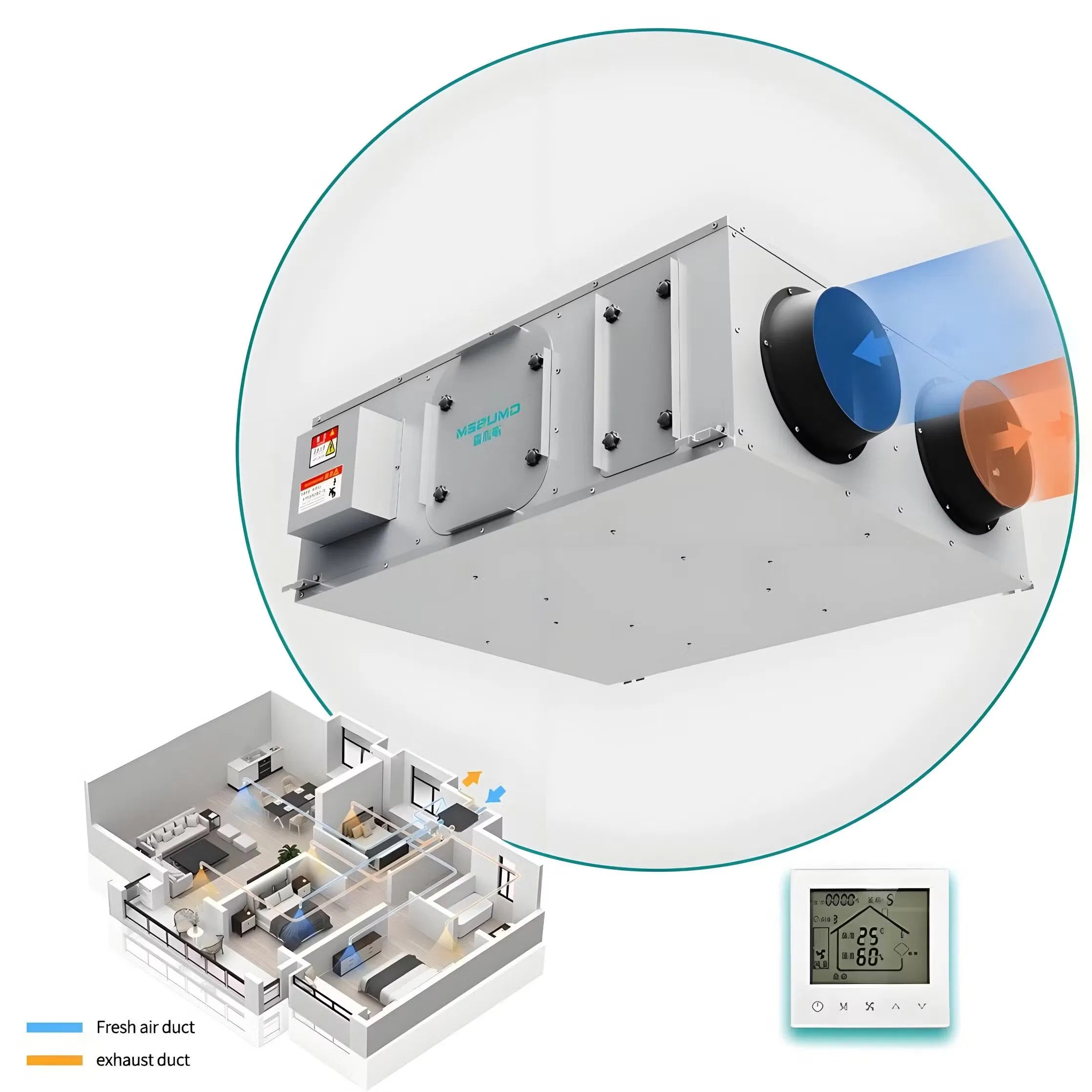
MVHR is a balanced mechanical ventilation system designed for airtight, energy-efficient homes and passive house builds. It features dual fan systems: one fan extracts stale, humid air from wet rooms, while another simultaneously supplies fresh outdoor air to living rooms, bedrooms, and other habitable spaces.
The core advantage of MVHR lies in its integrated heat exchanger and high-grade air filtration system. Before fresh air enters the home, it passes through precision filters to block airborne contaminants. Meanwhile, the heat exchanger recovers up to 95% of the heat from outgoing stale air to pre-warm incoming fresh air, eliminating cold drafts and excessive energy loss.
By delivering controlled, filtered, and balanced air exchange 24/7, MVHR creates a stable, healthy indoor environment—making it the gold standard for premium IAQ in modern low-energy homes.
To understand which system delivers superior indoor air quality, we break down their performance across the most critical IAQ metrics: air filtration, pressure balance, humidity control, pollutant management, and air consistency.
This is the biggest IAQ gap between the two systems. Extract ventilation offers zero active filtration. All incoming outdoor air enters the home through unfiltered gaps and vents, allowing pollen, road dust, PM2.5 particles, traffic fumes, and outdoor allergens to flow freely indoors. For homes near busy roads, industrial areas, or green spaces with high pollen levels, this significantly worsens indoor air pollution and triggers allergy symptoms.
In contrast, MVHR comes with standard high-performance F7 or H11/H13 filters that trap 85–99% of airborne fine particles, dust, pollen, and airborne bacteria before fresh air circulates indoors. This dedicated filtration system continuously purifies incoming air, creating hypoallergenic indoor conditions ideal for allergy sufferers, children, and people with respiratory sensitivities.
Extract-only ventilation’s negative pressure design causes serious hidden IAQ issues. When indoor air is constantly extracted without matched supply air, negative pressure pulls unconditioned air from unintended sources—including roof voids, wall cavities, garages, and subfloor spaces. This often draws in mould spores, dust, damp air, and even odours from hidden building gaps, severely compromising indoor air quality.
MVHR maintains neutral air pressure via balanced supply and extract airflow. There is no uncontrolled air infiltration from building gaps. All fresh air entering the home is channelled through the system’s filtered ducts, ensuring every cubic metre of indoor air is clean, controlled, and predictable.
Excess humidity is the primary cause of domestic mould, condensation, and damp problems. Extract ventilation only removes humidity intermittently when fans are running. It cannot deliver continuous whole-home moisture control, leading to fluctuating indoor humidity levels. In airtight homes, residual moisture easily builds up on windows, walls, and ceilings, fostering mould and mildew growth.
MVHR provides 24/7 continuous whole-home humidity regulation. It steadily exhausts damp air generated from cooking, showering, and daily activities, maintaining an optimal indoor humidity range of 40–60% RH. Its consistent ventilation eliminates condensation and mould risks far more effectively than intermittent extract fans, delivering long-term healthy indoor humidity levels.
Extract ventilation only targets wet rooms, ignoring stale air accumulation in bedrooms, living rooms, and home offices. These occupied spaces often suffer from rising CO₂ levels, stuffy air, poor oxygen circulation, and lingering odours, which cause fatigue, poor focus, and discomfort—especially during nighttime sleep or daytime work hours.
MVHR distributes fresh, oxygen-rich air evenly to all habitable rooms while continuously extracting stale, CO₂-heavy air. It stabilises indoor CO₂ levels at healthy concentrations all day long, eliminating stuffiness and creating a consistently breathable indoor environment.
Unfiltered passive air intake in extract ventilation often brings cold outdoor air straight into living spaces in winter, causing uncomfortable cold drafts and uneven room temperatures. Many homeowners end up closing trickle vents to avoid drafts, which completely negates ventilation effects and worsens IAQ issues.
MVHR’s heat recovery core pre-conditions incoming fresh air, ensuring supplied air is always close to indoor temperature. It delivers fresh air without drafts, balancing IAQ and thermal comfort perfectly year-round.
Pros
Low upfront cost and simple installation for basic ventilation needs
Effective at spot moisture removal for bathrooms and kitchens during use
Minimal maintenance requirements for casual residential use
Cons
No air filtration, allowing outdoor pollutants and allergens indoors
Negative pressure causes unfiltered infiltration from wall and roof cavities
Poor whole-home humidity control, high mould and condensation risk
Stagnant stale air and high CO₂ in living areas and bedrooms
Drafty, unconditioned incoming air reduces thermal comfort
Pros
High-grade filtration blocks PM2.5, pollen, dust, and airborne contaminants
Balanced neutral pressure eliminates unfiltered air infiltration
Continuous whole-home humidity control prevents mould and condensation
Stable low CO₂ levels and consistent fresh air circulation in all rooms
Draft-free, temperature-conditioned fresh air for maximum comfort
Cons
Higher upfront installation cost compared to extract-only systems
Requires regular filter replacement to maintain top-tier IAQ performance
Professional commissioning is essential for optimal airflow balance
Choose Extract Ventilation if: You own an older, non-airtight home with existing natural ventilation, have a tight renovation budget, and only need basic spot ventilation for bathrooms and kitchens. It works adequately for loosely built properties with consistent natural air exchange.
Choose MVHR for superior IAQ if: You have a new build, passive house, or airtight renovated home, prioritise family health and allergy control, live in a polluted or high-humidity area, or want consistent year-round fresh air, zero condensation, and stable indoor humidity. For modern energy-efficient dwellings, MVHR is the only solution that delivers reliable, high-quality whole-home air quality.
When it comes to pure indoor air quality performance, MVHR outperforms standard extract ventilation by a significant margin. Extract ventilation solves surface-level damp and odour issues but cannot address core IAQ problems like pollutant infiltration, stale living room air, unstable humidity, and mould risks in airtight homes.
MVHR’s balanced airflow, professional filtration, continuous humidity regulation, and whole-home air purification create a truly healthy indoor environment. While extract ventilation serves as a budget basic option, MVHR is the long-term, health-focused investment for homeowners who prioritise clean, fresh, and comfortable indoor air year-round.
 18705226241


