


How Modern HVAC Technology Reshapes Indoor Air Quality Standards
In an era where people spend nearly 90% of their time indoors—whether in residential homes, commercial offices, schools, or industrial facilities—indoor air quality (IAQ) has evolved from a minor comfort consideration to a critical determinant of human health, productivity, and overall well-being. For decades, traditional HVAC systems focused primarily on temperature regulation and basic ventilation, failing to address hidden indoor air pollutants, humidity imbalances, and poor air circulation. Today, rapid advancements in modern HVAC technology are completely reshaping global indoor air quality standards, setting new benchmarks for clean, safe, and sustainable indoor environments.
Conventional heating, ventilation, and air conditioning systems were designed around a single core goal: maintaining consistent indoor temperatures. Their functional limitations have long created gaps in IAQ management. Most traditional units rely on simple air filtration that only captures large particulate matter like dust and hair, leaving fine particulate matter (PM2.5), volatile organic compounds (VOCs), mold spores, bacteria, and viruses circulating in indoor air.
Additionally, outdated HVAC designs often suffer from uneven ventilation and poor humidity control. Excess indoor humidity fosters mold and mildew growth, while overly dry air irritates respiratory tracts and skin. Stagnant air pockets caused by inefficient air circulation also trap pollutants indoors, leading to common indoor health issues including allergies, asthma flare-ups, fatigue, and poor concentration. These shortcomings exposed the urgent need for upgraded HVAC solutions that integrate comprehensive IAQ management.
One of the most impactful upgrades in modern HVAC technology is the adoption of advanced multi-stage filtration, which has redefined industry air purification standards. Unlike basic single-layer filters, modern HVAC systems combine pre-filters, HEPA high-efficiency filters, activated carbon filters, and electrostatic precipitation modules. This layered filtration structure effectively intercepts and eliminates PM2.5, pollen, pet dander, VOCs, formaldehyde, and airborne pathogens.
Many premium commercial and residential HVAC systems now integrate medical-grade filtration technology, raising the minimum IAQ requirements for ordinary buildings. This advancement has pushed global industry standards to mandate finer air purification capabilities for new HVAC installations, especially in high-traffic public spaces and healthcare facilities.
Traditional fixed ventilation modes often lead to insufficient fresh air intake or excessive energy waste. Modern smart HVAC systems solve this problem with intelligent real-time monitoring and adaptive ventilation control. Equipped with built-in IAQ sensors that detect real-time levels of CO2, PM2.5, VOCs, and humidity, these systems automatically adjust ventilation rates and air volume based on indoor air conditions and occupancy levels.
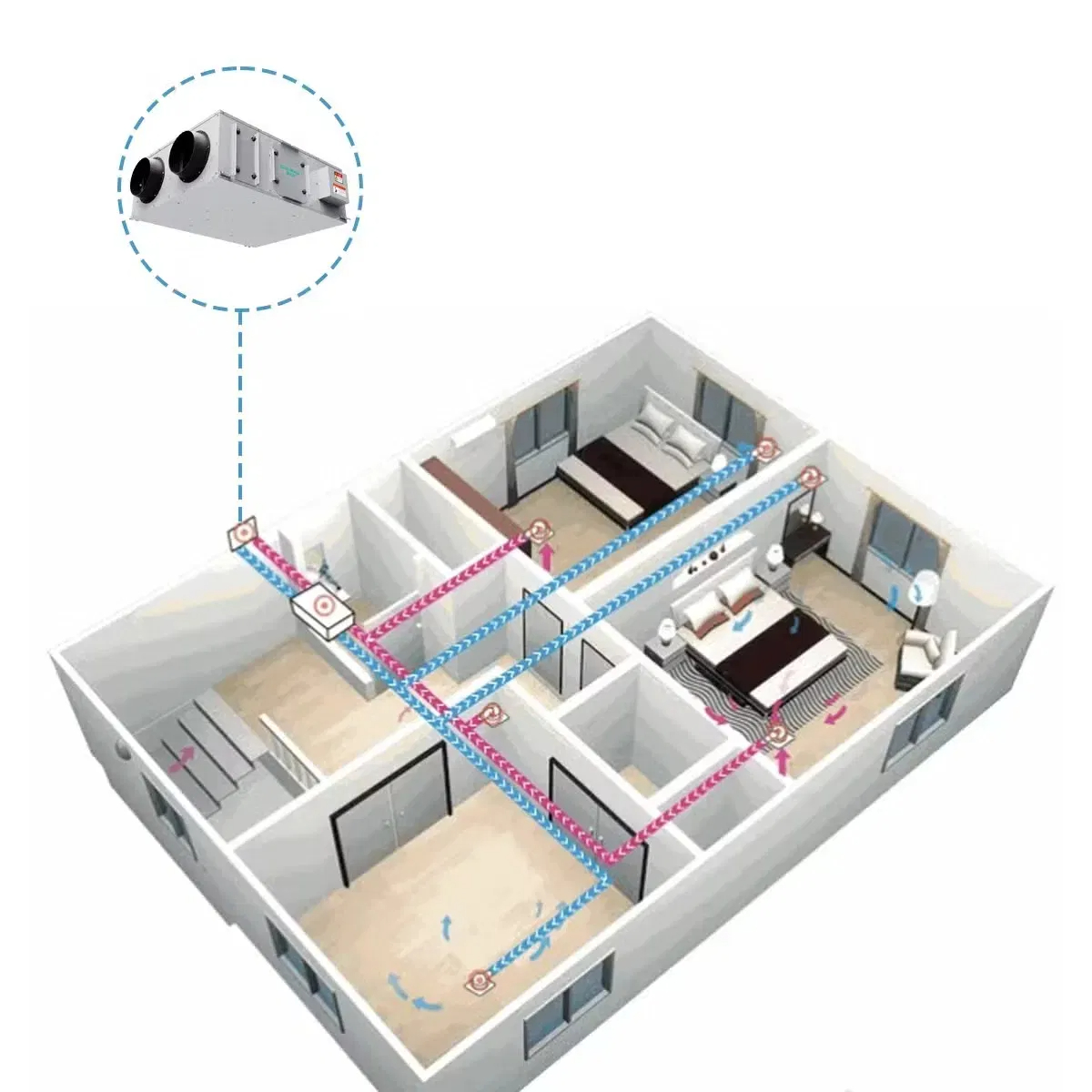
Demand-controlled ventilation (DCV) technology, a core innovation in modern HVAC design, ensures a continuous supply of filtered outdoor fresh air while exhausting polluted indoor air. It eliminates stale air accumulation and maintains optimal oxygen levels indoors. This intelligent ventilation mechanism has become a key indicator of updated IAQ standards, replacing the rigid, one-size-fits-all ventilation rules of the past.
Humidity balance is a long-overlooked core of indoor air quality. Modern integrated HVAC systems achieve precise humidity control alongside temperature regulation, maintaining indoor relative humidity within the healthy range of 40%–60%. This range inhibits mold and bacterial reproduction, reduces airborne allergen activity, and optimizes human respiratory comfort.
Moreover, advanced heat recovery ventilation (HRV) and energy recovery ventilation (ERV) technologies recover heat and moisture from exhausted indoor air, minimizing energy loss during fresh air exchange. These technologies balance IAQ improvement with energy efficiency, setting a new sustainable standard for green building indoor environment management.
To adapt to rising public health demands, modern HVAC systems widely integrate UV-C sterilization, plasma air purification, and photocatalytic oxidation technologies. These built-in modules continuously eliminate airborne bacteria, viruses, and harmful chemical pollutants without producing secondary pollution. Unlike traditional standalone air purifiers, HVAC-embedded purification technology realizes full-space, all-round air cleaning through systemic air circulation, thoroughly upgrading indoor sanitary air quality standards.
The iterative innovation of HVAC technology has directly driven the revision and upgrading of international and regional IAQ standards. Previously, most building air quality regulations only stipulated basic temperature and ventilation volume indicators. Today, authoritative institutions including ASHRAE have updated their standards to incorporate detailed indicators for fine particulate matter, VOC concentration, CO2 levels, and humidity control—all driven by modern HVAC technological capabilities.
In green building certification systems such as LEED and BREEAM, high-performance smart HVAC systems have become a core scoring item for indoor environmental quality. Buildings equipped with intelligent, high-efficiency HVAC solutions can significantly improve their green certification grades, further promoting the industry-wide popularization of new IAQ standards. Meanwhile, more countries and regions have begun to formulate mandatory HVAC system IAQ performance specifications for new buildings, accelerating the phase-out of backward, low-efficiency HVAC equipment.
As artificial intelligence, IoT connectivity, and low-carbon technology continue to develop, modern HVAC systems will become more precise, energy-saving, and intelligent. Future HVAC solutions will realize full-life-cycle IAQ monitoring, automatic pollutant early warning, and personalized indoor environment adjustment, creating customized healthy air environments for different scenarios and crowds.
In the context of global low-carbon and healthy building development, HVAC technology will no longer be limited to basic temperature adjustment and ventilation. It will evolve into a comprehensive indoor air environment management system, continuously leading the iteration of IAQ standards and protecting public indoor health.
Modern HVAC technology is far more than a building comfort device—it is the core pillar of modern indoor air quality management. From single temperature control to integrated purification, ventilation, humidity regulation, and intelligent monitoring, HVAC innovations have completely subverted traditional indoor environment management modes and reshaped global IAQ standards. For businesses, property managers, and homeowners, upgrading to modern HVAC systems is no longer a luxury choice, but a necessary investment in health, comfort, and sustainable building development.
 18705226241


