


How ERVs Recover Heat & Moisture to Reduce HVAC Waste
Modern buildings are designed to be tightly sealed to boost energy efficiency, but this design creates a major HVAC dilemma. Tight envelopes prevent conditioned indoor air from escaping, yet they also trap stale, polluted air inside. To maintain healthy indoor air quality, ventilation is mandatory. Unfortunately, traditional ventilation methods come with a steep cost: massive heating and cooling waste. Unconditioned outdoor air rushes in, forcing HVAC systems to constantly reheat, recool, and readjust indoor humidity. This is exactly where Energy Recovery Ventilators (ERVs) make a game-changing difference. By efficiently recovering residual heat and moisture from exhaust air, ERVs drastically cut unnecessary HVAC load, eliminate energy waste, and deliver balanced ventilation without sacrificing indoor comfort.
Most homeowners and building managers overlook how much energy standard ventilation wastes. When you open windows or run basic exhaust fans, you throw away fully conditioned indoor air — air that your HVAC system has already heated, cooled, and humidified or dehumidified at a cost.
In winter, warm, moisture-rich indoor air is exhausted, while dry, frigid outdoor air floods in. Your heating system has to work overtime to raise temperatures and restore comfortable humidity levels. In summer, cool indoor air escapes, and hot, humid outdoor air enters the building. Your air conditioner runs longer and consumes more electricity to cool down the space and remove excess moisture. Year-round, this unregulated air exchange creates repetitive, avoidable HVAC waste, driving up utility bills and shortening the lifespan of heating and cooling equipment.
Without a recovery system, ventilation and energy efficiency become conflicting goals. ERVs solve this conflict by recycling the energy that would otherwise be lost during air exchange.
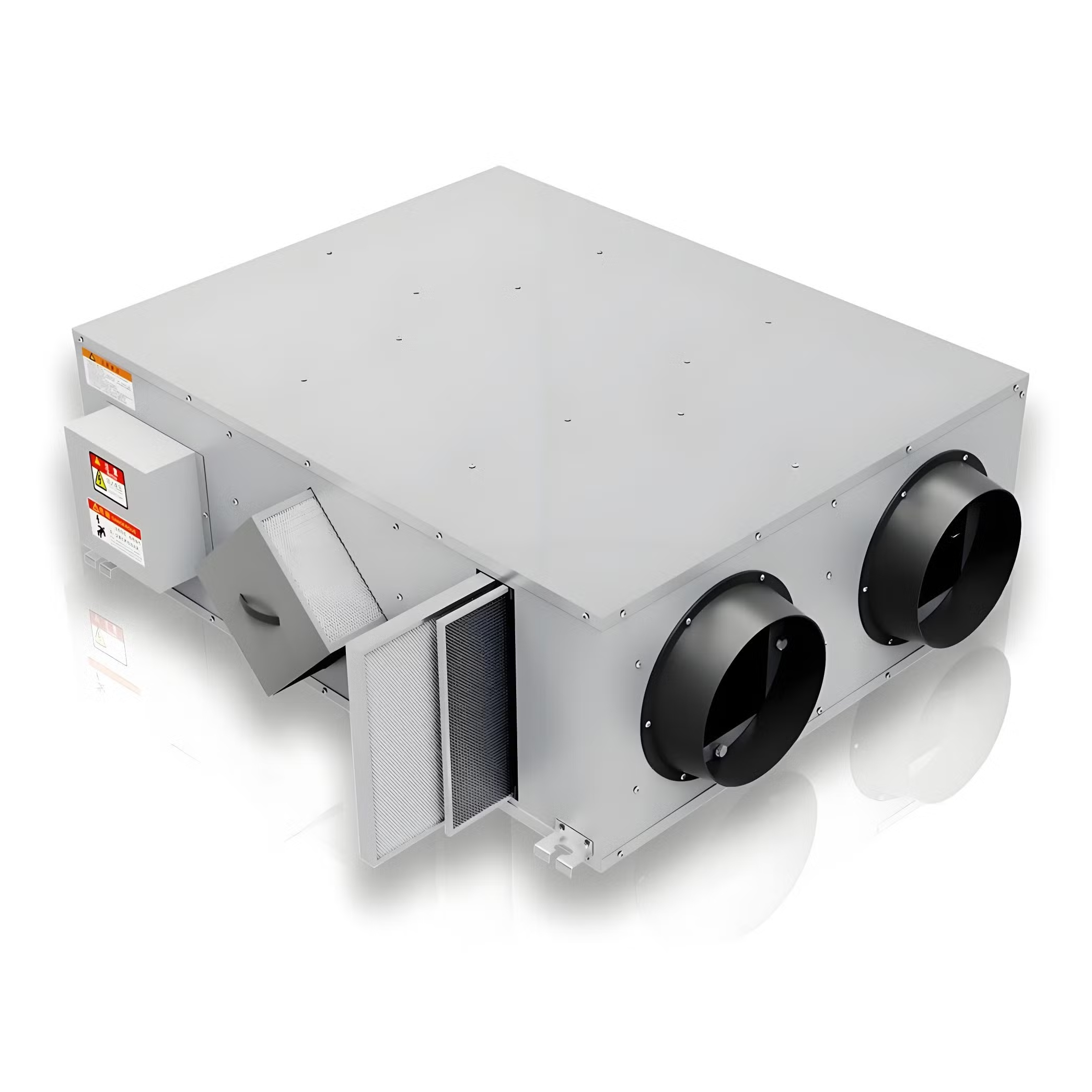
The energy-saving power of ERVs lies in their high-performance heat and moisture exchange core, the central component that separates ERVs from ordinary ventilation fans. ERVs operate with two independent, simultaneous airflow streams: one for exhausting stale indoor air and one for intaking fresh outdoor air, with zero cross-contamination between the two airflows.
As stale, conditioned indoor air is pushed out of the building, it passes directly through the ERV core. The core absorbs the residual heat or coolness carried by the exhaust air, as well as its moisture content. Right after this energy absorption, incoming fresh outdoor air flows through the same core. The fresh air is pre-conditioned by the stored heat, coolness, and moisture before it circulates into the indoor space.
This passive pre-conditioning process is the key to reducing HVAC workload. Instead of letting your HVAC system adjust the temperature and humidity of incoming air from scratch, the ERV handles the majority of the conditioning work in advance. The result is far less strain on your heating and cooling systems, and significantly reduced energy waste.
During cold seasons, indoor air is warm and humid after being heated by your HVAC system. When exhausted, this air transfers its heat and moisture to the ERV core. Cold, dry outdoor air picks up this stored heat and moisture as it enters the building. The pre-warmed, slightly humidified fresh air minimizes heat loss and prevents dry indoor air, eliminating the need for your heater to run continuously to compensate for ventilation-induced temperature drops.
In hot, humid weather, indoor air is cool and dehumidified by air conditioning. As stale indoor air exits, it leaves its cool energy and low-moisture signature in the ERV core. Hot, humid incoming outdoor air is pre-cooled and dehumidified through the core before entering the room. This drastically reduces the latent and sensible load on your air conditioner, stopping humidity buildup and avoiding overworking the cooling system.
By pre-conditioning incoming fresh air, ERVs reduce overall HVAC energy consumption by 20% to 35% in tightly sealed residential and commercial buildings. The eliminated repetitive heating, cooling, and dehumidifying work directly translates to lower electricity and gas costs every month.
Constant temperature and humidity adjustments are the main cause of HVAC system fatigue. With an ERV handling pre-conditioning, your heating and cooling equipment runs fewer cycles and operates under lighter loads. This reduces mechanical wear, lowers maintenance costs, and extends the service life of your entire HVAC system.
Unlike window ventilation that causes drafts, temperature swings, and unbalanced humidity, ERVs deliver consistent, comfortable fresh air year-round. They flush out CO₂, VOCs, and indoor pollutants while retaining beneficial heat and moisture, creating a healthier, more stable indoor environment without energy waste.
Reducing HVAC waste is essential for green building standards and energy-efficient construction. ERVs turn mandatory ventilation from an energy liability into an energy-efficient asset, helping residential homes, offices, and commercial buildings meet energy-saving certifications and reduce overall carbon footprints.
Ventilation does not need to be a source of energy loss. Traditional ventilation forces building owners to choose between fresh indoor air and low HVAC costs. ERVs completely remove this compromise by intelligently recovering wasted heat and moisture during every air exchange cycle.
By investing in an ERV system, you are not just upgrading your ventilation — you are optimizing your entire HVAC system’s efficiency. It is a simple, effective, and year-round solution to cut energy waste, lower operational costs, and maintain premium indoor air quality for any sealed building.
 18705226241


