


If you have heard the term “wall air intake ERV” while researching home ventilation, you may wonder exactly how this compact device delivers fresh air without sending your heating and cooling bills soaring. Unlike bulky central ventilation systems that require extensive ductwork, a wall air intake ERV is a duct-free, through-wall unit built to maintain balanced airflow, preserve indoor thermal energy, and continuously improve indoor air quality. Let’s break down its working principle, core components and full cycle step by step.
ERV stands for Energy Recovery Ventilator. A wall air intake ERV is a standalone ventilation unit installed directly through an exterior wall. It handles two air streams at the same time: stale air leaving your room and fresh outdoor air entering. Its biggest difference from simple wall vents or exhaust fans is the energy recovery core, which transfers heat and moisture between the two airflows instead of simply dumping conditioned indoor air outside.
This design makes it ideal for sealed modern homes, apartments, home gyms, home offices and renovation projects where running long ventilation ducts is impractical or too costly.
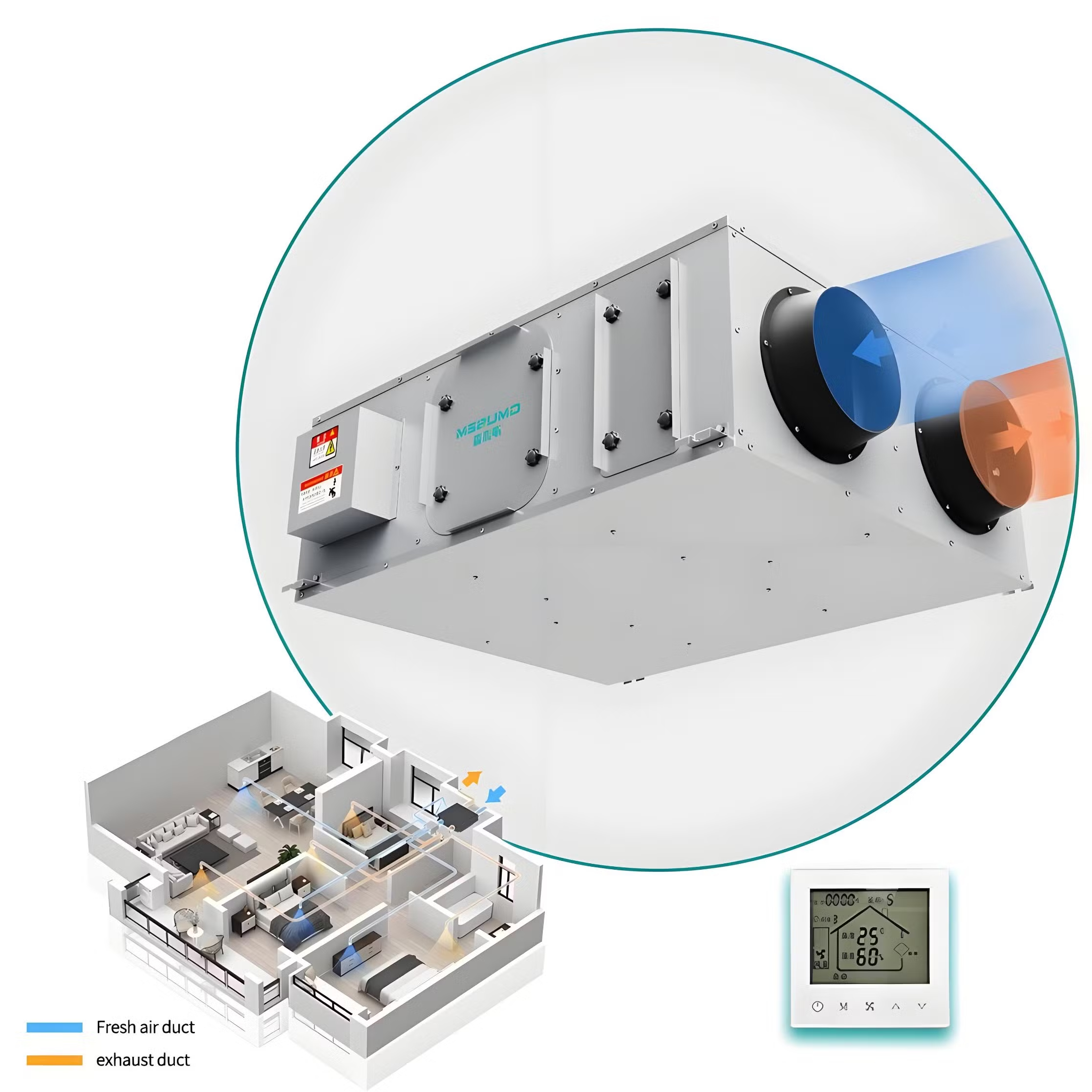
To understand how it works, it helps to know its main parts:
Two low-noise DC fans: One fan pulls in fresh outdoor air, the other pushes stale indoor air out. Many models support adjustable fan speeds to control airflow volume.
Energy recovery core: The heart of the ERV. It is a specially designed permeable core that allows heat and moisture to pass between the incoming and outgoing air without mixing the two streams.
Multi-stage filters: Located at the air intake side, these filters trap dust, pollen, pet dander, PM2.5 and other outdoor contaminants before fresh air enters your living space.
Wall penetration inlet and outlet: Separate passages for incoming fresh air and exhaust air, preventing cross-contamination.
Control panel: Often with speed adjustment, timer and optional humidity sensors to run the unit automatically.
Insulated housing: Reduces heat loss and suppresses operational noise.
The whole process runs continuously when the unit is switched on.
The intake fan pulls outside air through the wall air intake. Before moving further, the air first passes through the built-in filter. This filtration stage blocks pollen, road dust and airborne particles, so the air entering your room stays clean.
Meanwhile, the exhaust fan pulls stale, moisture-laden indoor air out of the room. This air carries carbon dioxide, cooking fumes, volatile organic compounds, excess humidity and unpleasant odours that build up in tightly sealed buildings. This contaminated air flows toward the recovery core before being discharged outdoors.
The two air streams flow on opposite sides of the ERV core. They never mix, but heat and humidity transfer across the core material.
In winter: Warm exhaust air releases its heat to the cold incoming fresh air. The fresh air is pre-warmed before entering the room, so your heater does not need to work overtime to raise its temperature.
In summer: Cool indoor exhaust air pre-cools the hot incoming outdoor air. It also transfers moisture, helping to keep indoor humidity stable and easing the load on air conditioners and dehumidifiers.
This is where the energy savings come from. Instead of throwing away all the thermal energy you have paid to create, the ERV recovers most of it.
After energy exchange, the pre-conditioned fresh air flows into your room. At the same time, the treated exhaust air is pushed out through the exterior wall. The system maintains balanced positive and negative pressure, avoiding uncomfortable drafts, whistling noises or uncontrolled air leakage through window gaps.
Many people mix up ERV, HRV and basic exhaust fans.
A simple exhaust fan only blows stale air out. It creates negative pressure, pulling unfiltered, untreated air in through cracks, with zero heat recovery.
An HRV, or Heat Recovery Ventilator, transfers only heat, with very little moisture exchange.
A wall air intake ERV transfers both heat and moisture. It balances humidity year-round: retaining moisture in dry winter months and removing excess humidity in muggy summer weather.
Most modern wall air intake ERVs are not limited to manual speed control. Many include humidity and CO₂ sensors. When indoor humidity rises after showering or exercising, or when CO₂ levels climb as people stay inside for hours, the unit automatically ramps up airflow. Once air quality returns to the preset level, it drops back to a quieter, lower-speed mode to save power.
One frequent misunderstanding is that the ERV “heats or cools air by itself”. It does not generate heat or cold. It only recycles the energy already present in your indoor exhaust air to pre-treat incoming fresh air. It is a ventilation solution, not an HVAC replacement.
Another myth is that it will bring in cold air in winter. Thanks to the recovery core, the incoming air arrives far closer to your indoor temperature than air from an open window. With proper filters, it also avoids the dust and allergens that flood in when you open windows.
A wall air intake ERV works by running two separate, simultaneous air streams through an energy recovery core. It filters incoming fresh air, flushes out stale indoor pollutants, and recycles heat and moisture that would otherwise be lost. It delivers consistent, comfortable ventilation without the high energy penalty of opening windows, and it fits spaces where large ducted ventilation systems are not feasible.
If you want steady fresh air, stable humidity and lower year-round energy bills, this compact wall-mounted ERV offers an elegant, easy-to-install ventilation solution for modern living spaces.
 18705226241


