


If you’ve ever noticed stuffy air, excess humidity, or even a faint musty smell in your home, chances are your space could use better ventilation. But have you ever stopped to wonder: how do home ventilation systems actually work? These unsung heroes of indoor air quality quietly keep our homes fresh, healthy, and comfortable—without us even noticing most of the time. In this blog, we’ll break down the basics of home ventilation, its key types, and the science behind how it keeps the air in your home clean and balanced.
First, let’s start with the “why” before the “how.” Indoor air can be up to 5 times more polluted than outdoor air, according to the EPA. Everyday activities like cooking, showering, cleaning, and even breathing release moisture, carbon dioxide, volatile organic compounds (VOCs), and other pollutants. Without proper ventilation, these contaminants get trapped, leading to poor air quality, mold growth, increased energy costs, and even health issues like allergies or respiratory irritation. A home ventilation system solves this by replacing stale indoor air with fresh outdoor air—while also managing temperature and humidity to keep your home comfortable.
At its simplest, home ventilation has one primary objective:air exchange. This means removing contaminated, stale indoor air and replacing it with clean, fresh outdoor air. But it’s not just about “blowing air around”—effective ventilation systems do this efficiently, without wasting energy (like letting conditioned air escape in the summer or winter) and without bringing in excess dust, pollen, or outdoor pollutants.
To achieve this, most ventilation systems use a combination of three key mechanisms: air intake (bringing in fresh air), air exhaust (removing stale air), and air distribution (circulating air throughout the home). The way these mechanisms work together depends on the type of ventilation system you have.
Not all home ventilation systems are the same—they’re designed to fit different home types, climates, and needs. Let’s break down the most common types and how each one operates.
Natural ventilation is the oldest and simplest form of home ventilation—it relies on natural forces like wind and temperature differences to move air. Think of opening a window on a breezy day: wind pushes fresh outdoor air into your home, while stale indoor air escapes through other windows, doors, or cracks. This is “cross-ventilation,” a common type of natural ventilation.
Another form of natural ventilation is “stack effect”: warm air rises, so stale, warm air in your home escapes through high openings (like attic vents or upper windows), while cooler, fresh air is drawn in through lower openings (like ground-floor windows or vents). Natural ventilation requires no electricity and is cost-effective, but it’s also unreliable—it depends on weather conditions. On calm, still days, it may not work at all, and in extreme climates, it can let in too much heat or cold, wasting energy.
Mechanical exhaust ventilation uses fans to actively remove stale air from the home, creating negative pressure that draws fresh outdoor air in through cracks, windows, or dedicated intake vents. This system is most commonly used in bathrooms, kitchens, and laundry rooms—areas where moisture and pollutants are most concentrated.
For example, your bathroom exhaust fan turns on when you shower, sucking out humid air that would otherwise cause mold or mildew. Similarly, a kitchen range hood exhausts smoke, grease, and cooking fumes. Some homes have a whole-house exhaust system, which uses a central fan connected to ducts in multiple rooms to remove stale air throughout the house. The downside? Because it relies on “passive” intake (air coming in through gaps), it can bring in outdoor pollutants like dust or pollen, and it may not distribute fresh air evenly.
Mechanical supply ventilation is the opposite of exhaust ventilation: it uses a fan to actively bring fresh outdoor air into the home, creating positive pressure that pushes stale air out through exhaust vents, windows, or cracks. This system ensures that fresh air is distributed evenly throughout the home, rather than relying on passive intake.
Fresh air is typically drawn in through a vent on the exterior of the home, filtered to remove dust, pollen, and other pollutants, then distributed through ducts to different rooms. This is ideal for homes with tight construction (like modern energy-efficient homes), where natural ventilation is limited. The downside? It can increase energy costs if the incoming air isn’t conditioned (heated or cooled) before being distributed.
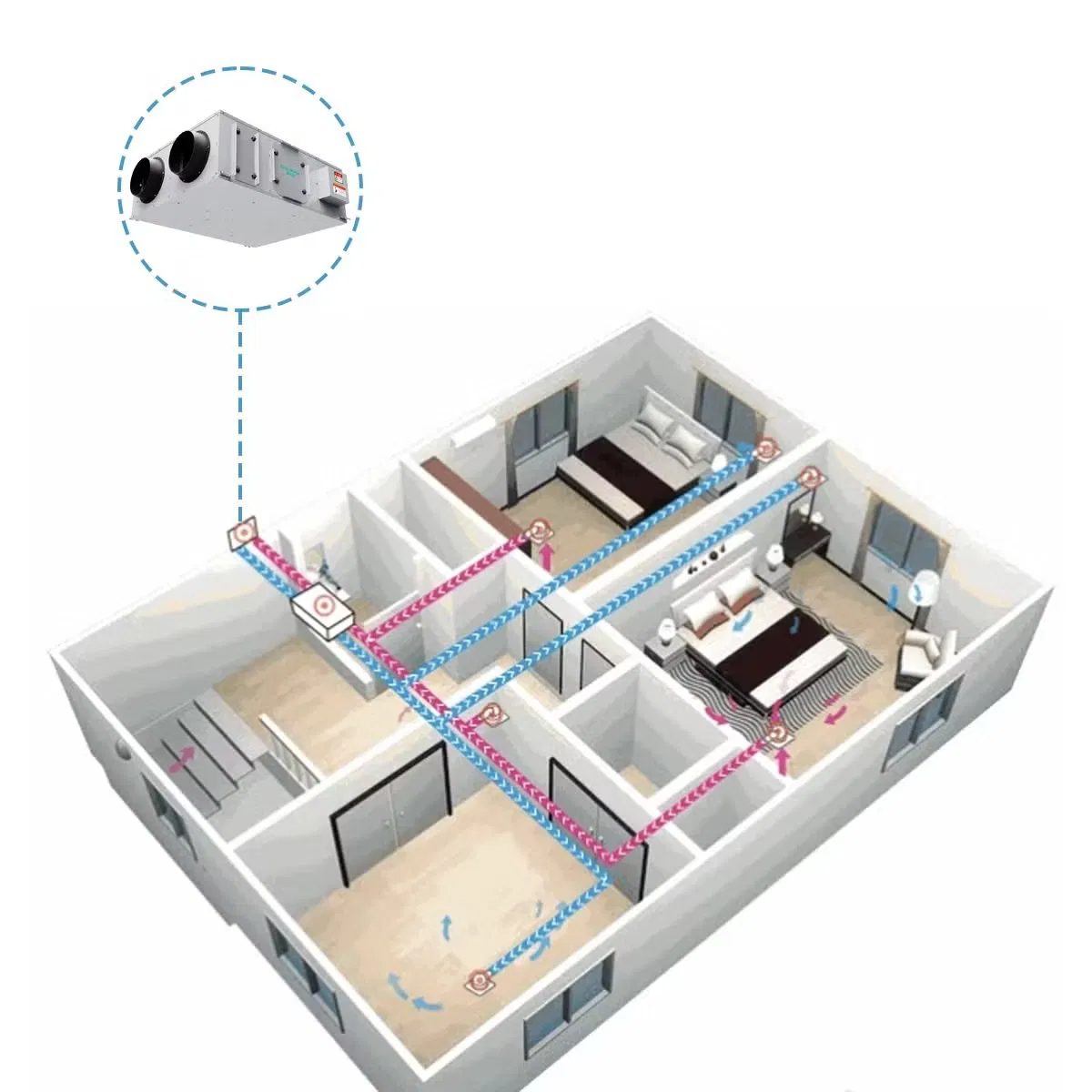
Balanced ventilation systems combine the best of supply and exhaust ventilation: they have both a supply fan to bring in fresh air and an exhaust fan to remove stale air, keeping the home’s air pressure balanced (neither positive nor negative). This ensures even air exchange, no energy waste from conditioned air escaping, and better control over indoor air quality.
Many balanced systems also include a heat recovery ventilator (HRV) or energy recovery ventilator (ERV) to save energy. These devices transfer heat (and sometimes moisture) between the outgoing stale air and incoming fresh air. For example, in the winter, the warm stale air leaving your home heats the cold fresh air coming in—reducing the load on your furnace. In the summer, the cool stale air cools the warm incoming air, easing the burden on your AC. This makes balanced ventilation the most efficient and effective option for most modern homes.
No matter which type of system you have, most home ventilation setups share a few key components:
Fan(s): The heart of mechanical systems—supply fans bring in fresh air, exhaust fans remove stale air. Fans vary in size and power depending on the home’s square footage and ventilation needs.
Ducts: Used to distribute fresh air throughout the home (supply ducts) and remove stale air (exhaust ducts). Ducts should be properly sealed to prevent air leaks and energy waste.
Filters: Found in supply vents and balanced systems—they trap dust, pollen, pet dander, and other outdoor pollutants before fresh air enters the home. Regular filter changes are essential for optimal performance.
Controls: Thermostats, timers, or humidity sensors that turn the system on/off or adjust fan speed. For example, bathroom exhaust fans may have a humidity sensor that turns on automatically when moisture levels rise.
Heat/Energy Recovery Unit (HRV/ERV): A feature of balanced systems that saves energy by transferring heat/moisture between incoming and outgoing air.
We’ve touched on this earlier, but it’s worth emphasizing: good home ventilation does more than just keep the air smelling fresh. It:
Prevents mold and mildew growth by reducing excess humidity.
Improves indoor air quality by removing VOCs, carbon dioxide, and other pollutants.
Reduces energy costs (especially with HRV/ERV systems) by reusing heat from outgoing air.
Enhances comfort by maintaining consistent temperature and humidity levels.
Protects your home’s structure by preventing moisture damage to walls, ceilings, and furniture.
Home ventilation systems may not be the most glamorous part of your home, but they’re essential for keeping your space healthy and comfortable. Whether you rely on simple natural ventilation, a mechanical exhaust fan, or a high-efficiency balanced system with an HRV/ERV, the core principle remains the same: replacing stale, polluted air with fresh, clean air.
If you’re unsure which ventilation system is right for your home, consider factors like your climate, home size, and construction type. And remember—regular maintenance (like changing filters, cleaning ducts, and checking fans) is key to keeping your ventilation system working efficiently for years to come.
Now that you know how home ventilation systems work, you can appreciate the quiet work they do to keep your home’s air fresh and healthy. Here’s to breathing easier!
 18705226241


