


Air quality is one of the quietest yet most decisive factors behind profitable livestock farming. Inside enclosed barns, ammonia, hydrogen sulfide, fine dust, mold spores, carbon dioxide and airborne pathogens build up rapidly. When these pollutants linger, they irritate animal respiratory tracts, suppress feed conversion, raise disease risk and drag down production. Traditional exhaust fans can push contaminated air out, yet they often create cold drafts, waste precious heat and struggle to maintain steady, clean air throughout the whole building. That is where agricultural ERV and HRV ventilation fans step in to transform barn air quality in a balanced, energy-efficient way.
Before exploring how heat-recovery ventilation solves the problem, it helps to understand the common pollutants threatening livestock housing.
Ammonia is the most well-known hazard. Released from decomposing manure, it burns the eyes and lungs of pigs, poultry, dairy cows and young calves. Even at moderate concentrations, ammonia weakens immune systems and increases the chance of pneumonia and secondary infections. Fine dust carries bacteria, viruses and fungal spores; once inhaled by animals and farm workers, it fuels chronic respiratory trouble. High carbon dioxide levels from dense stocking make livestock sluggish and reduce appetite, while trapped excess moisture encourages mold growth and rotting bedding.
Many farmers rely on simple negative-pressure fans. These systems pull fresh outdoor air through cracks, inlets or shutter vents. The downside is inconsistency. In winter, cold incoming air creates chilling drafts. In warm, humid seasons, they may not exchange air fast enough. Pollutants often pool near manure pits, slatted floors and resting zones, leaving pockets of poor air even when fans run continuously.
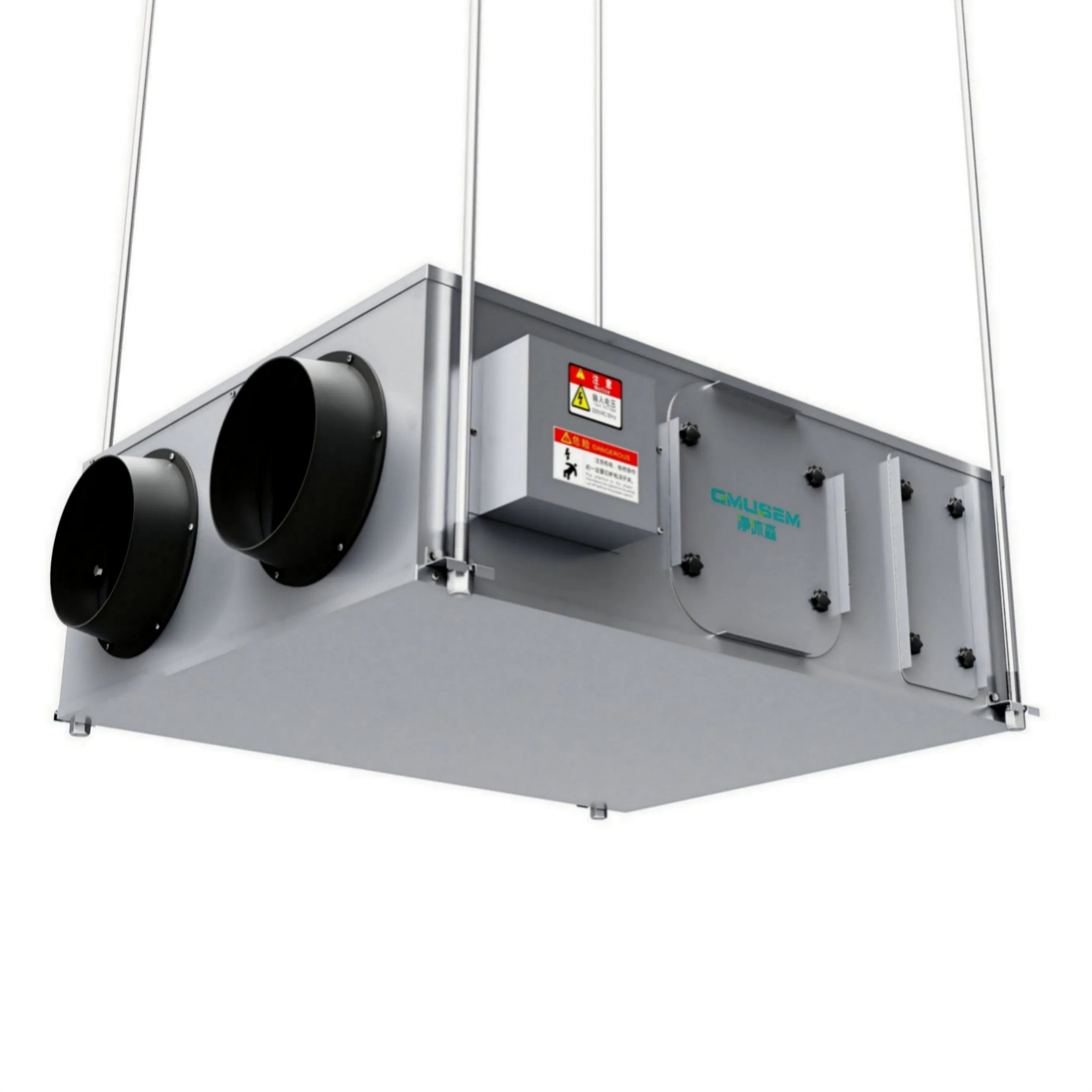
Unlike single-purpose exhaust fans, agricultural HRV and ERV units deliver balanced ventilation. Two separate airstreams move through the fan system at the same time: stale, polluted barn air flows out, while filtered fresh outdoor air flows in. A built-in exchanger transfers thermal energy between the two streams, so the incoming air is pre-conditioned without dumping all the barn’s heat outdoors.
The filtration stage is critical for air quality. Farm-grade HRV and ERV ventilation fans are fitted with heavy-duty filters such as F8, H11 or H13 media. These filters trap dust, pollen, mold and particulate contaminants before fresh air enters the animal zone. That alone cuts the volume of irritants circulating inside the barn.
An HRV, or Heat Recovery Ventilator, transfers only sensible heat. It keeps moisture from the exhaust air out of the supply airflow, making it ideal for high-moisture, high-ammonia barns. It continuously flushes ammonia and waste gases while avoiding extra humidity buildup. An ERV, or Energy Recovery Ventilator, transfers both heat and moisture. It adds a small amount of humidity back into dry incoming air, which benefits young stock sensitive to overly dry conditions.
Because supply air is distributed evenly through ductwork, there are fewer drafts. Fresh air reaches resting areas, feed lines and drinking zones, while exhaust ports pull contaminated air from the dirtiest parts of the barn. This eliminates the stagnant air pockets that often escape basic exhaust ventilation.
Steady, controlled air exchange prevents ammonia and hydrogen sulfide from accumulating. Instead of letting gases build to dangerous thresholds and then running fans on high for a quick purge, HRV and ERV systems maintain continuous low-level ventilation. This stable dilution keeps gas concentrations within safe limits around the clock. Over time, producers see fewer cases of respiratory distress and lower antibiotic use linked to air-borne illness.
Washable and replaceable filters block a large share of airborne dust. Less dust means fewer carriers for bacteria and viruses. By removing excess moisture, these fans also discourage mold growth on walls, ceiling insulation and bedding. Drier, cleaner litter stays healthier for animals and reduces the risk of fungal outbreaks.
When barns are tightly sealed for heat retention, carbon dioxide rises quickly with dense stocking. Elevated CO₂ makes animals lethargic and reduces growth rates. Balanced HRV and ERV ventilation automatically refreshes air to hold carbon dioxide at comfortable levels. Livestock eat more, grow more predictably and produce higher-quality milk, eggs or meat.
Poor barn air does not harm animals alone. Farmers and barn workers face long-term exposure to ammonia, dust and pathogens. By continuously improving indoor air quality, agricultural ERV and HRV fans cut respiratory irritation for people working inside, creating a safer workplace.
Drafts are a major hidden risk, especially for chicks, piglets and newborn calves. Sudden cold airflow suppresses immunity and increases mortality. Heat-recovery ventilation delivers tempered fresh air gently. The incoming air is preheated or pre-cooled by the exhaust airstream, so temperature swings stay small while air stays fresh.
Modern agricultural ERV and HRV ventilation fans can integrate with humidity, carbon dioxide and ammonia sensors, plus Modbus or Tuya smart controllers. The system automatically adjusts airflow when pollutant levels climb. If CO₂ spikes after feeding, or humidity rises after washing, the fans ramp up exchange rates. When air quality stays good, they run at lower speed to save energy.
This intelligent operation sets them apart from fixed-speed exhaust fans. Ventilation matches real-time barn conditions instead of running on a rigid timer. It prevents both under-ventilation, which lets pollution build up, and over-ventilation, which wastes energy and cools the barn unnecessarily.
Not all HRV and ERV equipment is built for farm environments. Residential heat-recovery ventilators cannot handle ammonia-laden, dusty barn air. Look for agricultural models with corrosion-resistant SGCC housings, heavy-duty variable-speed fans, easily accessible washable cores and high-grade filters. Units with higher CFM or CMH ratings can serve larger barns, while smaller wall-mounted ERV systems work well for calf hutches, isolation pens and smaller livestock shelters.
Maintenance directly impacts long-term air quality. Clogged filters slow airflow and stop trapping dust. Dirty exchanger cores can hold ammonia residue and organic buildup. A simple routine — inspecting filters, washing the core, checking duct leaks and testing sensors — keeps the ventilation system performing as designed. Neglected units will gradually lose airflow and stop protecting barn air quality.
Ventilation fans are a powerful tool, yet they work best alongside solid farm management. Manure removal, proper bedding, leak repair and stocking density control all reduce pollutant loads. The ventilation system then maintains clean air instead of fighting an impossible volume of waste gas and moisture. For all-in/all-out poultry barns, swine gestation facilities and dairy free-stall barns, pairing heat-recovery ventilation with regular sanitation creates the most reliable indoor environment.
For commercial livestock farms, the return shows up in animal health and production. Cleaner air means lower mortality, improved feed conversion, fewer disease outbreaks and reduced veterinary costs. While the upfront investment is higher than standard exhaust fans, the combined gains in animal performance, worker comfort and energy savings make heat-recovery ventilation a worthwhile upgrade.
As animal welfare standards tighten and energy costs keep rising, balanced ventilation is no longer a luxury. It is a practical way to turn a sealed barn from a pollution trap into a controlled, healthy growing space.
Barn air quality defines the baseline of livestock health. Agricultural ERV and HRV ventilation fans do not simply move air; they exchange it intelligently. They filter incoming fresh air, remove ammonia, dust and excess moisture, recover valuable heat and avoid damaging drafts. Whether you operate a poultry house, pig barn, calf facility or dairy farm, installing properly sized, well-maintained heat-recovery ventilation is one of the most effective steps you can take to build a cleaner, healthier and more productive barn environment.
 18705226241


