


Hospital Ventilation: Can Air Purification Systems Provide Relief?
Hospitals are high-risk, high-demand environments where clean air is never a luxury—it is a critical pillar of patient safety, infection control, and public health. Unlike residential or commercial buildings, healthcare facilities face unique air quality challenges: constant human traffic, airborne pathogens, surgical fumes, antibiotic-resistant bacteria, chemical pollutants, and fluctuating occupancy loads.
Traditional hospital ventilation systems are designed to handle these risks, but they are not without limitations. Aging infrastructure, overcrowded wards, seasonal virus surges, and limited air exchange rates often leave gaps in indoor air safety. This raises a vital question for healthcare facility managers, clinicians, and sustainability teams: Can air purification systems deliver reliable relief and supplement hospital ventilation to protect patients and staff?
In this blog, we break down the flaws of conventional hospital ventilation, the real value of modern air purification systems, their limitations, and how the two can work together to create safer hospital air environments.
Standard hospital mechanical ventilation systems follow strict healthcare guidelines, including regulated air changes per hour (ACH), directional airflow, and filtered air intake. Their core responsibilities are simple yet demanding: dilute airborne contaminants, control cross-contamination between wards, regulate indoor humidity and temperature, and exhaust harmful fumes and stale air.
However, traditional ventilation faces unavoidable bottlenecks in real-world hospital operation.
First, infrastructure aging and capacity constraints. Many existing hospital buildings rely on decades-old ductwork and ventilation units that struggle to meet modern infection control standards. During peak flu seasons, respiratory virus outbreaks, or hospital overcrowding, fixed ACH rates become insufficient to dilute surging airborne pathogens.
Second, zone-specific ventilation imbalance. Operating rooms, isolation wards, emergency departments, and general wards have vastly different air quality requirements. Central ventilation systems often fail to deliver targeted air treatment, leaving high-risk areas with inadequate air exchange while over-ventilating low-risk zones and wasting energy.
Third, external environmental interference. Urban hospitals frequently face outdoor air pollution, pollen, and industrial particulate matter. Traditional intake filters can block large particles but often fail to capture fine particulate matter (PM2.5), ultra-fine particles, and certain airborne microbial aerosols.
These gaps create an urgent need for supplementary solutions—and this is where air purification systems step in.
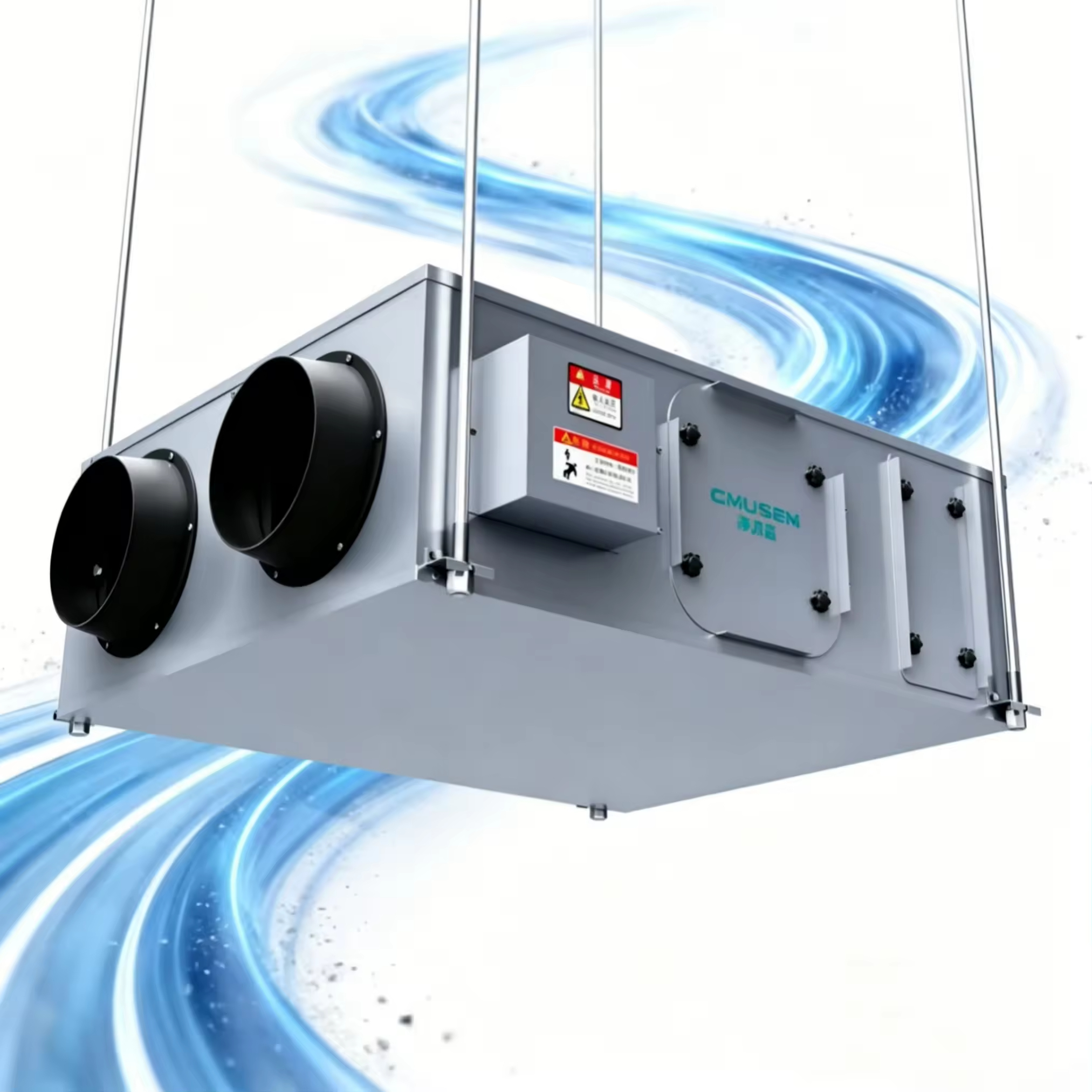
Air purification systems are not designed to replace hospital ventilation. Instead, they act as a powerful, flexible auxiliary tool that fills the functional gaps of central HVAC systems, providing targeted relief for high-pressure healthcare environments.
Airborne transmission remains one of the biggest threats in hospital-acquired infections (HAIs). Droplet nuclei carrying bacteria, viruses, and fungi can suspend in indoor air for hours, spreading between patients, visitors, and medical staff. High-performance air purifiers equipped withHEPA H13/H14 filters can capture 99.97% of ultra-fine airborne particles, including COVID-19, influenza, staphylococcus bacteria, and mold spores.
For isolation rooms, emergency waiting areas, and inpatient wards, portable and ducted air purification systems deliver continuous air cleaning between scheduled ventilation cycles. They effectively reduce the airborne pathogen load, lowering the risk of cross-infection and relieving the pressure on central ventilation systems to dilute contaminants rapidly.
Hospitals generate unique indoor pollutants that traditional ventilation struggles to manage efficiently. Surgical smoke, anesthesia residual fumes, disinfectant volatile organic compounds (VOCs), and chemical odors from medications and laboratory work can accumulate in enclosed spaces, irritating the respiratory tracts of vulnerable patients and fatigued medical staff.
Advanced air purifiers with activated carbon filters, photocatalytic oxidation (PCO), and UV-C disinfection modules can adsorb and decompose chemical fumes, odors, and gaseous pollutants. This complements physical filtration from ventilation systems, ensuring air is not only circulated but truly purified.
One of the biggest advantages of air purification systems is their flexibility. Unlike fixed central ventilation, purifiers can be deployed on-demand in high-risk, high-traffic zones: pediatric wards, ICUs, outpatient waiting halls, and temporary emergency treatment areas. They provide supplementary air changes locally without requiring overhauls of the entire building ventilation system.
This flexibility is especially valuable during public health emergencies, when hospitals need to rapidly upgrade air safety in temporary isolation facilities and makeshift treatment zones.
Running full-capacity central ventilation 24/7 to cope with high air quality demands consumes massive amounts of energy. By handling partial air purification and contaminant removal tasks, auxiliary air purifiers allow central ventilation systems to operate at optimized loads, reducing overall energy consumption while maintaining superior indoor air quality.
While air purification systems deliver significant relief, it is critical to clarify their boundaries to avoid over-reliance.
First, no replacement for fresh air exchange. Air purifiers only recirculate and clean existing indoor air; they cannot introduce fresh outdoor oxygen or exhaust excess indoor carbon dioxide. Hospitals require continuous fresh air renewal to prevent oxygen depletion—a task exclusive to mechanical ventilation systems.
Second, incapable of regulating airflow pressure. Isolation wards and operating rooms rely on positive and negative pressure airflow to block pathogen spread. Air purifiers cannot adjust indoor air pressure, which remains a core function of professional hospital ventilation systems.
Third, dependent on standardized maintenance. Unclean or overdue filters can become secondary pollution sources, accumulating bacteria and particles instead of cleaning air. Strict, regular maintenance is essential to guarantee purification performance.
The optimal hospital air quality strategy is not ventilation vs. purification, but ventilation plus purification. The two systems complement each other perfectly to build a dual-layer air safety barrier.
Central ventilation systems serve as the foundation, providing mandatory fresh air exchange, stable air pressure control, and overall indoor climate regulation. Air purification systems act as a targeted enhancement, conducting fine-scale pathogen filtration, pollutant removal, and local air quality optimization in high-risk areas.
This combined solution is now widely adopted in modern healthcare design and renovation projects, effectively reducing HAI rates, improving patient recovery environments, and creating healthier working conditions for frontline medical teams.
So, can air purification systems provide relief for hospital ventilation? The answer is a resounding yes—but with clear boundaries.
Air purifiers cannot replace professional hospital ventilation systems, but they fill critical performance gaps, relieve operational pressure, enhance infection control, and upgrade indoor air quality in high-risk healthcare environments. For hospitals facing aging infrastructure, peak epidemic pressure, or imbalanced zone ventilation, air purification is a cost-effective, flexible, and high-return solution to strengthen air safety.
As healthcare standards continue to rise, the combination of precision ventilation and efficient air purification will become the new standard for safe, intelligent, and sustainable hospital indoor environment management.
 18705226241


