


If you are shopping for a balanced ventilation system to boost indoor air quality while protecting your home’s energy efficiency, a home ERV system deserves a top spot on your shortlist. Energy Recovery Ventilators bring filtered fresh air indoors and push stale, contaminated air out, recovering both heat and moisture in the process. But with multiple types, sizes, controllers, and price points available, picking the right model can feel overwhelming. This complete buyer’s guide walks you through everything you need to know before making your purchase.
An ERV is a whole-home or single-room ventilation device built with a moisture-permeable exchange core. Unlike an HRV, which only transfers heat, an ERV moves both heat and water vapor between the supply and exhaust air streams. This makes it especially well suited for homes in humid, mild, or mixed climates where indoor humidity balance matters year-round.
Home ERV systems are an excellent fit if you check any of these boxes:
You live in a tightly sealed new build, passive house, or recently renovated home with low air leakage.
Your family struggles with allergies, persistent stuffy air, high indoor CO₂, cooking odors, or bathroom moisture and mold risk.
You want steady fresh air without opening windows and losing cooled or heated air.
You are upgrading your HVAC setup and prioritizing long-term IAQ and energy savings.
ERVs are not the best choice for every home. If you live in an extremely cold climate with prolonged freezing temperatures, an HRV may reduce the risk of core condensation and frost buildup. If your home is very leaky and naturally well ventilated, you may not need a full ducted unit.
Before comparing brands and specs, decide which form factor matches your space and budget.
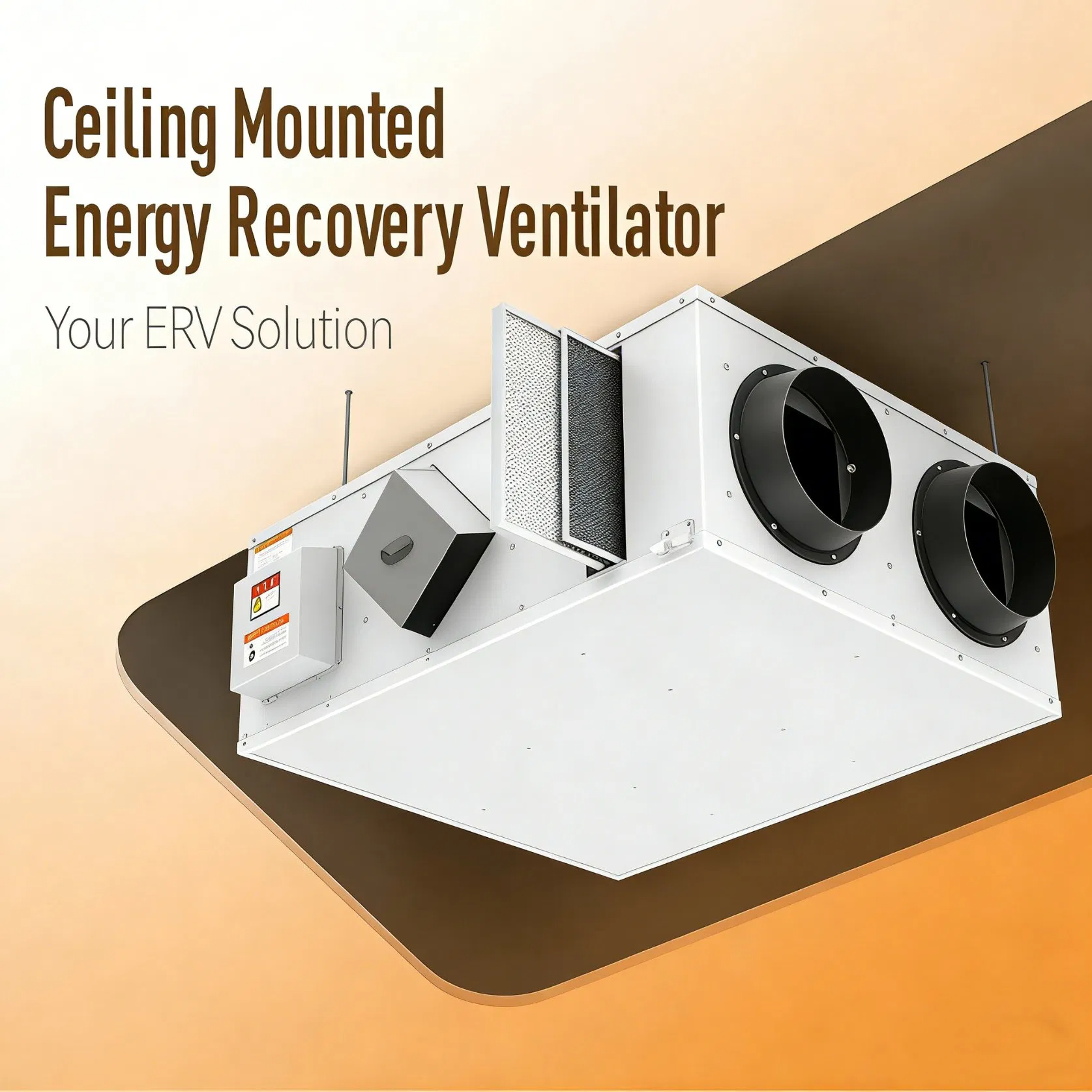
This is the premium option for new construction or major remodels. It connects to your home’s duct network and delivers balanced fresh air to bedrooms, living areas, and other occupied rooms, while pulling stale air from kitchens, bathrooms, and utility spaces. Ducted ERVs offer consistent airflow control and are ideal if you want uniform ventilation across the entire house. They require professional duct design and installation, which raises the upfront cost.
Compact wall-mounted ERVs are perfect for apartments, additions, older homes, or individual bedrooms where full ductwork is impossible or too costly. These units mount through an exterior wall and handle ventilation for one room. They are cheaper, easier to install, and great for spot ventilation, though they cannot circulate fresh air throughout the whole home. Many single-room models support smart control and run quietly for nighttime use.
These hybrid units use shorter duct runs and are designed for retrofits. They strike a middle ground: better coverage than single-room units without the full ductwork investment of a whole-home system. They are popular for mid-sized renovations and homes with limited ceiling or crawlspace access.
When browsing product listings, focus on these core technical features.
Airflow determines how much fresh air the unit can deliver. Sizing depends on your home’s square footage, number of bedrooms, occupancy, and local building ventilation codes. As a general rule, most homes require roughly 0.3 air changes per hour, or a fixed CFM based on bedroom count. Oversizing wastes energy and creates drafts; undersizing leaves your home poorly ventilated. If you are unsure, ask an HVAC professional to complete a ventilation load calculation.
The core is the heart of your ERV. Polymer membrane cores are common and reliable, offering stable heat and moisture transfer. Some premium models use treated paper cores. Look for sensible recovery efficiency and latent recovery efficiency ratings. Higher efficiency means the unit recovers more energy and moisture, lowering the burden on your heating and cooling equipment.
Check the decibel rating, especially if the unit will be installed in a living area, bedroom, or attic close to occupied spaces. Modern high-quality ERVs run at low speeds quietly. If noise is a priority, choose a unit with insulated housing and variable-speed fans.
Filters directly impact air quality. Basic units include MERV 7 or MERV 8 filters. If you have allergy sufferers or live in an area with heavy pollen, dust, or traffic pollution, select a model that supports MERV 13, H11, or H13 filtration. Remember that higher-grade filters create more airflow resistance and require regular replacement.
Basic ERVs come with simple three-speed manual switches. Premium versions add built-in humidity sensors, CO₂ sensors, automatic modes, timers, and smart connectivity. Many support Tuya smart control, Modbus RS485, or integration with home thermostats and building automation systems. Smart controllers let the unit ramp airflow automatically when humidity or CO₂ spikes, balancing comfort and energy use.
Home ERV pricing splits into two major parts: the unit itself and installation.
Single-room wall ERV: Lowest upfront cost. Many compact models fall into the affordable range and can be installed without extensive duct work.
Ducted whole-home ERV: Higher equipment price plus professional ducting, balancing, and labor. This is the most expensive option, but it delivers the most even ventilation.
Running costs: ERVs use small electric fans, so ongoing power consumption is relatively modest. Energy savings from reduced HVAC load often offset part of the operating expense over time.
Keep in mind that maintenance adds small recurring costs: replacement filters and occasional core cleaning. Some regions offer energy-efficiency rebates for ventilation upgrades, so check local incentive programs before purchasing.
Even the best ERV will underperform with poor installation.
Balanced airflow: Supply and exhaust airflow must be properly balanced. If one side moves far more air than the other, you may create negative pressure, pull in unwanted crawlspace or attic air, or disrupt combustion appliances.
Location: Whole-home units are commonly placed in attics, basements, or mechanical rooms. Avoid locations where freezing temperatures can damage the core unless the unit includes frost protection.
Duct quality: Use sealed, insulated flexible ducting or rigid ductwork. Leaky ducts erase much of the energy benefit.
Professional commissioning: After installation, the technician should test airflow, balance the system, and walk you through controller settings and maintenance routines.
This is one of the most common buying decisions.
ERV: Transfers heat and moisture. Best for humid climates, keeps indoor humidity stable, prevents overly dry air in winter and limits excess moisture in summer.
HRV: Transfers only heat. Better for cold climates, reduces frost risk inside the core, and removes more moisture from exhaust air.
If your main goal is humidity control alongside fresh air, an ERV is usually the right pick.
Before you buy, commit to regular upkeep. A neglected ERV quickly loses efficiency and can become an air-quality hazard.
Replace air filters every 3 to 6 months, depending on local air quality.
Inspect the exchange core annually and clean it following the manufacturer’s instructions.
Clear exterior intake and exhaust vents of leaves, debris, and insect nests.
If your unit has a condensate drain, keep the line clear and flowing.
Test sensors and smart controls once per year to confirm automatic modes work correctly.
Watch for these warning signs when evaluating a unit or installer:
A seller recommends an oversized or undersized unit without calculating your ventilation needs.
The unit has no replaceable filter or only a very low-grade filter.
No frost protection for cold-climate installation.
Poor customer support, unavailable spare filters, or a short warranty.
An installer skips airflow balancing after the job is finished.
Before placing your order, confirm these points: ✅ The airflow rating matches your home’s required ventilation rate. ✅ The core efficiency suits your local climate. ✅ Filter options meet your IAQ goals. ✅ Controller features fit your lifestyle (manual, humidity/CO₂ auto, smart or Modbus). ✅ Installation space and duct routes are available. ✅ You understand the warranty and availability of replacement parts. ✅ You have a trusted HVAC installer lined up for sizing and commissioning.
A home ERV system is a long-term investment in your household’s comfort, health, and energy efficiency. The “best” ERV is not always the largest or most expensive model; it is the one properly sized for your home, matched to your climate, installed correctly, and easy for you to maintain. Whether you want a simple wall-mounted unit for a bedroom or a fully ducted smart ERV for your passive house, taking the time to compare airflow, recovery efficiency, filtration, and controls will help you make a confident purchase that delivers cleaner, fresher indoor air for years to come.
Meta Description: Shopping for a home ERV system? This complete buyer’s guide covers types, sizing, key specs, installation, costs, and how to choose between ERV and HRV for better indoor air quality.
 18705226241


