


Living in a high-rise residential building offers unparalleled convenience, stunning views, and a vibrant urban lifestyle—but it also comes with unique ventilation challenges. Tight building envelopes, limited space for HVAC systems, and the need to balance indoor air quality (IAQ), energy efficiency, and occupant comfort can feel like a balancing act for developers, contractors, and homeowners alike. Enter high-efficiency ERV (Energy Recovery Ventilator) and HRV (Heat Recovery Ventilator) fan boxes: compact, powerful solutions designed specifically to address the ventilation needs of high-rise homes, without compromising on performance or sustainability.
In this blog, we’ll break down why high-efficiency ERV/HRV fan boxes are becoming the gold standard for high-rise residential units, how they work, their key benefits, and what to look for when selecting the right system for your project. Whether you’re a developer building a new high-rise community, a contractor retrofitting an existing building, or a homeowner looking to upgrade your ventilation, this guide will help you understand why these fan boxes are a game-changer.
High-rise buildings differ from low-rise homes in ways that make ventilation particularly tricky. First, their airtight construction—necessary for energy efficiency and noise reduction—traps stale indoor air, leading to a buildup of CO₂, allergens, volatile organic compounds (VOCs), and excess moisture. Unlike low-rise homes, which can rely on natural ventilation through windows or crawl spaces, high-rise units often have limited operable windows (or none at all), making mechanical ventilation a necessity.
Space is another critical constraint. High-rise units typically have limited utility closets, attic space, or crawl spaces, so ventilation systems must be compact enough to fit in tight areas—without sacrificing performance. Additionally, high-rise buildings face higher static pressure due to longer duct runs and multiple floors, which can reduce the efficiency of standard ventilation systems if not properly designed.
Finally, energy efficiency is non-negotiable. With rising energy costs and growing demand for sustainable buildings, high-rise developers and homeowners need ventilation solutions that reduce energy waste while maintaining comfort. Traditional ventilation systems often waste energy by expelling conditioned air (heated in winter, cooled in summer) directly outside—but ERV/HRV fan boxes solve this problem through innovative energy recovery technology.
ERV and HRV fan boxes are compact, self-contained ventilation units that exchange stale indoor air with fresh outdoor air—while recovering the energy from the exhausted air to precondition the incoming air. The key difference between ERVs and HRVs lies in how they handle moisture, making each suitable for different climates:
HRV (Heat Recovery Ventilator) Fan Boxes: These systems recover only the sensible heat (temperature) from the exhausted air. As stale indoor air is pushed out, the HRV’s heat exchange core transfers its warmth (in winter) or coolness (in summer) to the incoming fresh air. This reduces the load on your heating and cooling systems, saving energy. HRVs are ideal for cold, dry climates where maintaining indoor heat is a priority and excess moisture is less of a concern.
ERV (Energy Recovery Ventilator) Fan Boxes: ERVs go a step further by recovering both sensible heat and latent heat (moisture) from the exhausted air. This is critical for humid climates (summer) or dry climates (winter), as it helps balance indoor humidity levels—preventing mold growth in humid months and dry air discomfort in cold months. By transferring moisture along with heat, ERVs maintain a more consistent and comfortable indoor environment while maximizing energy savings.
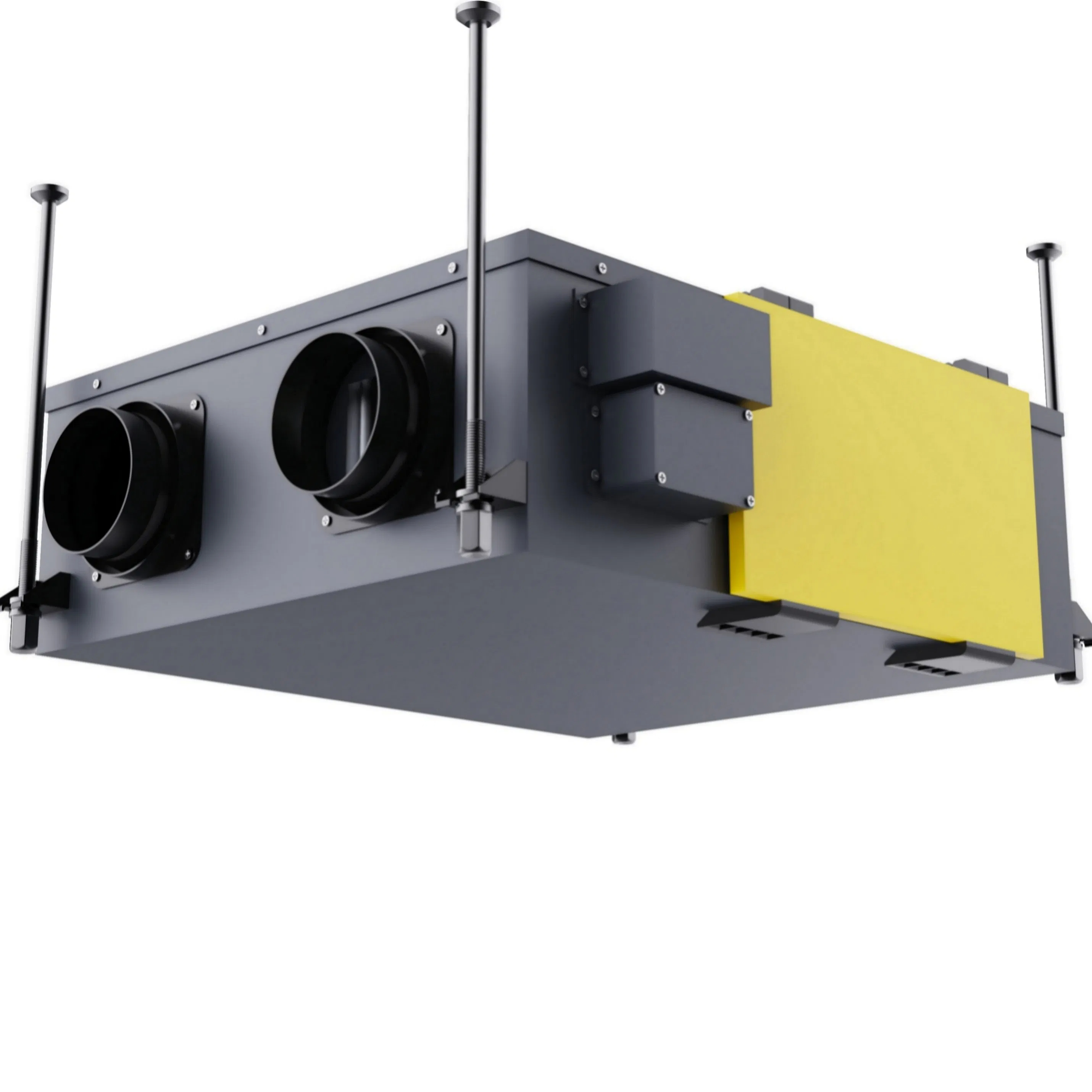
Both systems feature high-efficiency fans, advanced heat exchange cores (often made of nanofiber or polymer materials for optimal efficiency), and filters to remove dust, pollen, and other pollutants from incoming air—ensuring fresh, clean air circulates throughout the unit. Their compact design makes them perfect for high-rise homes, as they can be mounted in utility closets, ceilings, or walls without taking up excessive space.
For high-rise residential units, the benefits of high-efficiency ERV/HRV fan boxes extend far beyond basic ventilation. Here’s why they’re a must-have for modern high-rise living:
In airtight high-rise units, stale air can quickly become a health hazard. ERV/HRV fan boxes continuously replace stale indoor air with filtered outdoor air, reducing levels of CO₂, VOCs, allergens, and moisture. Many models feature MERV 11 or higher filters (some even offer optional HEPA filters) to trap fine particles like PM2.5, ensuring the air you breathe is clean and healthy—critical for occupants with allergies, asthma, or other respiratory concerns.
One of the biggest advantages of ERV/HRV fan boxes is their energy recovery capability. By capturing up to 80-84% of the energy from exhausted air, these systems reduce the workload on your HVAC system—lowering energy bills by 20-50% compared to traditional ventilation systems. For high-rise buildings, this translates to significant cost savings for both building owners (in common areas) and homeowners (in individual units). Additionally, by preconditioning incoming air, ERV/HRV fan boxes maintain consistent indoor temperatures and humidity, eliminating hot or cold spots and reducing discomfort.
High-efficiency ERV/HRV fan boxes are engineered with high-rises in mind. Their slim, compact profiles fit easily in utility closets, ceiling cavities, or wall-mounted enclosures—eliminating the need for large, bulky equipment that’s impractical in small high-rise units. Many models also feature flexible duct connections and front-access panels for easy maintenance, making them ideal for retrofits and new construction alike.
Modern high-rise buildings are subject to strict energy efficiency and ventilation codes, such as IECC, Energy Star, and LEED. High-efficiency ERV/HRV fan boxes help meet these standards by reducing energy consumption, improving IAQ, and lowering a building’s HERS score—making them a valuable asset for developers looking to achieve green building certifications. They also support compliance with zero-energy ready home (ZERH) requirements, as their energy recovery capabilities help reduce modeled energy loads.
Noise pollution is a common concern in high-rise buildings, so ventilation systems must operate quietly. High-efficiency ERV/HRV fan boxes feature advanced fan technology and sound-dampening designs, with noise levels as low as 25-40 dB—quieter than a conversation. This ensures that occupants can enjoy fresh air without being disturbed by loud fan noise, even in bedrooms or living areas.
Not all ERV/HRV fan boxes are created equal—especially for high-rise applications. Here are the key factors to consider when selecting a system:
Energy Efficiency Rating: Look for units with high energy recovery efficiency (ERE) and fan efficacy. The higher the ERE, the more energy the system recovers, leading to greater savings. Energy Star-certified models are a reliable choice, as they meet strict efficiency standards.
Airflow Capacity: Choose a fan box with airflow capacity matching the size of the unit. For most high-rise apartments (500-1,500 sq. ft.), a unit with 50-150 CFM (cubic feet per minute) is sufficient. Ensure the system can handle the static pressure of high-rise duct runs without losing efficiency.
Filter Quality: Prioritize units with high-quality filters (MERV 11 or higher) to remove pollutants. Optional HEPA filters are a plus for areas with poor outdoor air quality.
Moisture Handling: Select an ERV if you live in a humid climate (to remove excess moisture) or an HRV if you live in a cold, dry climate (to retain heat without adding moisture). Some units offer adjustable moisture control for versatility.
Installation and Maintenance: Choose a unit with easy front access for filter changes and maintenance, as high-rise units may have limited access to equipment. Look for models with rubberized duct gaskets to reduce noise and prevent air leaks.
Smart Controls: Many modern ERV/HRV fan boxes feature smart controls, allowing occupants to adjust airflow, monitor IAQ, and set schedules via a smartphone app or wall panel. This adds convenience and helps optimize energy use.
High-efficiency ERV/HRV fan boxes are already making a difference in high-rise communities around the world. For example, a 30-story passive house development in Weifang, China, installed 124 ceiling-mounted ERV units, achieving strict energy efficiency standards and receiving high praise from building experts for its superior IAQ and comfort levels. In urban centers like New York and London, retrofitted high-rises are using compact ERV fan boxes to upgrade ventilation without renovating entire HVAC systems—reducing energy costs and improving occupant satisfaction.
For homeowners, the impact is equally significant. A family in a 1,200 sq. ft. high-rise apartment in a humid climate reported a 30% reduction in energy bills after installing an ERV fan box, along with less mold growth and improved comfort year-round. In cold climates, HRV fan boxes help retain heat, reducing the need for constant heating and preventing dry air that causes skin irritation and respiratory issues.
High-rise residential living demands ventilation solutions that are compact, efficient, and effective—and high-efficiency ERV/HRV fan boxes deliver on all three fronts. They solve the unique challenges of high-rise ventilation by improving IAQ, reducing energy waste, fitting in tight spaces, and complying with modern building codes. Whether you’re building a new high-rise community or upgrading an existing unit, these fan boxes are an investment in comfort, health, and sustainability.
As the demand for green, healthy buildings continues to grow, high-efficiency ERV/HRV fan boxes will only become more essential. They’re not just a ventilation solution—they’re a way to elevate the quality of high-rise living, making urban homes more comfortable, healthier, and more sustainable for years to come.
Ready to upgrade your high-rise ventilation? Contact a trusted HVAC professional to learn more about selecting the right high-efficiency ERV/HRV fan box for your needs.
 18705226241


