


Heat Recovery Ventilation Explained: How HRV Systems Work in Homes
Modern residential homes are designed to be tightly sealed and highly insulated to boost energy efficiency. While this design cuts down on heating and cooling loss, it creates a common hidden issue: stagnant, polluted indoor air with no reliable way to circulate fresh outdoor air inside. Opening windows brings fresh air but wastes precious indoor heat or cool air, driving up utility costs and creating uncomfortable drafts. This is where Heat Recovery Ventilation (HRV) systems become an essential home HVAC solution. In this article, we fully explain how residential HRV systems work, their core home-specific functions, and why they are a game-changer for modern household comfort and energy savings.
Many homeowners mistake HRV for ordinary exhaust fans or air purifiers, but it serves a completely different, dual-purpose role for household spaces. A standard fan only removes stale air without heat retention, while an air purifier merely filters existing indoor air without introducing fresh outdoor oxygen.
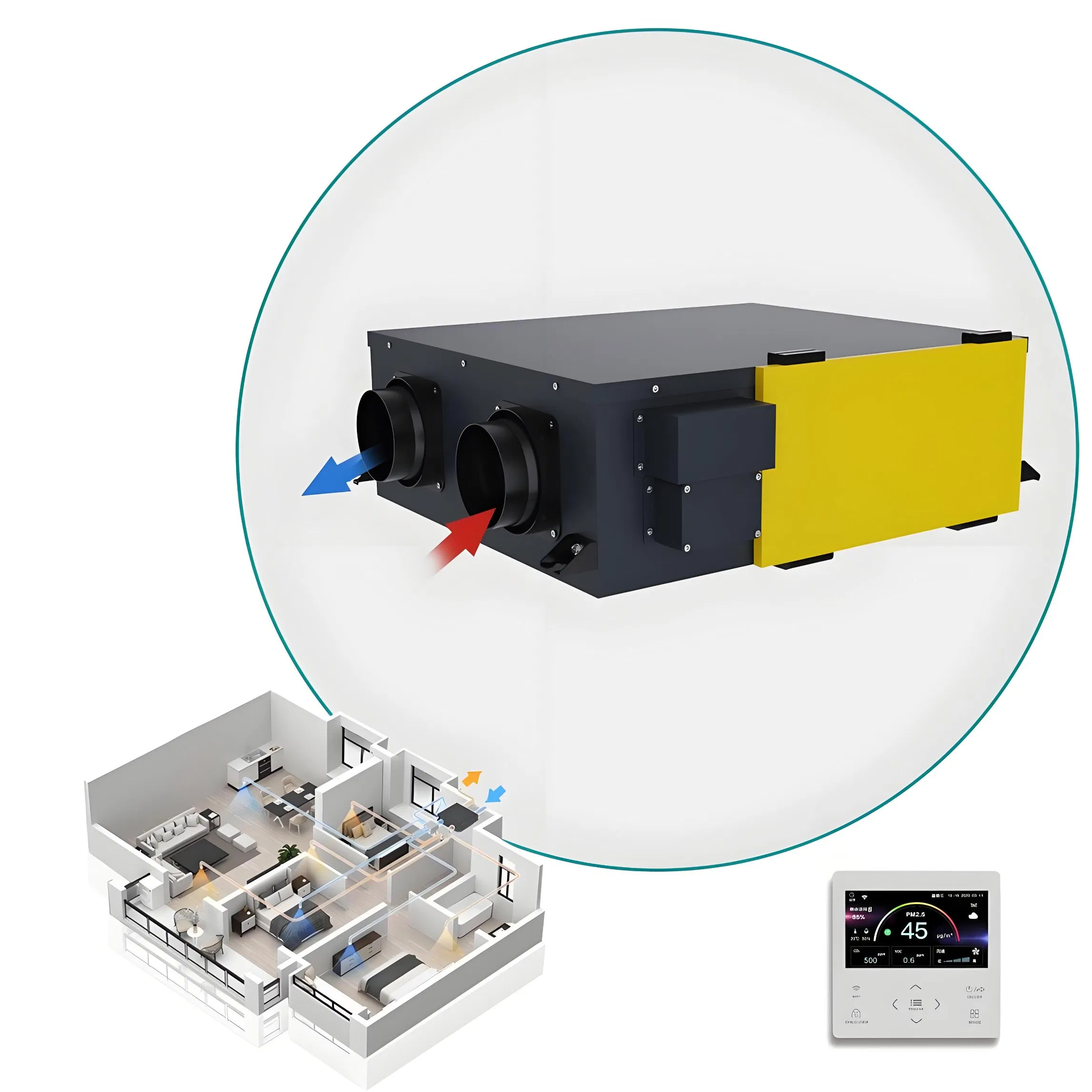
A home Heat Recovery Ventilation system is a balanced mechanical ventilation solution built exclusively for residential environments. It continuously swaps stale indoor air for filtered outdoor air while capturing and reusing up to 90% of the heat from exhausted household air. Tailored for daily family living, it addresses the unique pain points of sealed homes: stuffy bedrooms, bathroom condensation, kitchen odour buildup, and energy waste from frequent window ventilation.
To understand how HRV works in homes, it’s important to first know its key residential-focused components. Every household HRV unit features a compact, home-friendly design with four core parts that enable seamless, quiet operation:
Dual High-Speed Quiet Fans: One exhaust fan to remove stale indoor air from wet rooms and living areas, and one intake fan to draw in fresh outdoor air. Household-specific low-noise motors ensure no disruptive sound during sleep or daily activities.
Aluminum Heat Exchange Core: The heart of the HRV system. Its layered plate structure transfers heat between two separate air streams without mixing pollutants, optimized for household temperature ranges.
Multi-Stage Air Filters: Designed for home use, these filters trap household dust, pet dander, pollen, and outdoor fine particles, ensuring circulated air is clean and safe for families, children, and pets.
Residential Ductwork Network: Slim, space-saving ducts installed across key home zones, including bedrooms, living rooms, bathrooms, and kitchens, for whole-house balanced ventilation.
HRV’s home operation follows a simple, automatic cycle that runs 24/7 to maintain optimal indoor air quality and temperature. Unlike commercial HVAC systems, residential HRV adjusts gently to fit household living conditions all year round.
The HRV exhaust fan targets high-pollution, high-humidity areas typical in every home. It pulls out stale air accumulated with kitchen cooking fumes, bathroom shower moisture, bedroom CO2 buildup, pet odors, and household dust. This step prevents moisture from lingering on walls, windows, and furniture, eliminating the root cause of domestic mold and mildew growth.
As the warm stale indoor air flows through the heat exchange core, it transfers almost all its thermal energy to the core’s metal plates. Crucially, the outgoing contaminated air and incoming fresh air remain completely separated. No dust, odors, or humidity crosses over — only heat is preserved. This is the key mechanism that stops homes from losing valuable indoor heat during ventilation.
While the core retains household heat, the intake fan draws in fresh outdoor air and passes it through the pre-warmed core. In winter, the cold outdoor air is pre-heated to match indoor temperatures, eliminating the cold drafts caused by opening windows. In summer, the cooler indoor exhaust air pre-cools hot outdoor air, keeping the home naturally refreshed without overworking air conditioners.
Before the pre-conditioned outdoor air enters living spaces, it passes through fine filters to remove outdoor allergens and pollutants. The purified, fresh air is then evenly distributed to bedrooms, living rooms, and study rooms. This creates a consistent, whole-home air circulation loop, ensuring every corner of the house stays fresh, breathable, and thermally comfortable.
One of the biggest advantages of home HRV systems is their seasonal adaptability, perfectly fitting the changing climate needs of residential buildings.
In cold seasons, homeowners face a dilemma: ventilate for fresh air and lose heat, or keep windows closed and suffer stuffy air. HRV solves this perfectly. It recovers residual heat from exhausted indoor air, preheats incoming frigid air, and maintains indoor warmth without heat loss. This drastically reduces the workload of heaters and cuts winter heating costs.
In mild summer weather, HRV uses cool indoor air to pre-cool warm outdoor air, providing natural ventilation without raising indoor temperatures. Unlike ERV systems, residential HRV blocks excess outdoor humidity from entering the home, preventing sticky, muggy indoor environments and protecting wooden furniture and floors from moisture damage.
Understanding how HRV works helps homeowners recognize its practical value for daily living, far beyond basic ventilation.
Whole-House Fresh Air Circulation: Unlike single-room fans, HRV delivers balanced ventilation for the entire home, eliminating hidden stuffy corners and improving overall indoor air quality.
Stable Indoor Temperatures: By eliminating ventilation-related heat loss and drafts, HRV keeps home temperatures consistent, creating a more comfortable living environment for families.
Household Health Protection: Continuous air exchange reduces indoor CO2, VOCs, allergens, and mold spores, effectively alleviating allergies, dry coughs, and fatigue caused by poor indoor air.
Long-Term Home Structure Protection: By controlling indoor humidity year-round, HRV prevents wall peeling, window condensation, and wooden fixture dampness, extending the service life of home decoration and building structures.
Myth 1: HRV is only for new housesFact: HRV systems are highly adaptable. Compact ducted and ductless HRV models are available for old house renovations, apartments, and townhouses, suitable for almost all residential building types.
Myth 2: HRV will make homes too dry or humidFact: Standard residential HRV only transfers heat, not moisture. It steadily removes excess indoor humidity generated by daily cooking, showering, and breathing, maintaining a healthy and balanced indoor humidity level.
Myth 3: HRV operation is noisy and disruptiveFact: Modern home-grade HRV units adopt mute fan technology and shock-absorbing design. The operating sound is lower than normal speaking volume, which will not affect rest, study, or work at home.
Heat Recovery Ventilation (HRV) is a smart, home-centric ventilation solution designed to fix the core conflict between modern home energy efficiency and indoor air quality. Its unique heat recovery and balanced ventilation working principle allow families to enjoy fresh, clean air every day without sacrificing indoor temperature comfort or paying extra energy costs.
For any sealed, insulated modern home, understanding how HRV works is the first step to upgrading your family’s living quality. As energy-efficient housing becomes mainstream, HRV has evolved from a high-end upgrade to a necessary facility for healthy, comfortable, and eco-friendly residential living.
Q: Does an HRV system replace air conditioning or heaters?A: No. HRV is a ventilation system rather than a temperature adjustment device. It optimizes indoor air quality and reduces the workload of HVAC equipment, helping your air conditioner and heater run more efficiently and save energy.
Q: How often should I maintain my home HRV system?A: For household use, clean the air filters every 2 to 3 months to ensure ventilation efficiency. A full professional inspection and core cleaning once a year can keep the unit running optimally for years.
Q: Can HRV reduce indoor odors at home?A: Absolutely. HRV continuously exhausts cooking fumes, pet odors, and musty smells, while filtering fresh incoming air, effectively keeping your home smelling clean and fresh all day long.
 18705226241


