


When it comes to maintaining healthy indoor air quality (IAQ) and optimizing home energy efficiency, ventilation systems are non-negotiable—especially in tightly sealed modern homes. Two popular options for balanced mechanical ventilation are Energy Recovery Ventilators (ERVs) and Heat Recovery Ventilators (HRVs). While both work to replace stale indoor air with fresh outdoor air, they differ in critical ways that make one better suited for certain climates and lifestyles than the other. In this blog, we’ll break down how each system works, their key differences, and how to choose the right one for your home.
First, let’s start with the basics: both ERVs and HRVs are “balanced” ventilation systems, meaning they bring in the same amount of fresh outdoor air as they expel stale indoor air. This prevents negative or positive pressure buildup in your home, which can cause issues like drafts, moisture damage, or poor air circulation. The core difference lies in how they handle heat and moisture during the air exchange process.
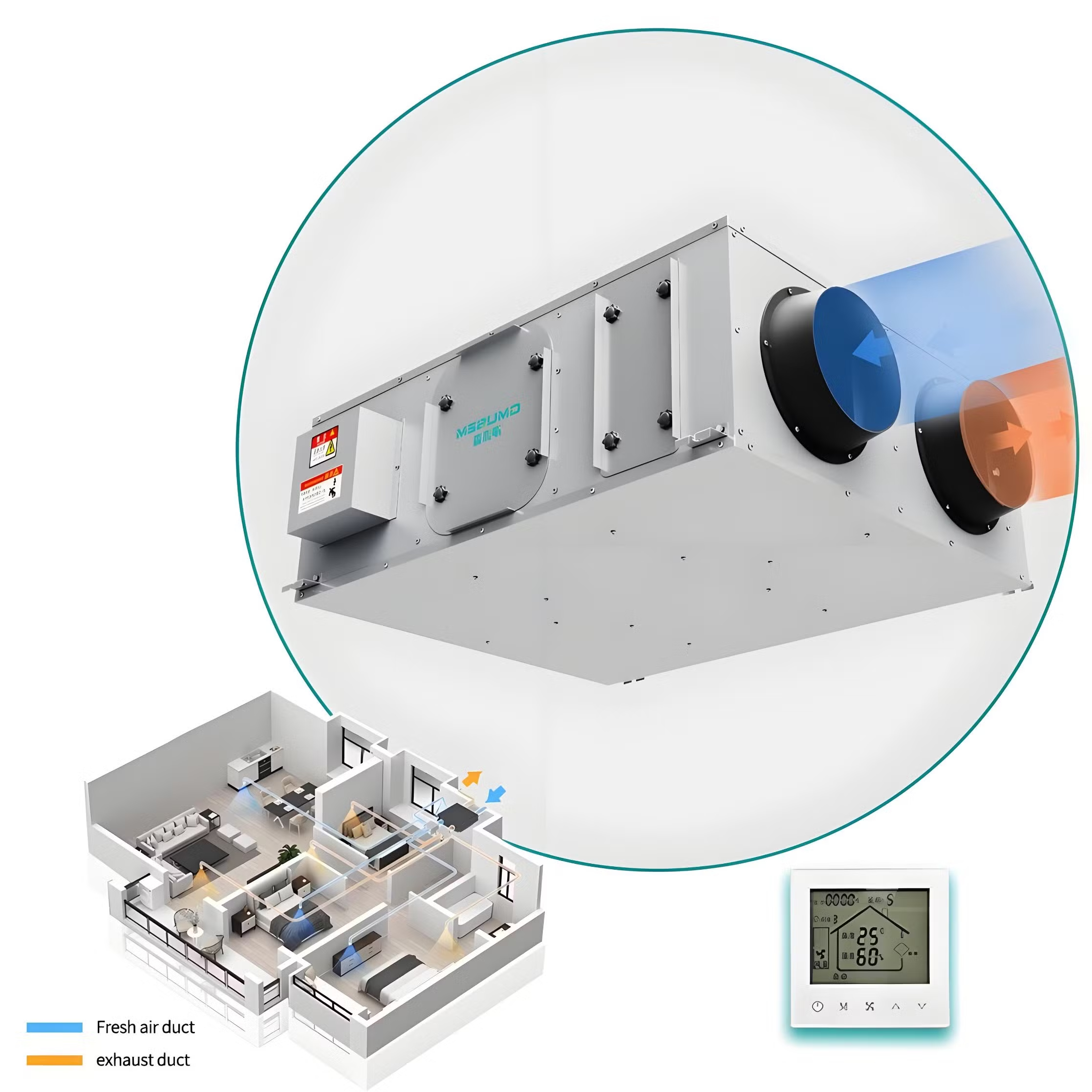
HRVs focus on transferring heat between incoming and outgoing air streams—without moving moisture. Here’s a simplified breakdown of their operation:
Stale, warm indoor air is pulled from high-moisture areas (like bathrooms, kitchens, and laundry rooms) into the HRV unit.
Fresh, cold outdoor air is drawn into the unit through a separate duct.
The two air streams pass through a heat exchanger (usually made of aluminum or plastic) where heat from the indoor air is transferred to the outdoor air—without the two air streams mixing (this is crucial for IAQ).
The pre-heated fresh air is distributed throughout your home, while the cooled stale air is expelled outside.
HRVs are designed to preserve heat in cold climates, reducing the load on your furnace or heating system. They do not add or remove moisture, so they’re ideal for homes where excess humidity isn’t a major concern.
ERVs take things a step further by transferring both heat and moisture between air streams. This makes them more versatile for year-round use, especially in climates with extreme temperature or humidity swings. Here’s how they operate:
Like HRVs, ERVs pull in fresh outdoor air and expel stale indoor air through separate ducts.
The air streams pass through an energy recovery core (often made of a porous material that absorbs and releases moisture).
In winter: Heat and moisture from indoor air are transferred to dry, cold outdoor air—preventing your home from becoming too dry (and reducing the need for humidifiers).
In summer: Cool, dry indoor air transfers heat and absorbs moisture from warm, humid outdoor air—helping to dehumidify incoming air and lighten the load on your air conditioner.
A key benefit of ERVs is that they maintain balanced humidity levels, which improves comfort and reduces the risk of mold or mildew growth.
To make the choice clearer, let’s outline the most important distinctions:
Feature | HRV | ERV |
|---|---|---|
Moisture Transfer | No moisture transfer—only heat. | Transfers both heat and moisture. |
Best For | Cold, dry climates (e.g., Northern U.S., Canada, Northern Europe). | Humid climates (summer or year-round), or regions with extreme temperature swings (e.g., Southern U.S., Mid-Atlantic, coastal areas). |
Humidity Impact | Does not affect indoor humidity levels. | Balances indoor humidity (adds moisture in winter, removes it in summer). |
Energy Efficiency | Saves energy by reducing heating costs in winter. | Saves energy year-round (reduces heatingand cooling/humidification/dehumidification costs). |
Potential Drawbacks | May require a separate humidifier in very dry climates; can’t help with summer humidity. | Slightly higher upfront cost than HRVs; not necessary in extremely dry climates (may over-humidify). |
The decision between an ERV and HRV ultimately comes down to three factors: your climate, indoor humidity concerns, and energy goals. Here’s a step-by-step guide to choosing:
Cold and Dry (Winter-Dominant): If your area has long, cold winters with low humidity (e.g., Minnesota, Alberta, Sweden), an HRV is ideal. It preserves heat without adding excess moisture (which could lead to window condensation or mold in tightly sealed homes).
Humid (Summer or Year-Round): If you live in a region with hot, humid summers (e.g., Florida, Texas, Southeast Asia) or year-round humidity (e.g., Pacific Northwest), an ERV is better. It will dehumidify incoming air in summer and add just enough moisture in winter to keep your home comfortable.
Mixed Climates: For areas with both cold winters and humid summers (e.g., Illinois, New York, Germany), an ERV is the most versatile choice—it handles both heat and moisture transfer year-round.
If you struggle with dry air in winter (e.g., nosebleeds, cracked skin, static electricity), an ERV can help by transferring moisture from outgoing indoor air to incoming outdoor air. If your home is already prone to high humidity (e.g., basement mold, musty odors), an HRV may be better—since it won’t add extra moisture.
Both systems improve energy efficiency by reducing the load on your HVAC system, but ERVs offer more year-round savings. If you prioritize long-term energy efficiency and comfort, an ERV is worth the slightly higher upfront cost. If you only need to cut heating costs in winter, an HRV is a more budget-friendly option.
Size Matters: Choose a system sized for your home’s square footage—an undersized unit won’t provide enough ventilation, while an oversized one will waste energy.
Ductwork: Both systems require proper ductwork to distribute air effectively. If your home doesn’t have existing ducts, consider ductless mini-split options (though they’re less common for ERVs/HRVs).
Maintenance: Clean or replace air filters every 3–6 months, and have the heat/energy recovery core inspected annually to ensure optimal performance.
For most homeowners—especially those in mixed or humid climates—an ERV is the better all-around choice. It balances heat and moisture transfer year-round, improves comfort, and offers long-term energy savings. However, if you live in an extremely cold, dry climate and only need to preserve heat in winter, an HRV is a cost-effective solution.
Ultimately, the best way to decide is to consult a local HVAC professional. They can assess your home’s specific needs, climate, and existing systems to recommend the perfect ventilation solution for you.
Got questions about ERVs, HRVs, or indoor air quality? Drop a comment below—we’re here to help!
 18705226241


