


ERV Ventilation: A Complete Guide to Energy Recovery Ventilators
Modern high-performance homes are engineered with tight building envelopes, advanced insulation, and air-sealed windows to slash heating and cooling waste. While this airtight design drastically boosts energy efficiency, it creates a common indoor air problem: stagnant, polluted air trapped inside the living space. Without controlled ventilation, indoor air accumulates CO2, excess moisture, allergens, VOCs, and unpleasant odors, compromising home comfort and family health. This is where Energy Recovery Ventilation (ERV) systems stand out as a game-changing solution. This complete guide covers everything homeowners need to know about ERV ventilators, including their core functions, working principles, key components, unique advantages, ERV vs HRV differences, installation tips, and routine maintenance best practices.
An Energy Recovery Ventilator (ERV) is a whole-home mechanical ventilation system designed for balanced, energy-efficient air exchange. Unlike basic exhaust fans that only expel stale air or open windows that cause massive temperature and energy loss, ERVs simultaneously exhaust contaminated indoor air and intake filtered fresh outdoor air. Its defining feature is the ability to recover both heat and moisture from outgoing airstreams, pre-conditioning incoming fresh air to match indoor ambient conditions.
Tailored for airtight modern homes, passive houses, and energy-efficient buildings, ERV systems solve the core conflict between tight insulation ventilation and energy conservation. They deliver consistent, fresh indoor air year-round without spiking utility bills or creating uncomfortable indoor temperature fluctuations, making them a staple upgrade for healthy, sustainable residential spaces.
To understand how ERVs deliver superior ventilation performance, it is essential to know their key built-in components that ensure stable, efficient, and long-lasting operation:
Serving as the heart of the ERV unit, the crossflow exchange core enables heat and moisture transfer between incoming and outgoing air streams. The two airstreams run parallel inside the core without mixing, ensuring polluted indoor air never contaminates fresh incoming air. This component recovers 60% to 85% of wasted energy from exhausted air, forming the foundation of the system’s energy-saving performance.
ERVs adopt a dual-fan independent operation design: one exhaust fan removes stale, polluted indoor air, while one supply fan draws fresh outdoor air into the home. The dual-fan system maintains balanced air pressure indoors, prevents negative air pressure, and ensures uniform whole-home air circulation without drafts or air dead zones.
Most modern ERV units are equipped with washable or replaceable filters of varying grades. These filters trap outdoor pollutants including pollen, dust, airborne debris, and fine particles, while blocking indoor pet dander and dust from clogging the core. Filter systems ensure only clean, purified fresh air enters living spaces, greatly improving indoor air quality.
Smart ERV models come with manual or automatic control panels, paired with humidity and air quality sensors. Users can adjust fan speeds, set ventilation schedules, and switch seasonal modes manually. Smart sensors automatically detect indoor humidity, CO2 levels, and air stagnation, adjusting ventilation intensity intelligently to adapt to changing indoor environments.
ERV operation follows a simple, precise, and energy-efficient cycle that adapts to seasonal temperature changes perfectly:
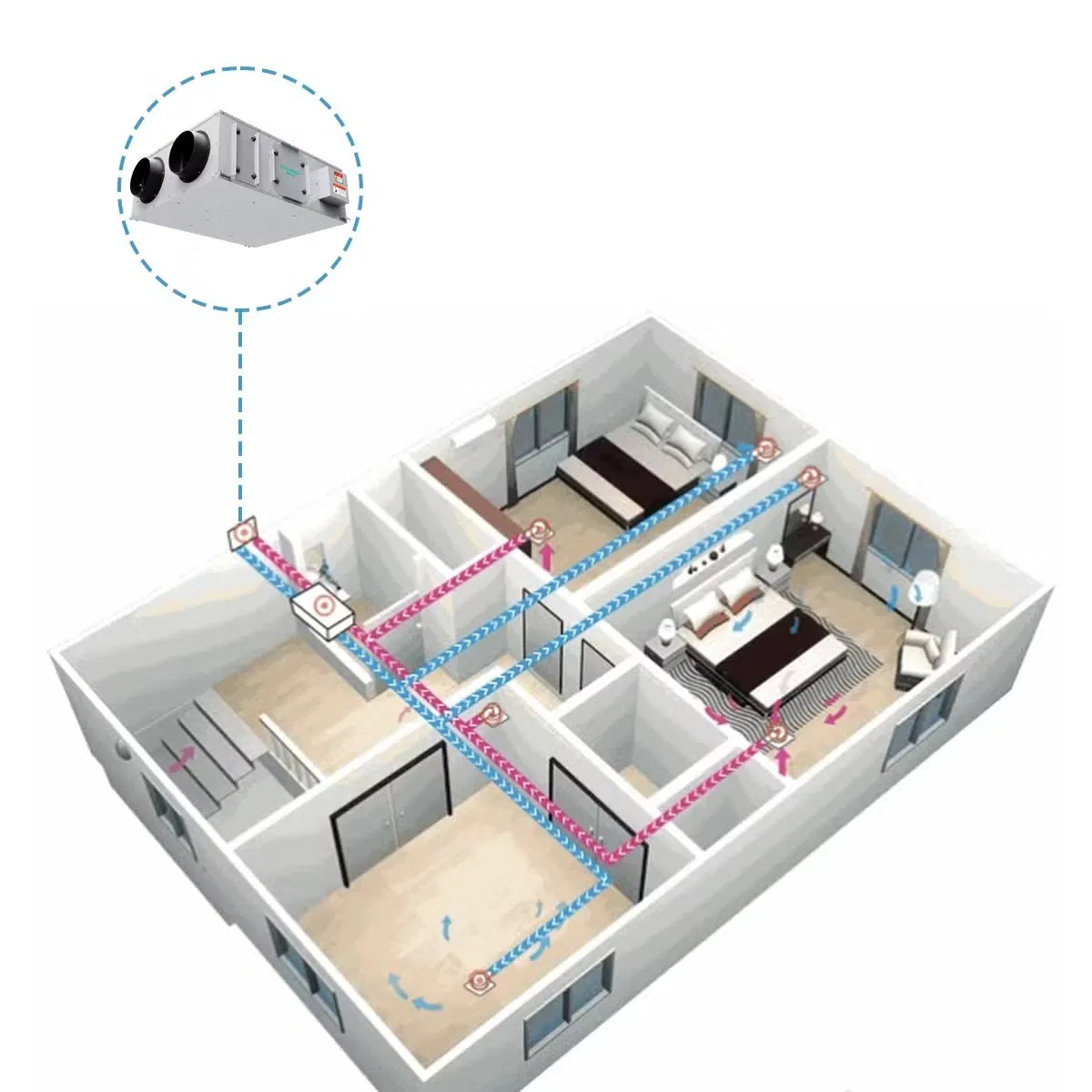
Step 1: Dual Air CirculationThe dual fans start synchronous operation. The exhaust fan pulls stale indoor air—rich in CO2, moisture, and household pollutants—from bedrooms, living rooms, and kitchens into the ERV unit. Meanwhile, the supply fan draws fresh, oxygen-rich outdoor air into the system through the filter layer for preliminary purification.
Step 2: Energy and Moisture ExchangeThe two separate air streams pass through the ERV core without cross-contamination. In winter, warm, humid indoor exhaust air transfers heat and residual moisture to cold, dry incoming outdoor air. In summer, cool indoor exhaust air lowers the temperature of hot outdoor air and absorbs excess outdoor humidity.
Step 3: Conditioned Air DistributionPre-conditioned fresh air is evenly distributed to every room through duct systems. Polluted exhaust air, after completing energy transfer, is discharged outdoors completely. This continuous cycle maintains fresh, temperature-stable, and humidity-balanced indoor air all year long.
Many homeowners confuse ERV with HRV (Heat Recovery Ventilator), but the two systems have critical differences that determine their suitability for different climates and homes:
Feature | ERV (Energy Recovery Ventilator) | HRV (Heat Recovery Ventilator) |
|---|---|---|
Energy Transfer Type | Transfers both heat and moisture | Only transfers sensible heat, blocks moisture |
Humidity Regulation | Balances indoor humidity year-round | No humidity adjustment function |
Best Climate | Humid summers, dry winters, variable climates | Cold, dry northern climates |
Core Advantage | All-season comfort, prevents dryness and mold | High heat recovery efficiency in cold seasons |
For most residential areas with distinct four seasons and variable humidity, ERV is the more versatile and practical choice due to its dual temperature and humidity regulation capabilities.
The unique moisture transfer function differentiates ERVs from ordinary ventilation systems. In dry winter months, it retains indoor moisture to prevent dry skin, sore throats, and static electricity. In humid summer weather, it removes excess outdoor moisture to avoid damp walls, window condensation, and musty odors. Stable humidity levels create a naturally comfortable living environment in every season.
By recovering up to 85% of residual energy from exhausted air, ERVs drastically reduce the workload of heating and cooling systems. Pre-conditioned incoming air minimizes HVAC temperature adjustment pressure, cutting monthly electricity and gas bills effectively. Reduced household energy consumption also lowers home carbon emissions, supporting eco-friendly and sustainable living standards.
ERVs continuously flush out accumulated indoor pollutants including CO2, VOCs, cooking fumes, pet odors, and dust mites. The built-in filtration system blocks outdoor pollen, dust, and airborne allergens, providing clean and fresh air indoors. For families with allergy sufferers, asthma patients, young kids, and pets, ERV ventilation greatly reduces respiratory health risks and improves overall living wellness.
Persistent indoor excess moisture is the main cause of mold, mildew, rotting wood, and peeling paint in walls and ceilings. ERV systems control indoor humidity within a healthy, stable range, eliminating the damp environment mold and bacteria need to grow. Regular balanced ventilation protects furniture, wooden structures, and wall finishes, extending your home’s service life and reducing maintenance costs.
Unlike open windows that introduce harsh drafts, traffic noise, and outdoor pollutants, ERVs deliver gentle, uniform, and quiet air exchange. The duct-based ventilation design ensures every corner of the home gets fresh air without temperature shocks or noise interference, maintaining a peaceful and cozy indoor environment all day long.
ERV ventilators are ideal for airtight new builds, renovated energy-efficient homes, passive houses, and residences located in humid or variable climates. They are especially recommended for homes with poor natural ventilation, closed-off rooms, persistent stuffiness, condensation problems, or households prioritizing healthy indoor air quality.
First, match the system size to your home’s square footage and room count to ensure sufficient airflow exchange. Second, prioritize models with high-efficiency filtration and adjustable fan speeds for flexible ventilation control. Third, choose Energy Star-certified units with high energy recovery rates to maximize long-term energy savings.
Proper maintenance ensures stable ERV performance, extends unit lifespan, and guarantees consistent air quality improvement. Basic routine upkeep is simple and homeowner-friendly:
Clean or replace air filters every 2–3 months to avoid dust buildup that blocks airflow and reduces filtration efficiency. Inspect and clean the exchange core every 6 months to remove accumulated debris and maintain optimal energy and moisture transfer performance. Check fan operation and duct connectivity quarterly to prevent air leakage and abnormal noise. Conduct a full professional inspection once a year to ensure long-term stable system operation.
Energy Recovery Ventilators are far more than ordinary ventilation devices—they are comprehensive indoor air quality and energy management systems. By integrating fresh air exchange, energy recovery, humidity regulation, and pollutant filtration in one compact unit, ERVs perfectly solve the ventilation dilemma of modern airtight homes. Whether you want to improve family health, reduce utility expenses, eliminate mold risks, or upgrade home living comfort, an ERV system is a worthy long-term investment for every modern residential property.
 18705226241


