


Commercial ERV Units: Ventilation Solution for Workshops & Factories
Proper ventilation is one of the most overlooked yet critical factors in industrial operational efficiency, workplace safety, and employee productivity. For workshops, manufacturing plants, and large-scale factories, poor air circulation, stale indoor air, excessive humidity, and rising energy costs have long been persistent pain points. Traditional ventilation methods, such as natural window ventilation and simple exhaust fans, can no longer meet the standardized air quality and energy-saving requirements of modern industrial production. This is where commercial ERV (Energy Recovery Ventilation) units emerge as the ideal ventilation solution for industrial spaces, balancing fresh air renewal, energy conservation, and stable indoor air environment.
Most industrial facilities face unique ventilation challenges that differ from residential or commercial office spaces. Workshops and factories often generate large amounts of dust, odor, residual heat, and even trace harmful gases during production processes. At the same time, modern industrial buildings are designed with high air tightness to insulate external noise and temperature changes, which further blocks natural air convection.
Conventional ventilation solutions have obvious drawbacks. Simple exhaust fans only discharge dirty indoor air without introducing filtered fresh air, leading to unbalanced air pressure and poor ventilation uniformity. In cold or hot seasons, direct ventilation will cause massive loss of indoor heating or cooling energy, resulting in sky-high HVAC operation costs. In addition, uncontrolled natural ventilation cannot adjust indoor humidity and air cleanliness, easily causing equipment corrosion, product quality degradation, and even occupational health risks for workers.
These problems make commercial ERV units a necessary upgrade for industrial ventilation systems, rather than an optional accessory.
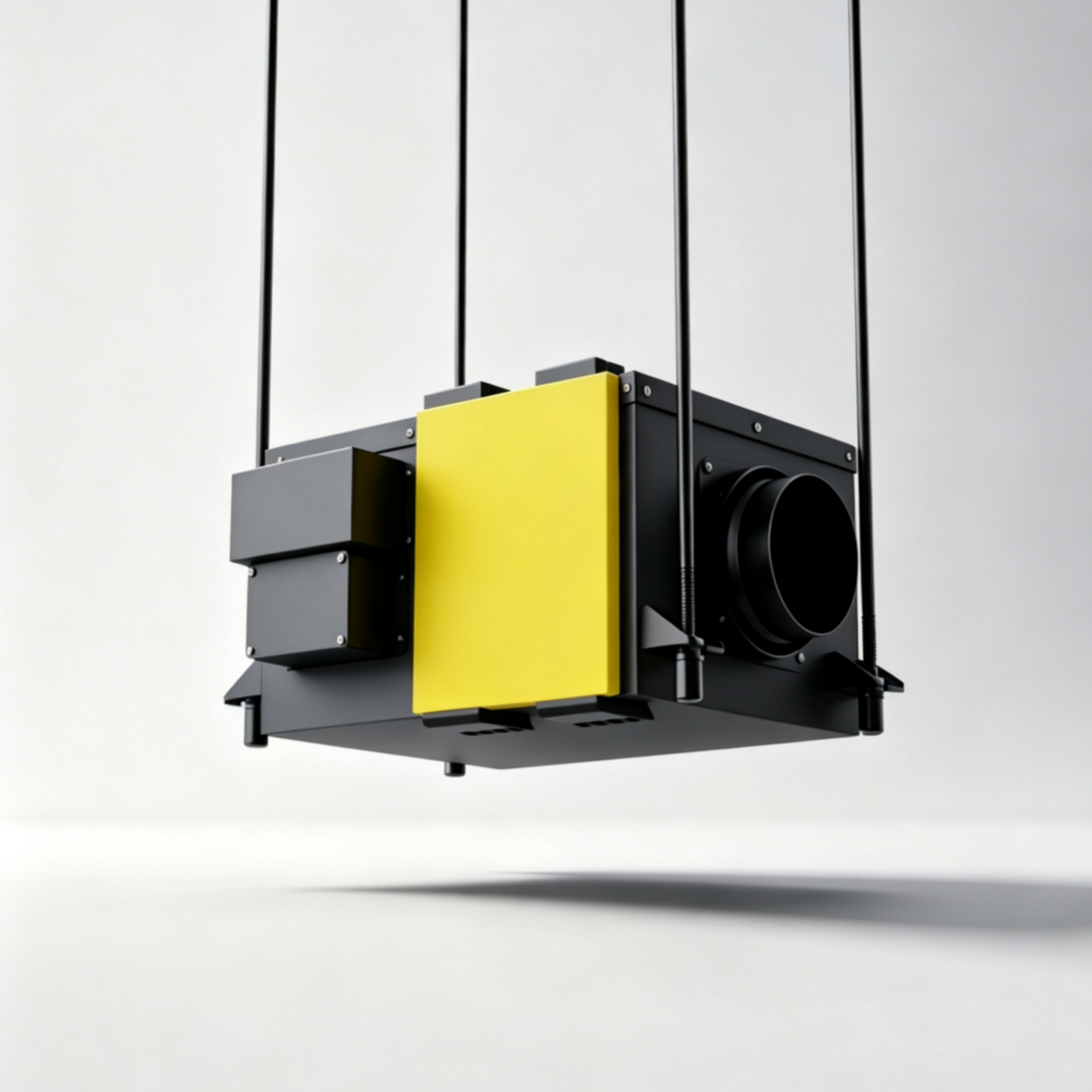
Commercial ERV units are high-efficiency ventilation devices designed for large-space industrial scenarios. The core of the system lies in its energy recovery core exchanger, which enables full heat and moisture exchange between the exhausted indoor air and incoming outdoor fresh air without mixing the two air streams.
When the system operates, polluted indoor air containing heat or cold is exhausted out of the workshop through one set of air ducts, while fresh outdoor air is filtered and drawn indoors through another set of ducts. During the air exchange process, the energy in the exhaust air is efficiently transferred to the incoming fresh air. This preheats or precools the fresh air, greatly reducing the workload of heating and cooling equipment.
Unlike residential ERV models, commercial ERV units are equipped with high-power fan systems, large-area heat exchange cores, and multi-stage filtration structures, which are fully adapted to the high-air-volume, long-duration operation needs of factories and workshops.
Industrial HVAC energy consumption accounts for a large proportion of factory operational expenses. Traditional ventilation wastes nearly all indoor temperature energy, forcing heating and cooling systems to run continuously to maintain a stable working temperature. Commercial ERV units can recover70% to 85% of the air energy from exhaust air, effectively reducing the load on air conditioners, heaters, and heat pumps. For large factories operating 24/7, this energy-saving effect translates into substantial long-term cost savings, significantly lowering overall operational expenditure.
Workshops such as printing, machinery processing, chemical auxiliary production, and woodworking continuously produce dust, peculiar odors, and tiny particulate matter. Without effective ventilation, these pollutants will accumulate indoors, threatening workers’ respiratory health and violating industrial safety production standards.
Commercial ERV units are fitted with multi-layer filter screens, which can effectively block outdoor dust, pollen, and impurities while rapidly exhausting indoor harmful gases and stale air. The continuous fresh air replacement keeps indoor oxygen levels stable, eliminates sultry and stuffy environments, and creates a safe, healthy working condition for employees.
Many industrial production processes and precision equipment have strict requirements for indoor humidity. Excessively humid air causes metal equipment rust, circuit board damp failure, and mold growth on production materials; overly dry air leads to static electricity, which affects product precision and even triggers safety hazards.
The energy recovery core of commercial ERV units supports reasonable moisture exchange, maintaining indoor humidity within a stable and appropriate range all year round. This not only protects precision production equipment and raw materials but also effectively reduces product defective rates caused by unstable air environments.
Factory workshops usually operate for long hours or even around the clock, which puts forward higher requirements for ventilation equipment stability. Commercial ERV units adopt industrial-grade materials, enhanced fan structures, and overheat protection devices. They feature low noise, low failure rate, and long service life, capable of stable high-air-volume operation for a long time without frequent shutdowns or maintenance, fully matching industrial production rhythms.
Commercial ERV units are highly versatile and can be customized for various industrial and workshop scenarios, covering multiple industry needs:
Printing and plate-making workshops: Effectively exhaust ink odors and volatile substances, control indoor humidity to avoid plate deformation, and ensure printing precision.
Machinery and metal processing workshops: Discharge metal dust and oil fume, keep the workshop air clean, and reduce equipment dust accumulation.
Electronics and precision manufacturing workshops: Maintain constant temperature and humidity, filter fine particulate matter, and avoid static electricity and dust pollution affecting product quality.
Warehouse and logistics factories: Accelerate air circulation, prevent goods from getting damp and moldy, and improve the storage environment.
Light industry and textile workshops: Eliminate stuffy air, reduce fiber dust accumulation, and improve employee working comfort.
To maximize the performance of commercial ERV units, factories and workshop owners need to focus on scientific selection and standardized installation.
First, match the CFM (cubic feet per minute) air volume according to the workshop area, floor height, and personnel density. Too small air volume cannot achieve effective ventilation, while excessive air volume causes energy waste. Second, select appropriate filtration grades according to industry characteristics: workshops with more dust and odors need high-efficiency filter screens to enhance purification effects.
In terms of installation, commercial ERV units need professional duct layout to ensure uniform air supply and exhaust, avoiding ventilation dead corners. Regular daily maintenance is also essential, including cleaning filter screens and inspecting fan operation status, which can effectively extend the service life of the equipment and maintain stable ventilation efficiency.
In the era of green industrial manufacturing and energy-saving upgrading, ventilation is no longer a simple "air exchange" demand, but an important part of factory energy conservation, safety production, and efficiency improvement. Commercial ERV units perfectly solve the pain points of high energy consumption, poor air quality, and unstable indoor environment in traditional industrial ventilation.
For all types of workshops and factories, investing in a high-efficiency commercial ERV ventilation system is not only a way to optimize the working environment and protect employee health but also a long-term cost-saving and efficiency-enhancing measure for industrial operation. It is the most practical and reliable ventilation solution for modern industrial spaces.
 18705226241


