


Best ERV Units for Cold Climates – Heat & Moisture Recovery Explained
Living or operating a business in cold climates comes with unique indoor air quality and energy challenges. Frigid winter temperatures, dry freezing air, and tightly sealed buildings force homeowners and commercial property owners to make a tough choice: open windows for fresh air and lose precious indoor heat, or keep windows closed to save energy and suffer from stale, polluted indoor air, dry skin, stuffy rooms, and accumulated CO₂.
Standard ventilation systems often fail to perform in low-temperature conditions. Ordinary exhaust fans cause massive heat loss, while basic ventilators struggle with frost buildup, core freezing, and overly dry indoor air. This is why high-performance ERV units designed for cold climates are a game-changer. These specialized Energy Recovery Ventilators deliver consistent fresh air, retain indoor heat, preserve balanced humidity, and resist freezing—solving all major cold-climate ventilation pain points. In this guide, we will break down how cold-climate ERVs work, their heat and moisture recovery mechanisms, key benefits, and how to pick the best unit for your space.
Not all ERV units are suitable for freezing weather. General-purpose ERVs are engineered for mild temperate climates and face critical malfunctions when temperatures drop below freezing. The biggest issue is heat core frosting. When ultra-cold outdoor air mixes with warm, moist exhausted indoor air inside the heat exchange core, condensation freezes quickly, blocking airflow, reducing ventilation efficiency, and even damaging the core over time.
Additionally, standard ventilators strip nearly all moisture from incoming air in winter, leaving indoor environments extremely dry. Low indoor humidity triggers dry throat, chapped skin, static electricity, aggravated respiratory allergies, and cracked wooden furniture or flooring. Worse, traditional ventilation leads to constant heat leakage, forcing heating systems to work overtime and resulting in sky-high utility bills throughout the cold season.
Cold-climate-specific ERVs are uniquely optimized to avoid these issues, with anti-frost designs, enhanced heat retention, and intelligent moisture recovery tailored for low-temperature environments.
The core advantage of the best ERV units for cold climates lies in their dual heat recovery and moisture recovery technology, which operates efficiently even in sub-zero temperatures without frost blockage.
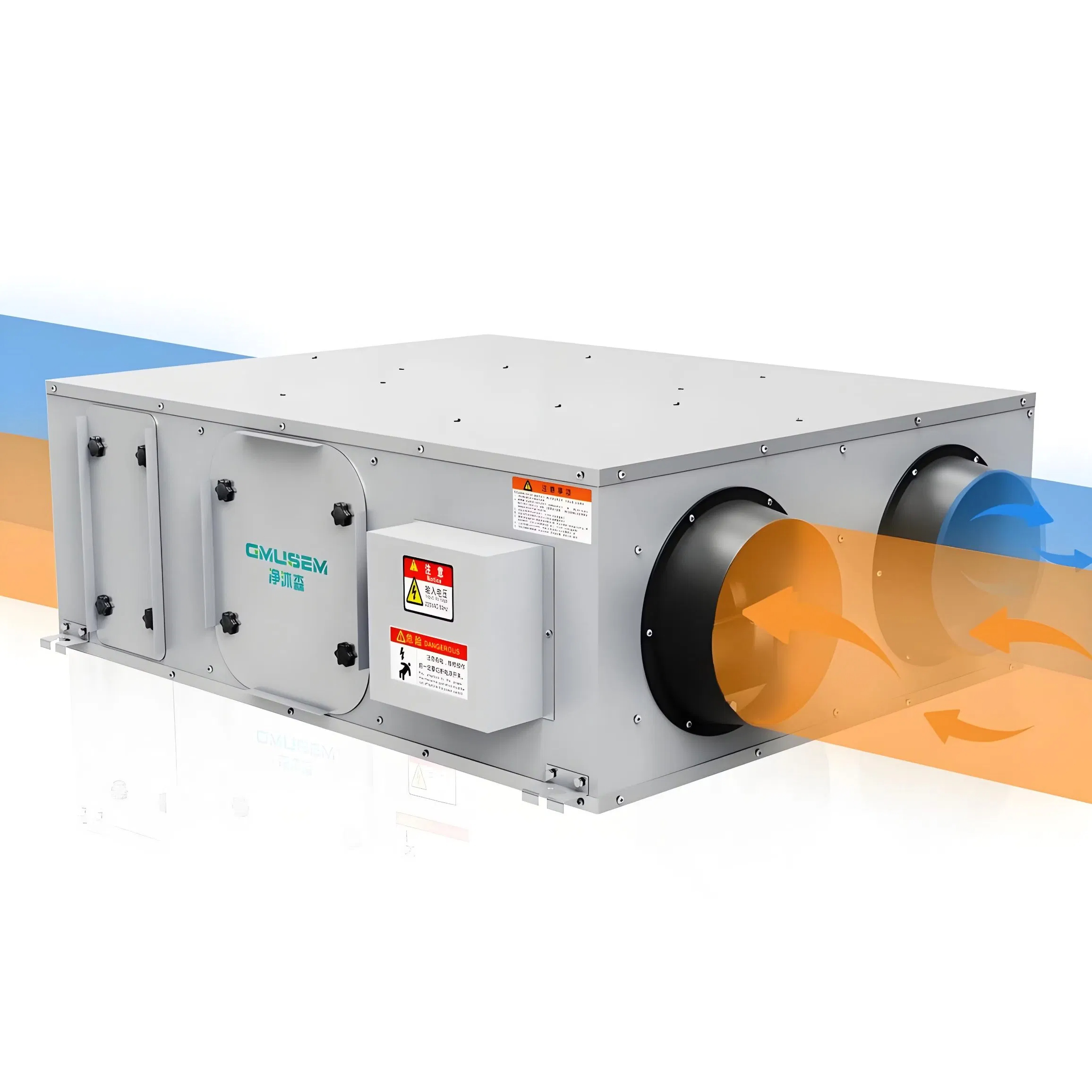
Cold-climate ERVs adopt upgraded cross-flow or counterflow heat exchange cores with ultra-high heat transfer efficiency, reaching 80%–90% energy recovery rate. While exhausting stale indoor air out of the building, the core captures nearly all residual heat from the warm indoor airstream. The captured heat is instantly transferred to the incoming freezing outdoor air, pre-warming it to a mild temperature before it circulates indoors.
This process eliminates the need for your heating system to reheat cold outdoor air repeatedly. It maintains stable indoor temperatures, eliminates cold drafts from ventilation, and drastically cuts down winter heating energy consumption—making it ideal for homes, offices, and rural buildings in frigid regions.
Unlike HRV systems that only recover heat and drain all moisture, cold-climate ERVs feature breathable hydrophilic core materials that retain reasonable indoor humidity. In dry, freezing winters, indoor air naturally loses moisture rapidly. As humid stale indoor air passes through the ERV core, the system absorbs excess water vapor and transfers it to dry incoming outdoor air.
This smart moisture balancing function keeps indoor humidity at a comfortable 40%–60% RH, the optimal range for human health and building protection. It effectively solves common cold-climate problems including dry respiratory tracts, static electricity, dry and cracked skin, and brittle wooden furnishings, creating a warm and humid indoor environment without any extra humidifier cost.
The best cold-climate ERVs are equipped with automatic defrost technology, a must-have feature for winter ventilation. When external temperatures drop to freezing levels and frost starts to form on the heat core, the intelligent control system triggers periodic micro-defrost cycles without shutting down ventilation completely. Some premium models adopt bypass air technology and enhanced core anti-freezing coatings to prevent ice accumulation fundamentally.
This ensures continuous 24/7 ventilation operation even in -20°C/-4°F weather, avoiding intermittent airflow or system shutdowns that plague standard ventilators in cold seasons.
By recovering over 80% of indoor heat that would otherwise be wasted through ventilation, cold-climate ERVs greatly reduce the load on furnaces, heat pumps, and electric heating systems. For residential homes, this cuts monthly heating costs significantly; for commercial buildings such as schools, offices, and hotels that require long-hour ventilation, the annual energy savings are considerable.
Window ventilation in winter always brings harsh cold drafts and outdoor pollutants like snow dust and smog. Cold-climate ERVs deliver pre-warmed, filtered fresh air evenly throughout the room without cold airflow irritation. They continuously dilute indoor CO₂, formaldehyde, and VOCs, eliminating stuffy air and ensuring breathable, clean air all winter long.
Extremely dry indoor air in cold weather causes wooden floors, doors, and furniture to crack and deform, while unregulated humidity fluctuations lead to wall peeling and mold growth in hidden corners. The consistent humidity balance provided by cold-climate ERVs protects building materials, extends furniture service life, and avoids mold and mildew issues caused by poor winter ventilation.
With professional anti-frost, anti-freeze, and low-temperature resistant component designs, premium cold-climate ERVs can operate stably in extreme freezing conditions. They feature low-temperature startup tolerance, sealed air ducts, and anti-condensation structures, ensuring no system failure, no airflow blockage, and no noise increase during harsh winters.
Select ERV units with a heat recovery efficiency above 80%. Higher efficiency means less heat loss, lower heating pressure, and better energy-saving performance in winter. Avoid low-efficiency general models that waste energy and fail to insulate heat.
Never choose cold-climate ERVs without defrost functions. Automatic intelligent defrost or bypass defrost technology is the core guarantee for continuous operation in sub-zero temperatures, preventing core freezing and ventilation interruption.
Choose ERVs with high-quality hydrophilic heat exchange cores that support stable moisture transfer. Avoid overly aggressive dehumidification models that make indoor air drier, and opt for units that maintain a natural, comfortable humidity range in winter.
Small apartments and single-family homes can choose compact low-airflow cold-climate ERVs, while large villas, offices, and commercial spaces require high-airflow models to ensure sufficient air exchange volume and meet indoor air quality standards in cold weather.
Ventilation in cold climates no longer has to mean choosing between fresh air and energy loss. The best ERV units customized for cold weather perfectly integrate high-efficiency heat recovery, intelligent moisture balancing, and anti-frost operation, solving the seasonal pain points of dry air, heat waste, frost blockage, and poor indoor air quality.
Whether you live in a region with freezing winters or manage commercial buildings in cold zones, investing in a professional cold-climate ERV is the most cost-effective way to maintain warm, humid, clean, and energy-efficient indoor environments all year round.
 18705226241


