


Are MVHR Systems Noisy? Noise Reduction Tips for Residential Installations
Homeowners considering an MVHR system often share one major concern: are MVHR systems noisy? Many people worry that continuous running ventilation units will create distracting hums, rattles, or airflow noise that disrupt sleep, relaxation, and daily life. The short answer is: a properly designed, installed, and maintained MVHR system is extremely quiet—barely noticeable in most residential homes. However, noisy MVHR units are common due to poor sizing, faulty installation, neglected maintenance, or incorrect duct design. In this guide, we will explain typical MVHR noise levels, the root causes of loud ventilation systems, and actionable noise reduction tips for new builds, renovations, and retrofit MVHR installations.
Modern residential MVHR units are engineered for low-noise operation, specifically designed for continuous background ventilation. Industry acoustic standards define clear acceptable noise levels for living spaces:
Living areas & kitchens: Below 35 dB(A) – completely unobtrusive and masked by daily household sounds
Bedrooms: Below 30 dB(A) – quiet enough for undisturbed sleep, matching ambient night-time room noise
Unit plant room/loft space: 40–50 dB(A) – audible near the unit but isolated from living areas
If your indoor vents produce loud rushing air, constant humming, rattling, or fluctuating noise, your MVHR system is not performing as intended. Excessive noise is always a symptom of an underlying issue, not a normal feature of heat recovery ventilation.
Nearly all MVHR noise issues stem from four key areas: incorrect system sizing, poor ductwork design, flawed installation practices, and lack of routine maintenance. Understanding these causes is the first step to eliminating unwanted ventilation noise.
One of the most frequent mistakes is installing an undersized MVHR unit for the property’s square footage and ventilation demands. A small unit forced to deliver high airflow will constantly run on boost speed, creating significant fan hum and turbulent airflow noise. Conversely, an oversized unit running inconsistent high speeds can also generate unnecessary resonance and noise throughout the duct system.
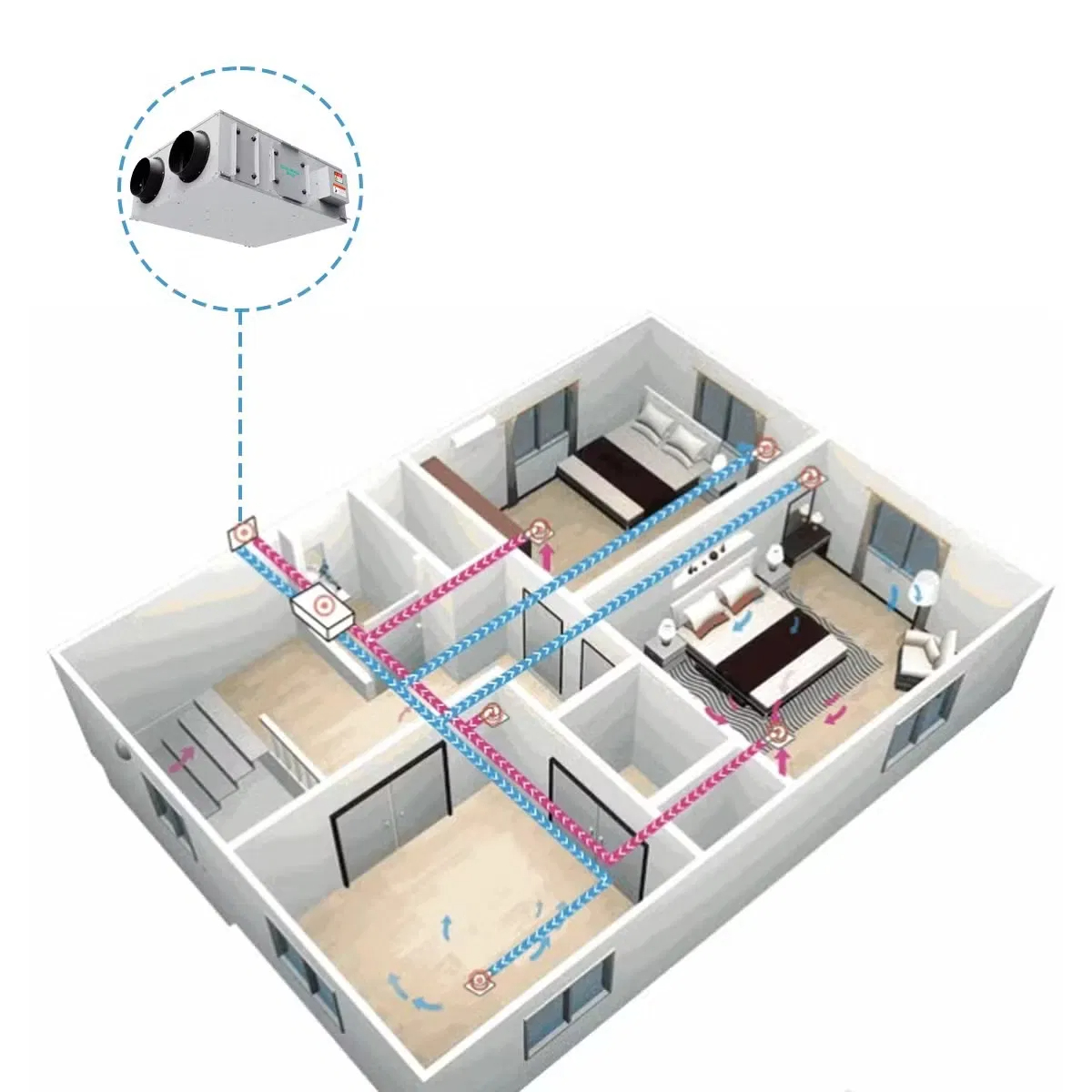
Duct design is the biggest hidden cause of MVHR noise. Small-diameter ducts (100mm or less), long duct runs, excessive bends, and cramped routing force air to travel at high velocity. Fast-moving air creates whooshing, rushing noise and turbulent airflow that amplifies sound through vents. Additionally, overused flexible ducting resonates with fan vibration, turning quiet mechanical movement into audible room noise.
MVHR fan motors produce subtle vibration during operation. Without proper isolation, these vibrations transfer directly to loft joists, walls, and ductwork, creating a low-frequency hum that echoes through the entire house. Units mounted rigidly on lightweight partitions or wooden frames amplify vibration noise far more than securely isolated installations.
Clogged, dusty MVHR filters disrupt balanced airflow, creating air resistance and turbulent circulation. Dirty fan blades and internal dust buildup unbalance fan rotation, resulting in persistent humming, buzzing, or rattling noises. This is the easiest noise issue to fix yet one of the most commonly overlooked by homeowners.
Installations without inline silencers or acoustic attenuators fail to dampen airflow and fan noise before it reaches living spaces. Placing air vents directly above beds or seating areas also makes normal low-level ventilation noise far more noticeable to occupants.
Whether you’re designing a new MVHR system, retrofitting an existing one, or fixing a noisy current setup, these professional acoustic tips will deliver a near-silent ventilation experience without sacrificing airflow efficiency.
Always calculate your home’s exact ventilation requirements based on room count, floor area, and occupancy before selecting an MVHR unit. A perfectly sized system runs steadily on low background speeds for daily ventilation, only using boost mode temporarily for high-moisture activities like cooking or showering. This eliminates constant high-speed fan noise and reduces long-term system wear.
Upgrade duct sizing to 125mm or 150mm diameter ducts wherever space allows, as larger ducts reduce air speed and turbulent flow that causes rushing noise. Minimise the use of flexible ducting, reserving it only for short, straight connection points. Use rigid ducting for main runs to eliminate resonance and airflow vibration. Avoid sharp 90-degree bends; use gradual curved bends to keep airflow smooth and quiet.
Mount your MVHR unit on heavy-duty anti-vibration pads or rubber isolators to break the vibration transfer path between the unit and building structure. Add flexible acoustic connectors between the unit casing and rigid ductwork to stop mechanical vibration from travelling through the entire duct system. This simple upgrade drastically reduces low-frequency humming in lofts and adjacent rooms.
Fit inline silencers (attenuators) on both supply and extract duct branches, within one metre of the MVHR unit, to dampen airflow noise before it enters habitable rooms. For bedrooms and quiet living spaces, add external acoustic duct insulation to muffle residual airborne noise. Properly installed silencers eliminate the majority of audible vent noise with no impact on ventilation performance.
Avoid installing supply or extract vents directly above beds, sofas, or work desks where occupants will notice minor airflow noise. Position vents in central room areas, ceiling corners, or outer wall sections to distribute air evenly while keeping noise away from resting zones. Use low-profile, low-turbulence air valves designed specifically for quiet residential ventilation.
Stick to a regular MVHR filter replacement schedule (3–6 months depending on household conditions) to maintain smooth, balanced airflow. Dirty filters create uneven air pressure, turbulence, and fan strain that generates excess noise. During annual professional servicing, ask engineers to balance system airflow and calibrate fan speeds to eliminate over-ventilation and unnecessary operational noise.
Set your MVHR system to run on low, constant background speed for everyday use. Reserve boost mode only for temporary high-humidity situations like cooking, showering, or drying laundry. Continuous low-speed operation is virtually silent, while prolonged boost-speed running is the main cause of noticeable MVHR noise in homes.
Continuous low hum: Vibration transfer or unbalanced fan – install anti-vibration mounts and service fan blades
Rushing air noise from vents: High duct velocity or blocked filters – upgrade duct size, replace filters, rebalance airflow
Rattling or buzzing: Loose ductwork or dirty internal components – secure ducts and complete system maintenance
Loud boost-mode noise: Undersized unit or poor duct design – reassess unit sizing and add silencers
MVHR systems are not inherently noisy – noise issues are always the result of poor design, rushed installation, or neglected maintenance. With correct unit sizing, optimised low-velocity ductwork, acoustic isolation, and regular filter upkeep, your MVHR system will operate silently in the background, delivering fresh, filtered air and heat recovery benefits without disrupting your home comfort.
By following these residential noise reduction tips during installation, retrofit, or routine maintenance, you can enjoy all the energy-saving and air quality benefits of MVHR while maintaining a peaceful, quiet living environment year-round.
 18705226241


